
The Energy Truce's Fragile Future: Putin Holds the Key to Market Stability
The U.S.-brokered moratorium on energy infrastructure strikes between Russia and Ukraine, announced in late March 2025, has become a precarious linchpin for global energy markets. With the 30-day truce set to expire in mid-April and both sides accusing the other of violations, the fate of the agreement—and its implications for energy prices and geopolitical stability—rests largely on Vladimir Putin’s willingness to enforce it.
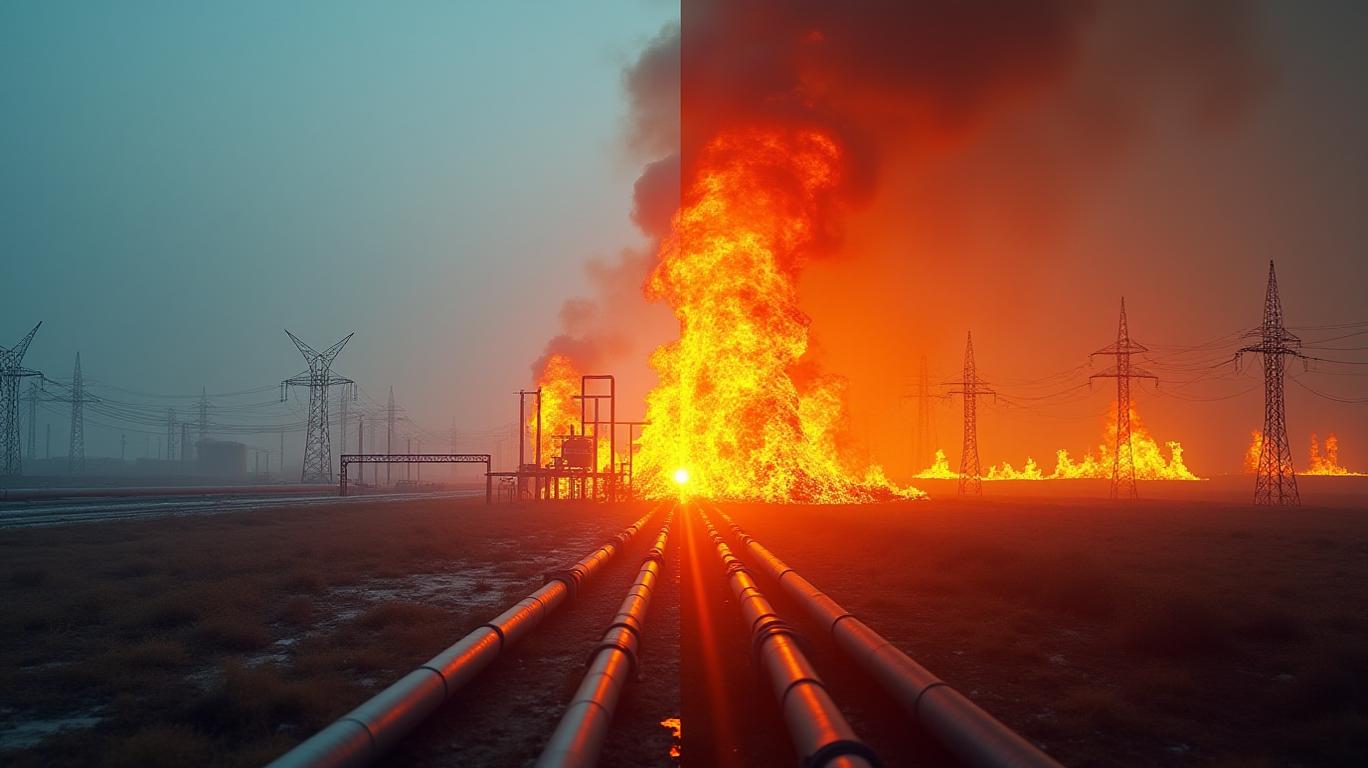
The Truce’s Contentious Reality
The moratorium, initially hailed as a rare diplomatic breakthrough, bars attacks on energy infrastructure such as pipelines, refineries, and power plants in both Russia and Ukraine. Yet, mutual accusations of violations have dominated the narrative. Russia’s Defense Ministry reported six Ukrainian strikes on energy facilities in its Rostov, Kursk, and Krasnodar regions, including an attempted attack on the TurkStream gas pipeline’s compressor station. Ukrainian President Volodymyr Zelenskyy, meanwhile, has accused Russia of drone strikes on Kherson’s thermal power plant, arguing Moscow seeks to destabilize Ukraine’s energy grid.
The Kremlin maintains that Russia is adhering to the terms while blaming Kyiv for “daily strikes.” “The Kyiv regime cynically continues its aggression,” declared Foreign Ministry spokesperson Maria Zakharova on April 9. However, the U.S. has yet to independently verify battlefield claims, leaving the truce’s credibility in doubt.
Market Reactions: Volatility Amid Uncertainty
The energy markets have responded to the truce’s fragility with a mix of cautious optimism and anxiety.
- Oil Markets: While the moratorium’s initial announcement eased fears of a supply shock from disrupted Russian energy exports, prices remain vulnerable to escalation. WTI crudeWTI-- traded near $70/barrel in early April—below its 2024 peak but higher than 2023 lows—as traders balanced the moratorium’s potential to stabilize flows against ongoing sanctions and hybrid warfare risks.
- Natural Gas: European gas prices dipped slightly on the truce news, but storage levels at 34% by April 2025 underscored concerns about winter preparedness. Asian buyers, particularly China, have increased spot LNG purchases, benefiting U.S. exporters as they ramp up production post-moratorium.
The U.S. decision to lift its LNG export permit moratorium in January 2025 has further complicated the landscape. While U.S. producers like Cheniere Energy (LNG) and NextDecade Corp. (NEXT) have gained access to global markets, geopolitical risks—including U.S. tariffs on Canadian and Chinese imports—have introduced logistical hurdles.
Putin’s Calculus: Politics vs. Pragmatism
The moratorium’s extension hinges on Putin’s strategic priorities. On one hand, compliance could ease Western pressure, particularly as U.S.-Russia relations inch toward normalization, with diplomatic talks focusing on restoring embassy operations. On the other, maintaining pressure on Ukraine’s energy sector could weaken Kyiv’s military and economic resilience.
Analysts note that Putin’s March 31 Security Council meeting, where he demanded updates on the moratorium’s implementation, signals its importance to his broader foreign policy agenda. Yet, his reluctance to endorse a broader ceasefire—opting instead for a limited, energy-focused truce—suggests he views the moratorium as a tactical maneuver rather than a peace overture.
Risks and Opportunities for Investors
- Risks: A collapsed truce could trigger energy supply disruptions, sending prices soaring. A failed TurkStream attack, for instance, might disrupt flows to Turkey and Europe. Geopolitical instability could also deter investment in long-term energy projects, particularly in regions like the Arctic or Caspian Sea.
- Opportunities: Compliance with the moratorium could stabilize prices, benefiting energy exporters like Russia (USDRUB), Canada (BCE.TO), and U.S. shale firms. LNG exporters and renewable energy companies may also gain as markets seek diversified supplies amid geopolitical uncertainty.
Conclusion: A Truce Built on Sand?
The energy moratorium’s future remains as fragile as the trust between Moscow and Kyiv. While the truce’s survival could offer temporary relief to markets, its collapse would reignite volatility.
Key data underscores the stakes:
- The International Energy Agency forecasts a 600,000 bpd global oil surplus in 2025, but supply disruptions could erase this buffer.
- GLJ Research projects U.S. WTI crude at $70.17/barrel and Henry Hub gas at $4.57/MMBtu in 2025, assuming moderate compliance.
- U.S. LNG exports to Asia surged 15% in Q1 2025, but trade tariffs threaten to erode margins.
Investors must weigh Putin’s incentives: Is the moratorium a stepping stone to broader talks, or a tool to buy time for military gains? With the expiration deadline looming, the answer—and its impact on energy markets—will hinge on one man’s calculus.








Comentarios
Aún no hay comentarios