
Energy Transition Risks in Central Europe: Geopolitical Exposure and Portfolio Resilience
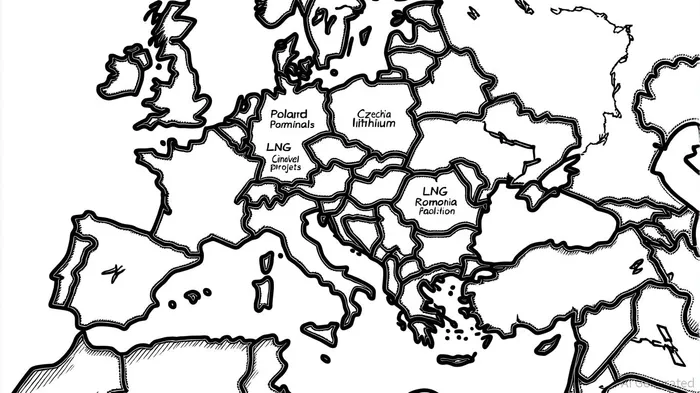
The energy transition in Central Europe has become a geopolitical battleground, shaped by the fallout from Russia's invasion of Ukraine, U.S.-China competition, and the EU's ambitious decarbonization agenda. While the region is pivotal to Europe's energy security and green ambitions, its path is fraught with risks—from overreliance on gas infrastructure to vulnerabilities in critical mineral supply chains. Investors must navigate these challenges with a dual focus on geopolitical exposure and portfolio resilience.
Geopolitical Exposure: A Fragile Energy Landscape
Central and Eastern European (CEE) nations have rapidly reoriented their energy strategies post-2023, shifting from Russian gas dependence to diversified imports, including U.S. liquefied natural gas (LNG). This transition, however, has introduced new vulnerabilities. According to a report by the Atlantic Council, CEE countries risk overbuilding gas infrastructure, which could lead to stranded assets as demand declines due to energy efficiency gains and heat pump adoption[1]. For example, Poland's pivot to marine transport for energy imports has created bottlenecks and elevated costs, exposing the region's reliance on volatile global LNG markets[3].
The geopolitical stakes are further heightened by divergent policy signals. The EU's restrictive regulatory environment contrasts with the U.S. Inflation Reduction Act's incentive-driven approach, potentially deterring private investment in CEE. Meanwhile, China's growing influence in clean energy supply chains—particularly in processing critical minerals—introduces new dependencies that require strategic management[2].
Critical Mineral Supply Chains: A Double-Edged Sword
The energy transition hinges on critical minerals like lithium, cobalt, and rare earth elements, yet the EU's reliance on China for processing these materials remains a significant risk. As stated by the International Energy Agency (IEA), China controls over 80% of global critical mineral processing and 90% of rare earth element refining[4]. This concentration leaves the EU exposed to export controls, as seen in 2024 when China restricted gallium and germanium shipments to the U.S.
To mitigate these risks, the EU's Critical Raw Materials Act (CRMA) aims to boost domestic production and recycling. Central Europe is at the forefront of this effort, with projects like Czechia's Cinovec lithium mine and Poland's Pulawy rare earths separation plant[5]. However, regulatory delays and permitting challenges—particularly in Germany—threaten to slow progress[4]. The CRMA's 2030 targets (10% domestic extraction, 40% EU-based processing, 25% recycling) remain ambitious, requiring sustained public-private collaboration[5].
Portfolio Resilience: Strategic Diversification and Regional Cooperation
Investors seeking resilience in Central Europe must prioritize diversification across technologies and geographies. The region's energy transition strategy emphasizes a mix of nuclear, wind, solar, and geothermal, alongside regional interconnectors to balance supply and demand[3]. For instance, interconnectors between coastal wind-rich areas and inland demand centers could enhance grid stability while reducing reliance on single energy sources[2].
Critical mineral supply chains also demand a multi-pronged approach. While the EU's CRMA focuses on domestic projects, partnerships with countries like Canada, Australia, and African nations are essential to diversify imports[5]. Investors should also monitor secondary material opportunities, such as recycling initiatives, which could reduce pressure on primary mineral extraction[4].
Conclusion: Balancing Risks and Opportunities
Central Europe's energy transition is a geopolitical imperative, but its success depends on managing exposure to volatile markets and supply chain bottlenecks. For investors, the path forward lies in aligning with EU-wide strategies, supporting regional innovation, and hedging against geopolitical shocks through diversified portfolios. As the IEA notes, the global demand for critical minerals will surge through 2050, making resilience in supply chains not just an economic necessity but a strategic one[4].







Comentarios
Aún no hay comentarios