
Energy Transition Opportunities in Canada's Resource Sector
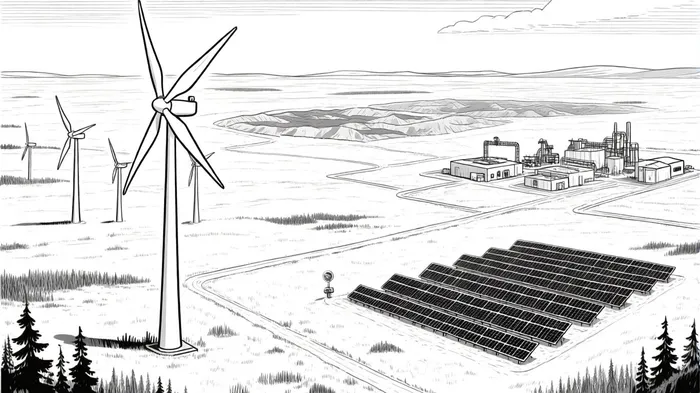
Canada's resource sector stands at a pivotal crossroads, where the urgency of decarbonization intersects with the promise of economic reinvention. As global markets pivot toward net-zero economies, the country's oil, gas, and mining industries are redefining their strategic positioning to align with clean energy infrastructure growth. With historic government investments, innovative partnerships, and a surge in private-sector capital, Canada is emerging as a global leader in the energy transition—though challenges remain in ensuring authenticity and scalability.
Government-Led Catalysts for Clean Energy Growth
The federal government has laid the groundwork for a transformative shift, committing $60 billion to clean energy infrastructure through initiatives like the Powering Canada's Future strategy[1]. Finalized in December 2024, the Clean Electricity Regulations establish a technology-neutral framework to phase out high-emission power generation by 2035, supported by mechanisms such as compliance credit systems and emissions trading[2]. These policies are complemented by $60 billion in clean energy tax credits and $20 billion in sustainable infrastructure funding, channeled through tools like the Canada Infrastructure Bank and the Smart Renewables and Electrification Pathways Program (SREP)[3].
Provincial governments are also stepping up. Ontario's Long-Term Request for Proposals (LT1 RFP) seeks to add 10,000 MW of new capacity and energy storage, while Saskatchewan's focus on Indigenous-led renewable projects underscores the importance of inclusive development[4]. However, Alberta's recent pause on large renewable project approvals highlights the need for balanced policy frameworks that reconcile grid reliability with decarbonization goals[4].
Strategic Positioning in Oil and Gas: From Fossil Fuels to Carbon-Neutral Operations
For Canada's oil and gas sector, the transition is both a necessity and an opportunity. The Pathways Alliance, representing 95% of oil sands production, has pledged to reduce emissions by 22 megatonnes annually by 2030 through $24.5 billion in carbon capture and storage (CCS) investments[5]. Companies like Suncor Energy Inc.SU-- and Canadian Natural Resources Limited (CNRL) are leveraging their dominance in the oil sands to pioneer low-carbon technologies, including hydrogen production and small modular reactors (SMRs)[5].
Yet skepticism persists. Researchers have flagged instances of greenwashing in industry communications, citing selective disclosure and misaligned claims[6]. For example, while oil sands firms tout reduced emissions intensities—from 78 to 57 kgCO2eq/bbl—international bodies like the International Energy Agency urge broader diversification into sustainable aviation fuel and renewable diesel[5]. The sector's reliance on natural gas for power further complicates short-term decarbonization, underscoring the need for accelerated renewable integration[5].
Mining's Role in the Clean Energy Supply Chain
Canada's mining industry is emerging as a linchpin in the global clean energy transition, driven by demand for critical minerals like lithium, cobalt, and rare earth elements. The Global Partnerships Initiative (GPI) is fostering international R&D collaborations, particularly with the U.S., to secure responsible supply chains[7]. Companies such as Glencore and Rio TintoRIO-- have already integrated renewables into operations: Glencore's Raglan mine uses wind turbines to meet 10% of its electricity demand, while Rio Tinto's Diavik diamond mine generates 17 GWh annually from wind power[7].
Government incentives, including the Clean Technology Investment Tax Credit, are accelerating adoption of electric mining vehicles and solar arrays at remote sites[7]. For instance, Snowline Gold's Forks exploration camp in the Yukon has slashed carbon emissions by 90% through solar energy[7]. These projects not only reduce environmental footprints but also enhance operational efficiency, positioning Canadian miners as key players in the EV and renewable energy value chains.
Challenges and the Path Forward
Despite progress, hurdles remain. The Alberta energy grid's dependence on natural gas and the province's temporary moratorium on large renewables create uncertainty for developers[5]. Similarly, the success of Indigenous-led projects hinges on equitable partnerships, as communities on or near Indigenous territories account for a significant portion of Canada's mineral wealth[7].
To maintain momentum, Canada must balance regulatory clarity with innovation. The $35 billion surge in clean energy investments in 2024—placing the country 8th globally—demonstrates strong private-sector confidence[8]. However, scaling projects like the LNG Canada Phase 2 expansion and Ontario's SMR deployment will require sustained policy support and cross-sector collaboration[9].
Conclusion
Canada's resource sector is undergoing a strategic renaissance, driven by government ambition, corporate innovation, and global demand for clean technologies. While challenges like greenwashing and grid reliability persist, the alignment of policy, capital, and critical mineral resources positions the country to lead the energy transition. For investors, the opportunities are clear: from oil sands firms pivoting to carbon-neutral operations to miners supplying the raw materials for a decarbonized world, Canada's resource sector is not just adapting—it is reinventing itself.





Comentarios
Aún no hay comentarios