
Energy Transition Financing: Navigating Volatility and Strategic Opportunities in 2026
The global energy transition is accelerating, driven by climate imperatives, technological innovation, and geopolitical realignments. At the forefront of this transformation are major financial institutions like JPMorgan ChaseJPM--, which are redefining their roles as both enablers and risk managers in the clean energy sector. As artificial intelligence (AI) reshapes energy demand and global supply chains face unprecedented volatility, banks must balance ambitious sustainability goals with the realities of market dynamics. This analysis explores JPMorgan's evolving strategies in energy transition financing, focusing on its dual mandate to fund clean energy while mitigating risks from AI-driven demand surges and geopolitical tensions.
JPMorgan's Strategic Pillars: Scaling Clean Energy Financing
JPMorgan Chase has positioned itself as a linchpin in the global shift to clean energy. By 2025, the bank aims to facilitate $200 billion in clean energy financing, a target embedded in its broader $1.5 trillion Security and Resiliency Initiative. This initiative prioritizes U.S. industries such as battery storage, grid resilience, and distributed energy, with up to $10 billion allocated to direct equity and venture capital investments in domestic clean energy startups. The firm's focus extends beyond traditional renewables: it is actively funding projects like geothermal energy (e.g., Fervo Energy) and carbon removal technologies, reflecting a diversified approach to decarbonization.
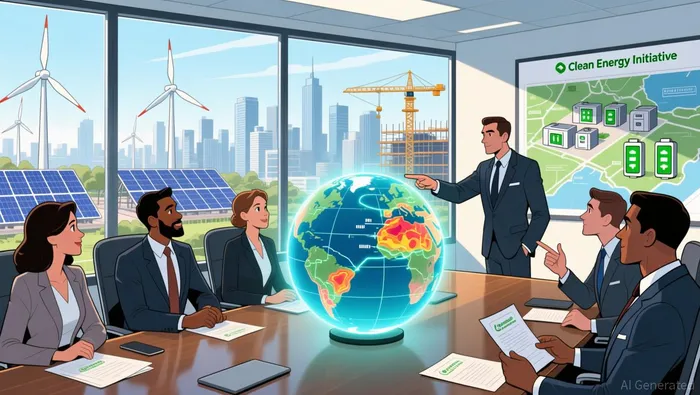 JPMorgan's commitment aligns with global climate frameworks, including the United Nations Sustainable Development Goals (SDGs) and the International Energy Agency's Net Zero Emissions scenario. However, the bank's strategy is not purely altruistic. By investing in critical minerals and energy infrastructure, JPMorganJPM-- is addressing supply chain vulnerabilities exacerbated by geopolitical competition, particularly between the U.S. and China. This dual focus on sustainability and national security underscores the bank's role as a strategic actor in the energy transition.
Managing Transition Risks: From Geopolitics to AI-Driven Demand
The energy transition is fraught with risks, from geopolitical instability to the unpredictable pace of technological adoption. JPMorgan's 2026 strategies emphasize proactive risk management, leveraging AI-driven analytics to forecast demand shifts and optimize capital allocation. For instance, the bank has identified AI as a "new industrial revolution," with AI workloads driving a tenfold increase in data center power consumption over the past decade. Hyperscale AI data centers now consume as much electricity as 100,000 households, creating a critical imbalance in energy supply. JPMorgan is responding by prioritizing scalable solutions such as nuclear, natural gas, and renewable generation to meet this surging demand.
Geopolitical risks further complicate the energy transition. JPMorgan's Center for Geopolitics highlights the U.S.-China rivalry as a defining theme for 2026, with trade tensions and supply chain disruptions posing challenges for clean energy financing. To mitigate these risks, the bank is doubling down on domestic supply chains and public-private partnerships, particularly in emerging markets where infrastructure gaps persist. This approach not only aligns with U.S. economic resilience goals but also taps into high-growth opportunities in the Global South.
Strategic Opportunities: Innovation and Resilience
Despite the volatility, JPMorgan sees significant opportunities in the energy transition. Its Innovation Economy platform, for example, provides tailored financial solutions to startups and high-growth companies, enabling them to scale technologies like grid storage and carbon capture. The bank's $2.5 trillion climate finance target by 2030 reflects confidence in the long-term profitability of clean energy, even as short-term market fluctuations persist.
Moreover, JPMorgan is capitalizing on the growing importance of infrastructure as a structural asset. Its 2026 Global Alternatives Outlook highlights core infrastructure-particularly power utilities-as a key beneficiary of the energy transition, driven by both environmental and security imperatives. By advising on and investing in projects that enhance grid resilience and energy independence, JPMorgan is positioning itself to profit from the inevitable reallocation of capital toward decarbonization.
Conclusion: A Model for the Future
JPMorgan Chase's approach to energy transition financing exemplifies the delicate balance between ambition and pragmatism. By integrating AI-driven demand forecasting, geopolitical risk analysis, and strategic investments in clean energy, the bank is navigating the complexities of a rapidly evolving landscape. For investors, the key takeaway is clear: the energy transition is not a linear path but a mosaic of opportunities and challenges. Institutions that, like JPMorgan, combine financial acumen with technological foresight will emerge as leaders in this new era.







Comentarios
Aún no hay comentarios