
Energy Storage as a Strategic Play in Europe's Shifting Power Markets
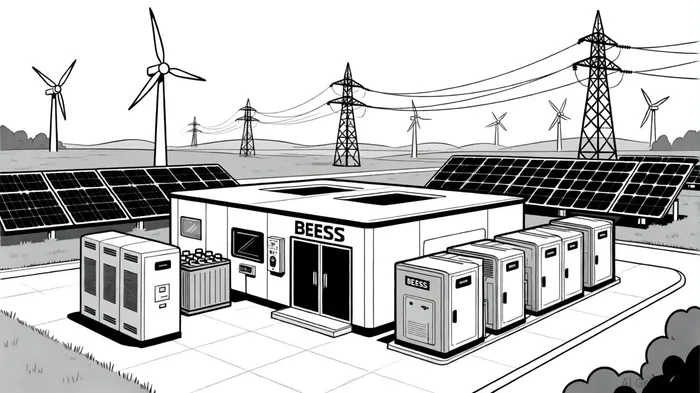
The energy transition in Europe is accelerating, driven by decarbonization mandates, renewable integration, and the urgent need for grid resilience. At the heart of this transformation lies energy storage—a sector poised to redefine power markets. Fluence EnergyFLNC--, Inc., a global leader in grid-scale battery storage, is emerging as a pivotal player in Central Europe, particularly through its partnership with DTEK's subsidiary DRI on Poland's Trzebinia battery energy storage project. This initiative notNOT-- only underscores Fluence's technological and strategic advantages but also highlights the growing importance of decentralized storage in stabilizing energy systems amid geopolitical and climate-driven uncertainties.
Fluence's Poland Project: A Case Study in Grid Resilience and Renewable Integration
Poland, a country historically reliant on coal, is now at a crossroads. Its energy transition goals—boosting renewable energy adoption and enhancing grid resilience—have created a critical need for advanced storage solutions. Fluence's Trzebinia project, a 133 MW / 622 MWh battery energy storage system (BESS), is set to become the largest of its kind in Poland under a 17-year capacity market contract, operational by 2027 [1]. The project leverages Fluence's Smartstack™ platform, known for its modular design and robust cybersecurity features, addressing Poland's vulnerabilities to cyberattacks on critical infrastructure [1].
This collaboration aligns with DTEK's broader strategy to strengthen energy security across Central and Eastern Europe. DTEK, a Ukrainian energy giant, has already demonstrated its commitment to the region through a 200 MW BESS project in Ukraine, which was recently energized [1]. By deploying Fluence's technology in Poland, DTEK and DRI are not only diversifying their energy portfolios but also contributing to a regional shift toward decentralized, grid-stabilizing storage. The project is emblematic of how energy storage is becoming a linchpin for integrating renewables, balancing supply and demand, and ensuring reliability in markets transitioning away from fossil fuels.
Fluence's Financial Resilience and Market Leadership
Despite recent challenges, Fluence's financial performance underscores its position as a high-conviction investment. In fiscal year 2024, the company reported record revenue of $2.7 billion, with a 22% year-over-year increase and a GAAP gross profit margin of 12.6%—a significant improvement from 6.4% in 2023 [2]. Net income turned positive at $30.4 million for the year, reversing a $104.8 million loss in 2023, while adjusted EBITDA surged to $78.1 million [2].
However, FluenceFLNC-- faced a revenue dip in Q1 2025, with total revenue falling to $186.8 million—a 49% decline from Q1 2024. The company attributed this to backend-loaded revenue distribution and customer-driven contract delays, particularly in Australia [3]. In response, Fluence revised its 2025 revenue guidance downward to $3.1–$3.7 billion, down from $3.6–$4.4 billion previously [3]. Despite these headwinds, Fluence maintains a robust backlog of $5.1 billion as of December 2024, with 60% expected to be recognized within 12 months [3]. The company also raised $400 million in convertible senior notes to strengthen its capital structure, signaling confidence in long-term growth [3].
Fluence's dominance in the energy storage market is further reinforced by its 97.9% market share in Q2 2025, as reported by CSIMarket, and its Tier 1 supplier status from S&P Global Commodity Insights [4]. Competitors like Tesla and Wärtsilä remain formidable, but Fluence's integrated approach—combining hardware, software, and services—alongside its focus on the U.S. market under domestic content policies, provides a distinct edge [4].
Notably, historical performance of the FENY ETF during earnings misses by its large-cap constituents (e.g., XOM, CVX, COP, EOG, SLB) offers additional context. Between 2022 and September 2025, seven such events occurred, with the ETF's median after-event drift showing a mild negative trend of approximately -2.8% over 30 trading days, though statistically insignificant [5]. One-day moves averaged -0.1% with a 57% win rate, indicating that earnings disappointments by FENY's heavyweight holdings have not produced a reliable directional edge for the ETF during this period [5]. This suggests that Fluence's exposure to broader market dynamics may buffer its performance against short-term volatility tied to individual earnings reports.
Strategic Implications for Clean Energy Infrastructure Investment
The Trzebinia project and Fluence's broader expansion into Central Europe highlight a critical trend: energy storage is no longer a niche technology but a foundational element of modern power systems. Poland's energy storage market, projected to grow from 25 MWh in 2024 to over 20 GWh by 2030 [1], exemplifies the scale of opportunity for companies like Fluence. This growth is driven by regulatory tailwinds, including the European Union's Renewable Energy Directive and the increasing frequency of extreme weather events that strain traditional grids.
For investors, Fluence's strategic positioning in Central Europe and its technological leadership present compelling arguments for long-term value creation. While near-term revenue volatility exists, the company's strong backlog, liquidity, and market share suggest resilience. Moreover, Fluence's partnerships with energy transition pioneers like DTEK demonstrate its ability to scale solutions in markets undergoing rapid transformation.
Conclusion
As Europe's power markets evolve, energy storage will be the cornerstone of a decentralized, resilient, and sustainable grid. Fluence's Trzebinia project in Poland, coupled with its financial and technological strengths, positions the company as a key enabler of this transition. For investors seeking exposure to the energy transition, Fluence offers a high-conviction play—a business that not only adapts to market shifts but actively shapes them.





Comentarios
Aún no hay comentarios