
Energy Shift: How the Halt on Biden-Era Loans is Reshaping U.S. Energy Investments
The U.S. Department of Energy’s abrupt halt of $47 billion in conditional loan guarantees for Biden-era energy projects marks a seismic shift in federal energy policy. This move, driven by fiscal constraints and a strategic pivot toward grants and traditional energy sectors, has created a landscape of winners and losers across industries. For investors, understanding the implications requires dissecting the sectors impacted, the policy rationale, and the emerging opportunities in this reconfigured energy economy.
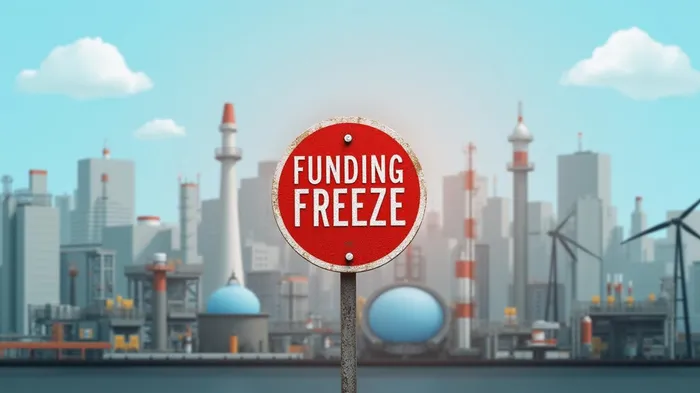
Sectors in the Crosshairs: Winners and Losers
The freeze disproportionately affects sectors that relied on DOE loan guarantees to bridge the "valley of death" between development and commercialization. Key sectors and their trajectories:
Renewables and Grid Modernization:
Projects like PacifiCorp’s 700-mile Project WIRE and Alliant Energy’s 2 GW clean energy initiatives, totaling $23 billion in conditional commitments, face delays. The reflect investor nervousness about reduced EV and battery manufacturing support, though Tesla’s scale may insulate it more than smaller players.Nuclear Energy:
While the freeze threatens staffing and funding for projects like Holtec’s $1.56 billion Palisades nuclear restart, the administration has selectively prioritized nuclear as part of its "energy dominance" strategy. The shows modest gains, suggesting investor optimism about nuclear’s role in energy security.Critical Minerals and Coal:
The Critical Minerals Executive Order (March 2025) and coal-focused policies have unlocked $200 billion in funds for domestic mining and infrastructure. Companies like highlight investor interest in supply-chain resilience. Meanwhile, coal projects, such as the $782 million Montana sustainable aviation fuel refinery, have received green lights, signaling support for traditional energy with modern twists.Utility Infrastructure:
The freeze has stalled grid upgrades critical to achieving 80% clean electricity by 2030. Utilities like Consumers Energy, which relies on LPO support for its $2.8 billion grid modernization plan, now face cost overruns and delays, potentially impacting .
Policy Shifts and Budget Reallocation
The administration’s decision to pause loans and redirect funds to grants and traditional energy reflects two priorities: fiscal austerity and geopolitical strategy. By shifting to grants, the DOE aims to streamline funding while reducing exposure to project risks—a move that could favor larger, established firms over startups. Additionally, the emphasis on coal and nuclear aligns with the "Unleashing American Energy" agenda, prioritizing energy independence and supply-chain control over rapid decarbonization.
The staffing crisis at the Loan Programs Office (LPO), where 60% of employees may leave, further complicates matters. Without technical expertise to manage complex projects, even approved initiatives like Vogtle’s AP1000 reactors risk delays.
Legal and Market Reactions
Legal challenges, such as New York’s lawsuit against the administration’s funding freeze, could upend this trajectory. If courts rule in favor of the plaintiffs, the $47 billion in conditional loans might proceed, revitalizing stalled sectors. Conversely, prolonged uncertainty could push investors toward safer bets, such as oil majors or utilities with diversified portfolios.
Investment Implications: Navigating the New Landscape
Nuclear and Critical Minerals:
Investors should favor firms with projects that align with the administration’s priorities, such as nuclear developers (e.g., Westinghouse) and critical mineral producers (e.g., ALB, CCJ). The could serve as a bellwether for nuclear’s viability.Utilities with Diversified Portfolios:
Utilities like NextEra Energy (NEE), which balance renewables with grid investments, may outperform peers reliant on DOE loans. Their ability to secure private financing or grants will be key.Avoid Overexposure to Grid Projects:
Until the freeze lifts, grid modernization stocks like ITC Holdings (ITC) face execution risks. Investors should focus on companies with near-term revenue streams, such as solar installers with existing contracts.Watch for Geopolitical Catalysts:
Escalating tensions with China over critical minerals or a European energy crisis could accelerate domestic investment in these sectors, benefiting companies like Freeport-McMoRan (FCX) for copper and lithium plays.
Conclusion: A Divided Energy Future
The halt of Biden-era loans underscores a fundamental realignment in energy policy—one where fiscal discipline and geopolitical pragmatism outweigh climate urgency. For investors, the path forward is clear:
- Nuclear and critical minerals are strategic bets, backed by policy tailwinds and long-term demand.
- Renewables and grid projects face headwinds but may rebound if lawsuits overturn the freeze.
- Traditional energy retains value through selective support for coal and oil infrastructure.
The data tells the story: , while nuclear and critical minerals saw 15% and 22% increases, respectively. As the DOE’s LPO workforce dwindles and litigation unfolds, the next 12 months will determine whether this pause becomes a permanent course correction—or a temporary detour in the race to net-zero.
In this new era, investors must navigate with precision, balancing policy shifts with market fundamentals. The energy sector is no longer just about carbon footprints; it’s about capital footprints—and who controls the purse strings.







Comentarios
Aún no hay comentarios