
Energy Sector Stabilization and Geopolitical Shifts in 2026
The energy sector in 2026 is navigating a complex interplay of geopolitical risks and market fundamentals, with the Russia-Ukraine war, U.S. sanctions on oil producers, and emerging peace talks shaping investment strategies. As global oil markets grapple with oversupply and shifting trade dynamics, investors must strategically position portfolios to account for both volatility and long-term stability.
The Russia-Ukraine Peace Talks: A Double-Edged Sword
The potential for a peace deal between Russia and Ukraine remains a critical wildcard for energy markets. Ukrainian President Volodymyr Zelenskyy's upcoming meeting with U.S. President Donald Trump in Florida centers on a 20-point peace plan that includes territorial compromises and security guarantees according to reports. While a resolution could ease sanctions on Russian oil producers like Rosneft and Lukoil, the process of sanctions relief is expected to be slow and conditional, mirroring the phased approach of the Iran nuclear deal. European markets, in particular, are unlikely to roll back energy sanctions due to strategic priorities for energy independence and geopolitical distrust. This means any increase in Russian oil supply would likely be gradual, with global oil prices remaining subdued as oversupply persists.
However, the mere possibility of a peace deal has already begun to trim the geopolitical risk premium embedded in oil prices. Historical precedents, such as the Gulf War, suggest that market adjustments to peace agreements can take 18–24 months according to data. For now, investors should brace for prolonged uncertainty, with the risk of sanctions snapbacks or renewed hostilities complicating long-term forecasts.
Sanctions and the Shadow Fleet: Venezuela's Role in Global Oil Markets
While the Russia-Ukraine conflict dominates headlines, U.S. sanctions on Venezuela's oil exports are also reshaping energy markets. The U.S. has intensified blockades and seizures of tankers, potentially reducing Venezuela's production by 500,000 barrels per day in worst-case scenarios. This has spurred the growth of a "shadow fleet" of tankers and transshipment operations, with buyers like China and India circumventing sanctions through indirect channels.
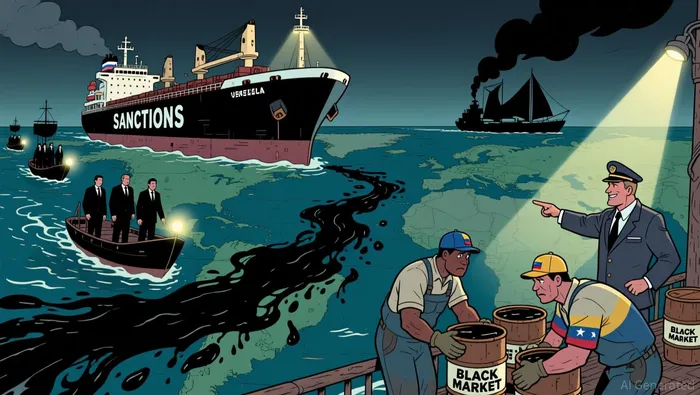
For investors, Venezuela's instability presents both risks and opportunities. A pro-Western government could attract $80–100 billion in international investment, boosting production by 1–2 million barrels per day over several years. Conversely, military interventions or sovereign debt restructurings could trigger short-term volatility, with oil prices spiking before stabilizing. Precious metals like gold and silver are increasingly being used as hedging tools to mitigate these risks according to market analysis.
Strategic Positioning in Energy Commodities
Given the geopolitical landscape, energy commodity portfolios in 2026 should prioritize resilience over speculation. Here's how:
Oil: Navigating Oversupply and Geopolitical Uncertainty
Global oil markets remain bearish, with Brent crude hovering around or below $60 per barrel due to record floating storage accumulation. While a Russia-Ukraine peace deal could theoretically increase supply, the phased nature of sanctions relief and European resistance to lifting restrictions will likely limit its impact. Investors should focus on short-term hedges against price swings, such as options or futures contracts, while avoiding overexposure to Russian oil producers until sanctions clarity emerges.Metals: The Energy Transition's New Frontline
Base metals like copper and aluminum are poised for sustained demand, driven by the energy transition and infrastructure spending. The International Energy Agency estimates that global clean energy investments will surpass $3.3 trillion in 2025, creating a robust demand backdrop. Precious metals, particularly gold, remain strong due to central bank purchases and geopolitical uncertainties, with UBS recommending up to a 5% allocation to a diversified commodity index.LNG: A Volatile but Strategic Bet
The liquefied natural gas (LNG) market is undergoing a transformation, with new U.S. and Qatari liquefaction capacity driving up feedgas demand and influencing Henry Hub prices. However, European markets face shrinking price differentials between summer and winter, reducing their resilience to supply shocks. Investors should consider LNG as a strategic but volatile component of their portfolios, hedging against geopolitical risks in key producing regions.
Hedging Against the Unknown
The U.S. dollar's influence on oil pricing remains a critical factor. A weaker dollar can boost oil demand by making the U.S.-denominated commodity more affordable for non-U.S. buyers, though the correlation has become less predictable in recent years. Additionally, U.S. military actions in Venezuela or other regions could disrupt supply chains, necessitating dynamic hedging strategies. Precious metals, diversified commodity indices, and geopolitical risk insurance are increasingly being deployed to manage these uncertainties.
Conclusion: Balancing Risk and Opportunity
The energy sector in 2026 is defined by a delicate balance between geopolitical risks and market fundamentals. While peace talks and sanctions enforcement shape oil and gas markets, the energy transition is creating new opportunities in metals and LNG. Investors must adopt a dual strategy: hedging against short-term volatility while positioning for long-term gains in sectors aligned with decarbonization and geopolitical realignments. As the year unfolds, the key to success will lie in agility, diversification, and a keen eye on the evolving interplay between diplomacy and economics.







Comentarios
Aún no hay comentarios