
U.S. Energy Policy Shifts: A New Era for Fossil Fuels and the SPR Dilemma
The U.S. Senate's 2025 budget bill, dubbed the “One Big Beautiful Bill,” marks a seismic shift in energy policy, favoring fossilFOSL-- fuels over renewables while leaving the Strategic Petroleum Reserve (SPR) in a precarious state. For investors, this creates both opportunities and risks—particularly for oil majors like ExxonMobil (XOM) and Occidental PetroleumOXY-- (OXY)—while exposing vulnerabilities tied to geopolitical tensions and supply chain fragility.
The Fossil Fuel Renaissance
The bill's most striking feature is its reversal of the clean energy trajectory set by the 2022 Inflation Reduction Act (IRA). It accelerates the phaseout of tax credits for wind and solar projects, eliminating full credits for projects not started by 2027 and imposing new restrictions on foreign-backed investments. Meanwhile, fossil fuels gain extended tax breaks, including permanent retention of Trump-era cuts, expanded oil and gas leasing on public lands, and the repeal of a methane emissions fee.
Why this matters: Companies like ExxonXOM-- and OccidentalOXY-- are poised to benefit. Exxon, with its deep-pocketed balance sheet and extensive Gulf Coast operations, can capitalize on expanded drilling rights in Alaska and the Arctic National Wildlife Refuge. Occidental, a leader in carbon capture and sequestration (CCS), gains from extended Section 45Q tax credits for carbon storage—a key part of its Project Bison.
The SPR's Empty Tanks
The bill's treatment of the SPRSPR-- is a glaring omission. While it allocates $113 million each to the SPR Petroleum Account and the Northeast Home Heating Oil Reserve, this pales compared to the SPR's dwindling stockpiles. As of June 2025, the SPR holds just 380 million barrels—down from a peak of 727 million in 1983—and faces delays in replenishment due to budget constraints and competition for crude from private buyers.
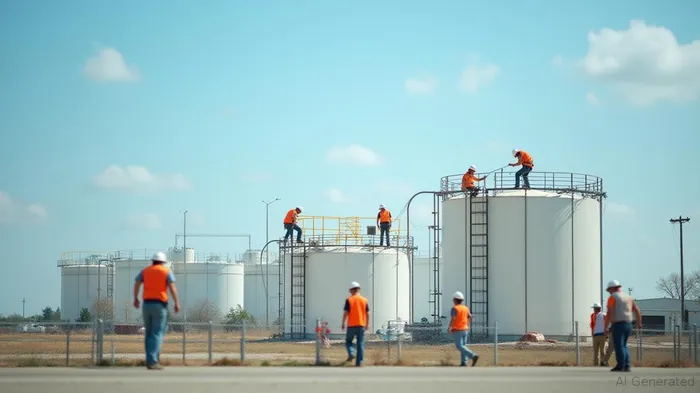
Investment risk: A low SPR increases vulnerability to supply shocks. Geopolitical events—such as Middle East instability or Russian disruptions—could trigger price spikes, squeezing refining margins and consumer demand. Companies like Marathon PetroleumMPC-- (MPC) and Phillips 66PSX-- (PSX), which rely on steady crude supplies, face heightened volatility.
Tax Credits and the Geopolitical Tightrope
The bill's fossil fuel incentives come with strings attached. While tax breaks boost profitability for producers, new “Foreign Entity of Concern” (FEOC) rules restrict reliance on Chinese or Russian supply chains. This could disrupt the global oil market's delicate balance. For instance, U.S. shale producers may struggle to scale up if they cannot source critical equipment or services from sanctioned countries.
Meanwhile, the elimination of EV tax credits and reduced renewables support could backfire. Lower EV adoption might prolong gasoline demand, but it also risks ceding global clean energy leadership to competitors like China. Investors in legacy automakers like General MotorsGM-- (GM) or Ford (F) should note that this policy reversal could delay their EV transition timelines.
Investment Implications
Buy the fossil fuel winners: Exxon and Occidental are well-positioned. Exxon's diversified portfolio (oil, gas, petrochemicals) and Occidental's CCS focus align with the bill's priorities. Both have strong balance sheets to withstand market swings.
Avoid overexposure to SPR-dependent sectors: Refiners and distributors (e.g., Andeavor Logistics, Tesoro) face risks if SPR drawdowns are insufficient during a crisis.
Hedge with geopolitical plays: Gold miners (e.g., Barrick Gold) or defense contractors (e.g., Raytheon) could benefit from elevated tensions in energy-rich regions.
The Bottom Line
The Senate's energy pivot creates a “two-speed” market: fossil fuels thrive in the short term, but long-term risks loom. Investors should prioritize companies with low debt, diversified revenue streams, and exposure to high-margin segments like CCS or LNG exports. Yet, with SPR levels at multi-decade lows and global supply chains strained, this policy shift is a high-risk gamble. Proceed with caution—and keep one eye on the SPR's empty tanks.





Comentarios
Aún no hay comentarios