
Energy Market Volatility and Infrastructure Demand Amid U.S. Weather Polarization in January 2026: Strategic Opportunities in Geographic Arbitrage and Resilience Investments
The U.S. energy landscape in early 2026 has been profoundly reshaped by extreme weather polarization, infrastructure vulnerabilities, and shifting market dynamics. January 2026 saw a perfect storm of Arctic cold, record warmth, and severe storms, triggering energy price volatility and exposing systemic weaknesses in grid resilience. These events have accelerated a strategic pivot toward geographic energy arbitrage and infrastructure modernization, creating new investment opportunities for stakeholders navigating a fragmented energy market.
Weather-Driven Energy Volatility and Infrastructure Strain
The January 2026 weather crisis underscored the fragility of U.S. energy systems. Arctic forecasts and thin holiday liquidity caused a 40% swing in Henry Hub natural gas futures in December 2025, as freeze-offs in key production areas and shifting weather models created a hyper-reactive market. By January, the central and eastern U.S. experienced above-average temperatures, reducing heating demand but increasing reliance on LNG exports to Europe amid colder northern conditions. Simultaneously, Texas faced a dual crisis: frozen oil and gas wells, insufficient pipeline capacity, and power plant failures led to outages affecting 4.5 million customers. In the Midwest, record rainfall and 88-mph wind gusts caused flash flooding and structural damage, compounding grid instability.
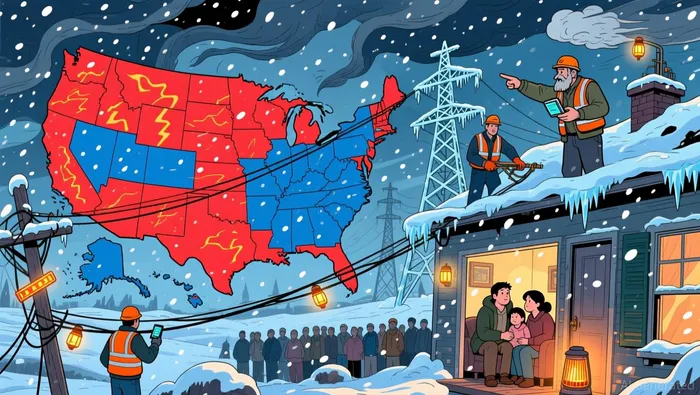 These events exposed a critical mismatch between aging infrastructure and the demands of a climate-volatile era. The rapid expansion of data centers and AI-driven computing has further strained peak load capacities, particularly in Texas, Virginia, and the Midwest. Regulatory delays and permitting bottlenecks have exacerbated the problem, pushing electricity costs higher for commercial and industrial users.
Geographic Arbitrage: Capitalizing on Regional Price Differentials
Post-crisis, corporate strategies are increasingly leveraging geographic energy arbitrage to mitigate volatility. The PJM region, with direct access to low-cost Appalachian gas and robust pipeline infrastructure, now enjoys a 15-25% cost advantage over constrained markets like California and the Northeast. Texas, meanwhile, is transitioning from historically low gas prices to a more moderate pricing structure as takeaway capacity improves. This shift reflects the growing importance of infrastructure quality in determining energy competitiveness.
Copper markets further illustrate this trend. U.S. Section 232 tariffs on semi-finished copper products have created a 25-30% price premium for refined copper in the U.S. compared to London Metal Exchange levels. This policy-driven arbitrage has redirected global copper flows to the U.S., highlighting how trade policies can amplify regional price differentials.
Corporate hedging strategies are also evolving. Power Purchase Agreements (PPAs) and hybrid systems that switch between natural gas and electricity based on market conditions are becoming standard. For example, energy-intensive manufacturers are adopting dual-fuel capabilities to exploit regional cost advantages, while AI-driven data centers are prioritizing locations with stable, low-cost energy supplies.
Infrastructure Resilience: A $20 Billion Investment Imperative
The January 2026 crisis has catalyzed a surge in infrastructure resilience investments, particularly in battery storage and grid modernization. The Sacramento Municipal Utility District's 160-megawatt battery storage project and Ohio's 10–20 megawatt battery-solar hybrid initiative exemplify this trend. Florida's Tallahassee Electric and Gas Utility is also deploying a 10–25 megawatt battery system to stabilize critical infrastructure. These projects are supported by federal and state incentives, including the Inflation Reduction Act (IRA) and state-level programs like Alabama's Strategic Energy Infrastructure Development Fund according to research.
Policy-driven capital flows are further reshaping the landscape. The IRA and Bipartisan Infrastructure Law (BIL) have allocated $20 billion to energy storage in 2026, stabilizing after a 50% increase in 2025. States like California are leveraging aggregated residential battery systems to deliver grid support, as demonstrated by a July 2025 test event where 500 MW of residential storage reduced CAISO's net load. Meanwhile, the EU's Carbon Border Adjustment Mechanism (CBAM) is redesigning global supply chains, incentivizing low-emission infrastructure investments.
Strategic Implications for Investors
The convergence of weather volatility, geographic arbitrage, and infrastructure demand presents a dual opportunity for investors. First, regional energy arbitrage-particularly in PJM, Texas, and copper markets-offers avenues to exploit price differentials through strategic asset allocation. Second, infrastructure resilience projects, supported by federal and state incentives, represent a $2.2 trillion global investment opportunity in renewables, grid modernization, and energy storage.
However, risks remain. Federal policy rollbacks and permitting delays could slow progress, while extreme weather events may continue to disrupt supply chains. Investors must prioritize projects with clear execution timelines, jurisdictional resilience, and alignment with long-term decarbonization goals.
Conclusion
The January 2026 weather crisis has accelerated a paradigm shift in U.S. energy markets. As weather polarization intensifies and AI-driven demand surges, geographic arbitrage and infrastructure resilience will define the next phase of energy investment. Stakeholders who align with these trends-leveraging regional price differentials, adopting hybrid energy systems, and prioritizing grid modernization-will be best positioned to navigate the volatility and capitalize on the opportunities ahead.







Comentarios
Aún no hay comentarios