
Energy Market Volatility and Geopolitical Risk Management: Positioning for Near-Term Oil Price Corrections Amid Middle East De-Escalation
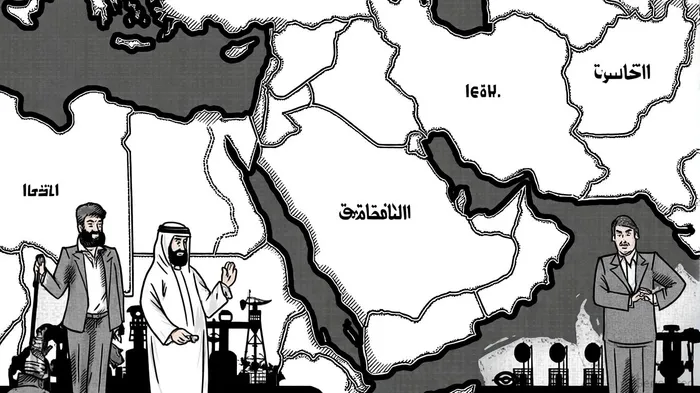
The recent de-escalation of Middle East tensions has triggered a near-term correction in oil prices, offering investors a window to reassess risk exposure in energy markets. On October 9, 2025, global crude prices fell as peace negotiations between Israel and Hamas signaled reduced geopolitical risk, with WTI and Brent crude futures settling at $61.51 and $65.17 per barrel, respectively, according to the IEA oil market report. This decline reflects a broader market recalibration, driven by easing fears of supply disruptions and growing global inventories, the IEA report found. However, the interplay between short-term relief and long-term uncertainties demands a nuanced approach to portfolio positioning.
The Immediate Impact of De-Escalation
The Israel-Hamas hostage deal, mediated by Qatar and the U.S., has temporarily alleviated regional volatility, according to a New York Times explainer. That coverage noted the agreement, while politically contentious within Israel, has reduced the likelihood of spillover conflicts that could disrupt oil infrastructure or shipping routes. For instance, the Red Sea, a critical corridor for global energy trade, now faces a lower risk of Houthi attacks, the IEA report said. Additionally, the deal has increased the probability of a renewed Iran nuclear agreement, which could unlock Iranian oil exports and further alter supply dynamics, the IEA report added.
Yet, the market's optimism is tempered by historical precedents. Past Middle East conflicts-such as the 1973 Oil Embargo and the 1990 Gulf War-demonstrate how even short-lived crises can create lasting price shocks, as noted by Oil & Gas Middle East. While current tensions are less severe, the region's strategic energy infrastructure, particularly the Strait of Hormuz, remains a vulnerability, according to a CSIS analysis. A single incident disrupting this chokepoint, which handles 20% of global oil flows, could trigger a 10–15% price spike within days, an Invezz analysis warned.
Supply-Demand Imbalances and OPEC+ Dynamics
The International Energy Agency (IEA) reports that global oil supply hit a record 106.9 million barrels per day in August 2025, driven by OPEC+ unwinding output cuts and robust non-OPEC+ production, the IEA report found. However, demand growth has stagnated, with OECD countries projected to see declining consumption in the second half of 2025. This mismatch has fueled bearish sentiment, pushing benchmark prices lower despite geopolitical risks.
OPEC+, particularly Saudi Arabia, has leveraged its spare capacity-estimated at over 4 million barrels per day-to stabilize markets, a point highlighted by Oil & Gas Middle East. Yet, the group's ability to manage volatility is constrained by external factors. For example, Iran's refusal to engage in nuclear negotiations and its potential to flood markets with crude if sanctions ease could undermine OPEC+ cohesion, the Invezz analysis noted. Similarly, U.S. strategic petroleum reserves, while a buffer, may be tapped in scenarios of prolonged disruption, the same Invezz analysis said.
Investment Strategies for a Volatile Landscape
Investors should adopt a dual approach to navigate this environment:
Position for Near-Term Corrections: With Brent crude averaging $66 per barrel in 2025 and further declines expected by year-end, Oil & Gas Middle East suggested energy equities and oil-linked ETFs may offer short-term gains. However, exposure should be hedged against sudden geopolitical shocks, such as renewed Iran-Israel tensions or Strait of Hormuz disruptions, as highlighted by the Invezz analysis.
Diversify Across Energy Sources: The global shift toward renewables and natural gas is reducing oil demand growth, the IEA report observes. Allocating to alternative energy infrastructure or LNG producers could mitigate long-term exposure to oil price swings, the Invezz analysis added.
Monitor Geopolitical Catalysts: Key risks include the durability of the Israel-Hamas ceasefire, Iran's nuclear ambitions, and Syria's evolving alliances with Gulf states, as the New York Times coverage outlines. Real-time intelligence, such as satellite tracking of oil infrastructure, can help investors anticipate market-moving events, a point underscored by the CSIS analysis.
Conclusion
The Middle East's geopolitical landscape remains a double-edged sword for energy markets. While de-escalation efforts have provided temporary relief, the region's history of volatility and critical infrastructure vulnerabilities ensure that oil prices will remain susceptible to shocks. Investors must balance short-term opportunities with long-term risk management, leveraging diversification and real-time data to navigate an uncertain outlook.







Comentarios
Aún no hay comentarios