
Energy Market Divergence and Consumer Affordability: Navigating 2025's Gas Price Trends and Investment Opportunities
The global energy landscape in 2025 is marked by stark regional divergences in gas prices, driven by shifts in liquefied natural gas (LNG) trade, geopolitical dynamics, and evolving consumer behavior. These trends not only reflect broader economic pressures but also signal critical investment opportunities in both energy infrastructure and retail sectors. As markets adapt to a post-pandemic recovery and geopolitical realignments, understanding these dynamics is essential for investors seeking to capitalize on emerging opportunities.
Energy Market Divergence: U.S. vs. Europe
The U.S. and European gas markets have followed divergent trajectories in 2025. U.S. natural gas prices surged past $5/mmbtu in early December 2025, fueled by robust LNG export demand to Europe and a cold snap. Conversely, European benchmark prices have declined to their lowest levels since spring 2024, as the region's reliance on U.S. LNG and seasonal storage needs have weakened market tightness. This divergence underscores the growing role of LNG in reshaping global energy flows, with the U.S. emerging as a key supplier to Europe amid reduced Russian pipeline exports.
Global gas demand in 2025 grew modestly by 0.5% through Q3, constrained by high prices and macroeconomic headwinds. Europe, however, became a key driver of demand growth, supported by cold weather and reduced renewable electricity production. In contrast, Asian demand stagnated, with China's LNG imports declining due to increased domestic production and weak demand. Looking ahead, global gas demand is projected to rebound by 2% in 2026, led by Asia Pacific's industrial and power sector recovery.
Consumer Affordability and Regional Impacts
Falling gas prices in Europe and Asia have had mixed effects on consumer affordability. In the European Union, household gas prices dropped by 8.1% in the first half of 2025, easing the burden on households. However, prices are projected to rise by 6% in 2025 due to tight market conditions and geopolitical factors, such as the end of Russian gas transit through Ukraine.
This volatility has strained industrial competitiveness, with high energy costs undermining Europe's manufacturing base.
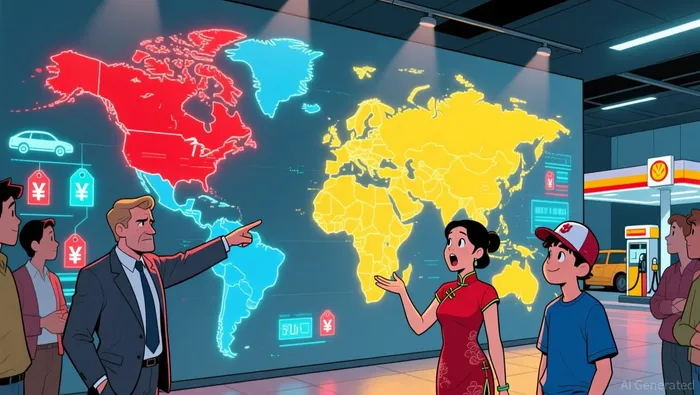
In Asia, China's gas demand declined by 2% year-on-year during November 2024–February 2025, driven by milder weather and high LNG spot prices. This led to a 25% year-on-year drop in LNG imports in Q1 2025. Meanwhile, India's electricity demand growth, initially subdued by global economic uncertainties, is expected to reach 4% by year-end, reflecting resilience in emerging markets.
Investment Opportunities in Energy and Retail Sectors
The energy sector's transformation in 2025 presents compelling investment opportunities. Natural gas is poised to remain a critical bridge fuel, particularly as a lower-carbon alternative to coal. Companies involved in LNG infrastructure, such as U.S. producers expanding export terminals, are well-positioned to benefit from sustained demand from Europe and Asia. Additionally, renewable energy sources are gaining traction, with their integration with battery storage offering scalable solutions for grid stability as highlighted in industry reports.
In the retail sector, falling gas prices have prompted strategic adaptations. U.S. gas prices fell below $3 per gallon in November 2025, reaching their lowest levels since 2021. Retailers like Circle K, 7-Eleven, and Costco have maintained strong market positions by balancing competitive pricing with margin management. Regional players such as Wawa and QuikTrip have also seen growth, leveraging localized strategies to navigate supply constraints and refinery closures.
Broader Economic Implications and Risks
The correlation between gas prices and inflation in 2025 has been nuanced. While falling oil prices (Brent crude near $60/barrel) have moderated fuel costs, U.S. inflation remains elevated at 3.4% in H2 2025, driven by tariff policies and supply chain pressures. Geopolitical risks, such as Middle East tensions or sanctions on Russian gas, could disrupt this trajectory, pushing prices higher. Conversely, easing sanctions on Russian supply could temper markets.
Conclusion
The 2025 energy market is defined by regional divergences, shifting consumer behavior, and strategic investment opportunities. Investors should prioritize LNG infrastructure, renewable energy integration, and retail sector players adapting to volatile fuel prices. As global gas demand rebounds in 2026, the interplay between supply resilience, geopolitical stability, and technological innovation will shape long-term returns.







Comentarios
Aún no hay comentarios