
Energy Infrastructure Resilience in Urban Markets: Investing in Grid Modernization Amid Outage Vulnerabilities
The urban power grid, once a symbol of industrial might, is now a fragile linchpin in the face of climate change, aging infrastructure, and the rapid integration of renewable energy. As cities grapple with increasingly frequent and severe outages-exacerbated by extreme weather events-the imperative to modernize energy infrastructure has never been more urgent. For investors, this crisis presents a compelling opportunity:
a $14.5 billion federal funding push in 2024 alone, coupled with technological innovation, is reshaping the grid into a resilient, decentralized, and data-driven system.
The Cost of Inaction: Outages as a Catalyst for Change
Urban grids are under unprecedented strain. The 2023 Texas winter outages, which left millions without power during a historic cold snap, underscored the vulnerabilities of traditional systems.
Frozen equipment and natural gas supply disruptions exposed the fragility of centralized grids unprepared for climate extremes. Similarly,
the North American Electric Reliability Corporation (NERC) warned in its 2024–2025 Winter Reliability Assessment that infrastructure limitations and renewable integration challenges remain critical risks.
The economic toll is staggering.
A U.S. utility company's 2023 investment in sensors for high-voltage lines, costing just $300,000, averted $50 million in reconductoring expenses while boosting line capacity by 18%. Such examples highlight the cost-benefit imperative of modernization: delaying upgrades risks far greater financial and social costs.
Federal Funding as a Foundation for Resilience
The U.S. Department of Energy (DOE) has positioned grid modernization at the heart of its climate and energy strategy.
In 2023, the DOE allocated $38 million for research and development under its Grid Modernization Initiative (GMI), a program aimed at enhancing resilience, security, and sustainability. This effort has expanded dramatically in 2024, with
a $14.5 billion in competitive funding selections and formula grants directed toward grid upgrades.
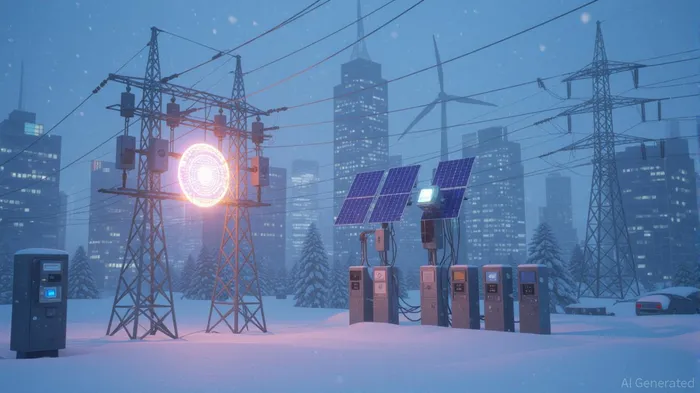 A key component of this strategy is the Grid Resilience and Innovation Partnerships (GRIP) program, which has earmarked $10.5 billion over five years. For fiscal years 2024 and 2025 alone,
a $3.9 billion will fund projects to improve transmission, deploy advanced technologies, and bolster resilience against climate impacts. These investments are not merely reactive; they are a strategic response to the dual pressures of decarbonization and reliability.
Technological Innovation: From Sensors to Microgrids
Modernization is being driven by a suite of technologies that address both immediate vulnerabilities and long-term sustainability. Advanced sensors and smart meters, for instance, enable real-time monitoring and predictive maintenance.
A Midwest utility's $19.5 million project to install smart sensors and software for detecting overloaded power lines exemplifies this approach, aiming to prevent blackouts and accelerate outage responses.
Energy storage is another cornerstone.
The International Energy Agency projects that storage will meet nearly 28% of flexibility needs in advanced economies by 2050. Meanwhile, decentralized systems like microgrids are gaining traction.
These localized grids can operate independently during outages, ensuring continuity for hospitals, data centers, and other critical infrastructure.
Demand response programs further enhance resilience by incentivizing consumers to adjust energy usage during peak periods.
Dynamic pricing strategies have already reduced peak load by up to 20%, demonstrating the power of customer engagement.
Case Studies: Proving the ROI of Modernization
Concrete examples illustrate the tangible benefits of these investments.
In California, a $50 million project to enhance subtransmission line capacity through smart substations improved grid stability without requiring new transmission corridors. Similarly,
a utility's deployment of sensors on 230-kilovolt lines not only increased capacity but also reduced annual congestion costs-a win for both reliability and affordability.
These projects align with broader economic goals.
As one utility executive noted, "Modernization isn't just about avoiding outages-it's about unlocking the full potential of renewable energy while keeping bills manageable for consumers."
Challenges and Opportunities
Despite progress, challenges persist.
The cancellation of grid modernization projects under the Trump administration, such as a $19.5 million initiative in the Upper Midwest, has left gaps in resilience planning. However, the current administration's aggressive funding agenda suggests a renewed commitment to closing these gaps.
For investors, the path forward is clear. The grid modernization sector offers a unique convergence of public policy, technological innovation, and market demand. With $14.5 billion in federal funding and a growing emphasis on decentralized, data-driven systems, the urban grid is evolving from a liability into a high-growth asset class.
Conclusion
The stakes could not be higher. As cities face a future of climate extremes and energy transitions, grid modernization is no longer optional-it is existential. For investors, the message is equally urgent: this is a market where capital can align with both profit and purpose. The grid of tomorrow will be smarter, cleaner, and more resilient-but only if we invest in it today.







Comentarios
Aún no hay comentarios