
Energy Infrastructure Resilience and the Rise of Grid Modernization Leaders
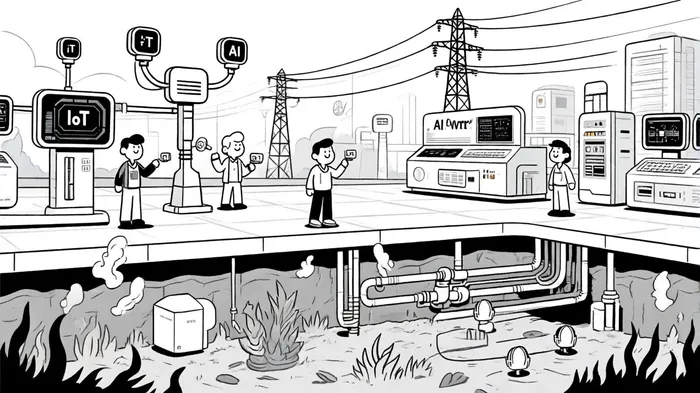
The global energy landscape is undergoing a seismic shift, driven by the urgent need to modernize aging infrastructure, integrate renewable energy, and mitigate catastrophic risks like wildfires. As electricity demand surges—particularly from data centers, which now consume 3% of U.S. power and are projected to grow at 15% annually through 2030—the pressure on utilities to enhance grid resilience has never been higher [1]. This has catalyzed a boom in grid modernization, with the global market expected to expand from $33.62 billion in 2024 to $71.91 billion by 2029, at a compound annual growth rate (CAGR) of 16.4% [2]. North America alone is forecasted to see its smart grid market grow from $16.6 billion in 2024 to $44.5 billion by 2034, fueled by digitalization, IoT, and decentralized energy systems [3].
Market Drivers: Decarbonization, Data Centers, and Wildfire Mitigation
The twin imperatives of decarbonization and infrastructure resilience are reshaping utility strategies. Solar and wind capacity contracted to U.S. data centers has already reached 34 GW, with 41 GW projected by 2030, supported by plummeting renewable costs and federal incentives like the Inflation Reduction Act [1]. Simultaneously, wildfires—exacerbated by climate change—pose a $16.9 billion annual risk to U.S. utilities, prompting aggressive investments in grid hardening. For instance, PG&E has allocated $18 billion through 2025 for undergrounding power lines and deploying technologies like Gridscope devices, while the Department of Energy's $7.6 billion GRIP program funds projects to enhance grid resilience [4].
Grid Modernization Leaders: Innovation and Financial Momentum
Several companies are emerging as pivotal players in this transformation. Pano AI, a 2020-founded startup, has raised $44 million in a Series B round, bringing total funding to $89 million. Its AI-powered panoramic cameras detect wildfires within minutes, as demonstrated during the 2024 Bear Creek Fire in Colorado, where rapid detection limited damage to just three acres [5]. With contracted revenue exceeding $100 million and a subscription-based model serving 250+ agencies, Pano AI's technology is a linchpin for utilities like Portland General ElectricPOR-- [5].
OroraTech, a Munich-based firm, leverages thermal-infrared nanosatellites to monitor wildfires globally. Its recent €25 million Series B funding, led by Korys and Bayern Kapital, supports expansion into North America and Asia-Pacific, enhancing predictive AI capabilities [6]. Meanwhile, Eaton has unveiled HiZ Protect™, an AI-driven solution to detect high-impedance faults—a leading cause of wildfires. Developed with the U.S. Army Corps of Engineers and NREL, the technology achieves 90% accuracy in lab tests and is set for deployment in utility recloser controls [7].
NV5, a geospatial analytics firm, has secured $9 million in contracts to support wildfire mitigation for utilities in Texas, California, and the U.S. West. Using LiDAR and cloud-based platforms, NV5's INSITE system optimizes vegetation management and asset risk assessments, critical for storm and fire resilience [8].
Technological Advancements and Strategic Partnerships
Innovations like Advanced Power Flow Controllers (APFCs) and carbon-fiber conductors are redefining grid efficiency. Smart Wires' APFC technology, deployed by AvistaAVA-- Utilities and Idaho Power, enhances power distribution control, reducing wildfire ignition risks [9]. Similarly, Dryad Networks' LoRaWAN-based IoT sensors detect smoldering fires, while Urban Sky's stratospheric microballoons provide heat anomaly detection before smoke appears [10].
Strategic partnerships are accelerating adoption. Microsoft's long-term power purchase agreement with Constellation EnergyCEG-- for a reactivated nuclear plant underscores the shift toward clean baseload power [1]. Meanwhile, Tennessee Valley Authority's collaboration with tech firms on demand response initiatives highlights the growing synergy between utilities and private innovation [1].
Investment Outlook: Balancing Risks and Rewards
While regulatory rollbacks and capital intensity pose challenges, the long-term value proposition for grid modernization remains robust. The wildfire mitigation sector alone is projected to grow from $900 million in 2023 to $3.5 billion by 2032, with companies like Pano AI and OroraTech leading the charge [5]. Eaton's recent $3.46 billion in GRIP-funded projects and NV5's $9 million in contracts illustrate the scalability of these solutions [4][8].
Conclusion: A Resilient Future Requires Strategic Investment
The convergence of decarbonization, digitalization, and wildfire mitigation is creating a fertile ground for innovation. Investors who target companies like Pano AI, OroraTech, EatonETN--, and NV5—those combining cutting-edge technology with scalable business models—stand to benefit from a sector poised for exponential growth. As utilities grapple with the dual challenges of reliability and sustainability, the winners will be those that transform risk into resilience.







Comentarios
Aún no hay comentarios