
Energy Infrastructure Resilience in the Post-Fire Era
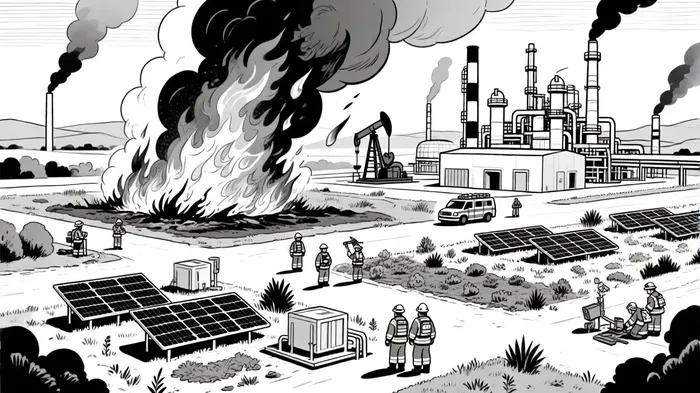
The escalating threat of wildfires, fueled by climate change, has redefined operational risk for energy infrastructure. Refining assets, particularly in North America's fire-prone regions, now face unprecedented exposure to disruptions that ripple across supply chains, markets, and communities. For investors, the challenge lies in balancing immediate operational vulnerabilities with long-term resilience strategies that align with both economic and environmental imperatives.
Operational Risks: From Production Halts to Systemic Vulnerabilities
Wildfires have already demonstrated their capacity to cripple refining operations. In 2023, Canadian wildfires forced the shutdown of Chevron's Kaybob Duvernay fields and Paramount's gas processing sites, slashing production by 319,000 barrels per day, according to an Energy Central analysis. Similarly, the 2024 wildfires in western North Dakota disrupted over 100,000 barrels of oil production daily, while California's Kinder MorganKMI-- pipelines faced temporary closures due to fire-related power outages, the analysis noted. These incidents underscore a critical trend: over 100,000 oil and gas wells in the western U.S. are now located in areas burned by wildfires, a figure projected to double by 2100, according to a quantitative assessment.
The risks extend beyond direct damage. Wildfires create "domino effects," where one fire can trigger cascading failures in interconnected infrastructure, from processing plants to transportation networks, as the study explains. Traditional natech (natural-technological) risk assessments have largely overlooked these dynamics, despite the availability of tools like FARSITE and FlamMap to model wildfire spread, the assessment notes. Integrating these models with domino scenario analysis is now essential for facilities in fire-prone regions.
Investment Opportunities: Resilience as a Strategic Asset
The financial case for resilience investments is gaining clarity. A 2025 McKinsey report estimates that climate resilience technologies could unlock a $1 trillion market by 2030, driven by the need to mitigate losses from disasters like wildfires, which caused $162 billion in global economic damage in the first half of 2025 alone. For refining assets, this translates to opportunities in adaptive infrastructure, such as microgrids and dynamic grid management systems.
Dynamic grid management, for instance, has proven more cost-effective than traditional interventions like undergrounding power lines. Adjusting protective device sensitivity during high-risk periods reduces wildfire risk while maintaining grid reliability at a lower cost per structure burned avoided, the quantitative assessment shows. Similarly, microgrids-localized energy systems combining renewables, storage, and conventional generators-offer a lifeline during fire seasons. In California, microgrids have enabled communities to maintain critical services even when the main grid is de-energized, the McKinsey report found.
ROI analysis further strengthens the case. The National Renewable Energy Laboratory's (NREL) Customer Damage Function Calculator quantifies the exponential costs of prolonged outages, helping investors prioritize resilience measures that minimize financial exposure. For example, utilities investing in vegetation management and advanced risk assessments now allocate significant budgets to these efforts, recognizing them as strategic rather than merely compliance-driven, the Energy Central analysis observed.
Aligning Resilience with Natural Capital and Investor Expectations
Investors are increasingly factoring in natural capital-the value of ecosystems that buffer against wildfires-into their decision-making. Embedding wildfire and biodiversity risks into financial models aligns with frameworks like the Taskforce on Nature-related Financial Disclosures (TNFD), which influence capital flows, the Energy Central piece notes. Utilities that integrate these metrics attract capital by demonstrating systemic risk management, particularly in regions like California, where multi-stage investment frameworks are being developed to address wildfire disruptions, heatwave-driven demand surges, and carbon-neutral transitions, the quantitative assessment explains.
Moreover, resilience investments yield ancillary benefits. Reducing flammable fuel loads through ecosystem stewardship not only mitigates fire risks but also supports biodiversity and community safety, reinforcing the ESG case highlighted by the Energy Central analysis. This dual impact resonates with stakeholders prioritizing Environmental, Social, and Governance criteria, further enhancing the appeal of resilience-focused portfolios.
The Path Forward: A Call for Integrated Strategies
The post-fire era demands a paradigm shift in how refining assets are assessed and managed. While technological solutions like microgrids and dynamic grid management offer immediate relief, long-term resilience requires systemic integration. This includes:
1. Geospatial Risk Assessments: Leveraging GIS-based tools to identify high-risk zones and optimize infrastructure placement, as demonstrated in the quantitative assessment.
2. Public-Private Partnerships: Collaborating with agencies like NREL to standardize resilience metrics and valuation methods, a priority highlighted in the McKinsey report.
3. Community-Centric Recovery Frameworks: Aligning infrastructure resilience with housing and economic recovery to prevent post-fire absenteeism and inequality, a theme the assessment underscores.
Conclusion
Energy infrastructure resilience is no longer a peripheral concern but a core component of operational and financial strategy. As wildfires redefine risk landscapes, investors who prioritize adaptive technologies, ecosystem integration, and systemic planning will not only safeguard assets but also capitalize on a $1 trillion opportunity. The question is no longer whether to invest in resilience-it is how quickly and comprehensively to act.







Comentarios
Aún no hay comentarios