
Energy Infrastructure Resilience: Navigating Regulatory Risk and Long-Term Value in Pipeline Assets
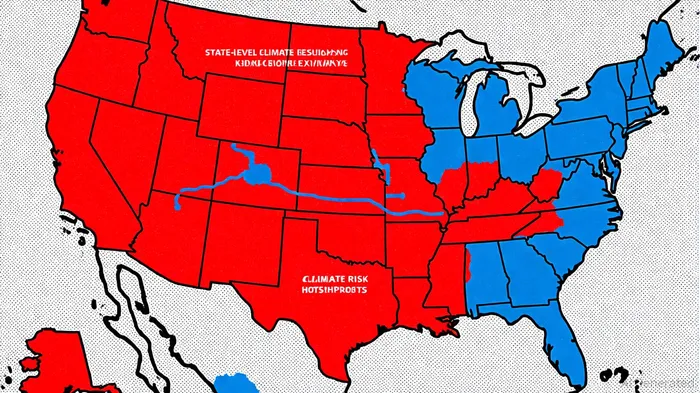
The energy infrastructure landscape in 2025 is defined by a paradox: federal policies accelerating fossil fuel development while state-level mandates push for climate resilience and renewable energy adoption. This duality creates a volatile environment for pipeline asset valuations, where regulatory risk and long-term investment outcomes are inextricably linked. Investors must now parse a fragmented policy framework to assess the durability of returns in an era of climate-driven disruptions and shifting political priorities.
Federal Deregulation and Pipeline Expansion
The Trump administration's “Unleashing American Energy” agenda has reshaped federal energy regulation, prioritizing speed and scale in pipeline development. The Federal Energy Regulatory Commission (FERC) has introduced temporary waivers that expedite natural gas infrastructure projects, including raising cost thresholds for blanket certification from $41.1 million to $61.65 million and allowing construction to begin immediately after certificate approval, pending rehearing requests [1]. These measures aim to address perceived reliability gaps in natural gas transportation but risk inflating asset valuations without commensurate guarantees of long-term demand.
Simultaneously, the Pipeline and Hazardous Materials Safety Administration (PHMSA) is reviewing pipeline safety regulations through an advance notice of proposed rulemaking (ANPRM), seeking to reduce compliance burdens and align with the administration's deregulatory goals [2]. While proponents argue this fosters economic efficiency, critics warn it could undermine safety standards and increase exposure to climate-related disruptions, such as extreme weather events that already strain aging infrastructure [3].
State-Level Resilience Mandates and Valuation Divergence
Contrasting federal priorities, states like New York and California continue to prioritize climate resilience. New York's Climate Resilient New York Act of 2025 (S.3590) establishes an Office of Resilience and task force to address flooding and heat risks, signaling a regulatory environment that could devalue fossil fuel assets over time [4]. California, though not explicitly mentioned in the sources, historically leads in clean energy policy, with potential future restrictions on fossil fuels likely to further erode pipeline valuations.
This regulatory divergence creates a “valuation split” between regions. In states favoring fossil fuels, pipeline assets may benefit from short-term policy tailwinds, such as expanded leasing on federal lands and streamlined approvals. However, in states advancing renewable energy mandates, pipeline operators face long-term risks from stranded assets and declining demand. For example, the House Committee on Energy and Commerce's proposed optional siting regime for carbon capture and hydrogen pipelines—granting preemptive federal authority over state laws—could temporarily boost valuations for certain midstream projects but may not offset broader decarbonization trends [5].
Financial Implications and Risk Assessment Challenges
Quantifying the financial impact of these regulatory shifts requires a nuanced approach. Asset Impact's 2025 dataset on midstream infrastructure, which includes emissions data for 2,000+ pipelines, enables granular climate risk assessments aligned with frameworks like the Net-Zero Banking Alliance (NZBA) [6]. However, gaps persist in modeling risks for emerging technologies. For instance, hydrogen transmission pipelines lack robust quantitative risk assessment (QRA) methodologies, as existing models for natural gas cannot fully account for hydrogen's unique failure mechanisms [7]. This uncertainty complicates valuations for projects tied to the administration's hydrogen economy ambitions.
Investors must also weigh geopolitical and macroeconomic headwinds. While U.S. LNG permitting has reopened, new tariffs and global energy market volatility introduce cross-border demand risks [8]. A 2025 Bloomberg report notes that only 12% of global energy infrastructure investments are allocated to resilience, particularly in lower-income countries, exacerbating systemic vulnerabilities [9].
Strategic Recommendations for Investors
To navigate this landscape, investors should adopt a dual strategy:
1. Diversify Exposure: Balance investments in federally supported pipeline projects with hedging mechanisms in renewable energy infrastructure, particularly in states with stable climate policies.
2. Leverage Advanced Analytics: Utilize asset-level datasets like Asset Impact's to model transition risks and align portfolios with evolving regulatory frameworks.
3. Engage in Policy Advocacy: Advocate for standardized resilience metrics and hybrid regulatory models that reconcile federal and state priorities, reducing valuation volatility.
The 2025 regulatory environment underscores a critical truth: pipeline assets are no longer insulated from the forces of climate policy and technological transition. As the energy sector grapples with competing imperatives of resilience and expansion, the ability to anticipate regulatory shifts—and their financial implications—will define long-term investment success.







Comentarios
Aún no hay comentarios