
Energy Infrastructure Resilience in the Midwest: Lessons from the Recent Wyoming Power Outage
The Case for Grid Modernization
The Wyoming outage highlights a systemic issue: legacy grids are ill-equipped to handle the complexity of today's energy landscape. Voltage instability and cascading failures are not isolated incidents but symptoms of a broader challenge. As the (NREL) emphasizes, integrating distributed energy resources-such as solar photovoltaic systems and battery storage-requires rethinking grid design to prioritize resilience. This is where modernization investments, particularly in smart grid technologies and advanced circuit breakers, become critical. The global circuit breaker market, for instance, by 2030, driven by the need for real-time monitoring and fault management in increasingly decentralized systems.
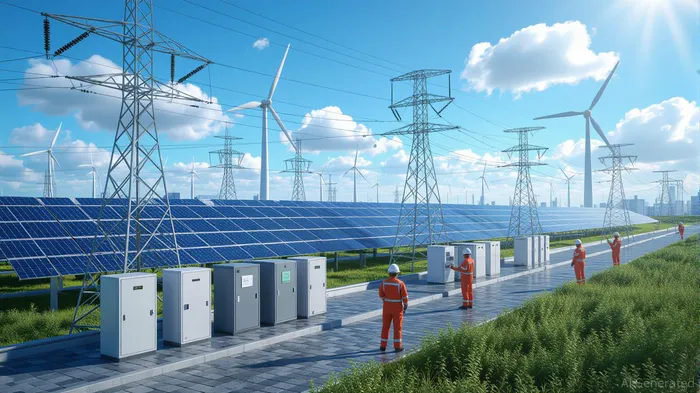
The U.S. Department of Energy's (LPO) has already recognized this urgency. In 2024, it to fund hydropower upgrades, battery storage, and transmission enhancements, . These projects are not just about reliability-they are about affordability. By reducing the frequency and duration of outages, modernized grids can mitigate economic losses and avoid the costly retrofits required after crises like Wyoming's.
Distributed Energy Solutions: Renewables, Storage, and Microgrids
The Wyoming outage also amplifies the strategic value of distributed energy solutions. Battery storage, for example, can stabilize voltage fluctuations and provide backup power during outages. The LPO's 2024 investments include virtual power plants and grid-enhancing technologies that pair renewables with storage, ensuring a balanced supply even when transmission lines falter. Similarly, microgrids offer a decentralized alternative to centralized grids. Tribal communities in the Midwest, through initiatives like , are pioneering microgrid projects that combine smart EV charging infrastructure with clean energy, enhancing local resilience while advancing energy sovereignty.
Post-2023 outages, " into grid planning, ensuring that solar and storage systems can sustain critical loads during disruptions. This approach aligns with the Midwest's growing emphasis on electrification and data center expansion, which demand a more agile and adaptive grid. For investors, the convergence of policy support-the and Inflation Reduction Act-with technological innovation presents a compelling opportunity.
Policy and Funding: A Tailwind for Investors
Government-backed funding is accelerating the transition. The LPO's 2024 conditional commitment to Wisconsin Electric Power Company exemplifies how policy is aligning with market needs to modernize infrastructure. These initiatives are not just regional but part of a national push to meet climate goals and energy security targets. For the Midwest, where electricity demand is projected to outpace growth in traditional energy sources, the investment case is clear: modernization is no longer optional-it is a prerequisite for economic and social stability.
Conclusion
The Wyoming power outage is a cautionary tale, but it also illuminates a path forward. By channeling capital into grid modernization, renewables, and microgrids, investors can address systemic vulnerabilities while capitalizing on and . The Midwest's energy future hinges on transforming fragility into resilience-and the returns, both financial and societal, are within reach.







Comentarios
Aún no hay comentarios