
Energy Infrastructure for AI: Why Nuclear Power Stocks Like Constellation Energy Are a Strategic Buy for 2026–2028
The artificial intelligence revolution is reshaping global energy demand, creating a surge in infrastructure needs that few investors have fully appreciated. As AI models grow in complexity and adoption accelerates, data centers-the backbone of AI operations-are becoming voracious consumers of electricity. This shift is not merely a passing trend but a structural transformation in energy markets, with nuclear power emerging as a critical enabler. For investors, companies like Constellation Energy (CEG) are uniquely positioned to capitalize on this confluence of technological and energy demand forces, making them a compelling strategic buy for 2026–2028.
The AI-Driven Energy Surge: A Structural Shift
The energy footprint of AI infrastructure is expanding at an unprecedented pace. In 2024, U.S. data centers consumed 4.4% of the nation's electricity, a figure projected to rise to 6.7%–12% by 2028 as AI adoption accelerates. AI-specific servers alone accounted for 53–76 terawatt-hours (TWh) of consumption in 2024, with estimates suggesting this could balloon to 165–326 TWh by 2028. By 2030, global data center electricity use is expected to reach 945 TWh-nearly 3% of global consumption-driven largely by AI training and deployment.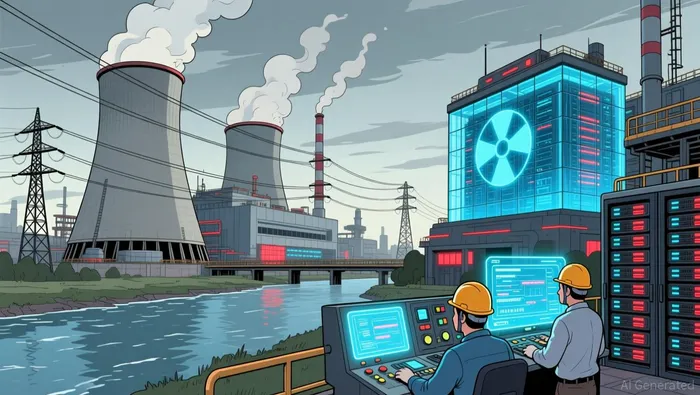
This surge is not just about scale but also about the type of energy required. AI workloads demand baseload power-a steady, uninterrupted supply-which makes renewable sources like solar and wind insufficient on their own. Nuclear power, with its ability to generate large volumes of carbon-free electricity 24/7, is stepping into the void.
Constellation Energy: A Nuclear Powerhouse for AI's Future
Constellation Energy, the largest nuclear operator in the U.S., is proactively aligning its expansion plans with the AI-driven energy boom. The company has secured long-term partnerships with tech giants to supply clean, reliable power for their data centers, locking in demand for decades.
One of the most significant deals is a 20-year power purchase agreement (PPA) with Meta, under which Constellation will supply 1,121 megawatts of nuclear energy starting in June 2027 from its Clinton Clean Energy Center in Illinois. This agreement not only supports Meta's AI ambitions but also ensures the Clinton plant's operation beyond 2027, when a state zero-emissions tax credit expires. The deal includes plans to expand the facility, generating an additional 30 MW of power and preserving over 1,000 jobs and $13.5 million in annual tax revenue.
Similarly, ConstellationCEG-- has partnered with Microsoft to restart the Three Mile Island Unit 1 in Pennsylvania, a project expected to deliver 800+ MW of carbon-free electricity to Microsoft's data centers by 2028. This initiative will create 3,400 direct and indirect jobs and contribute $16 billion to Pennsylvania's GDP, underscoring the economic and environmental synergies of nuclear-AI partnerships.
These contracts are not isolated wins but part of a broader strategy. Constellation's nuclear fleet is expanding to meet the decarbonization goals of AI-driven enterprises, which increasingly prioritize sustainability alongside scalability.
Financial Projections and Analyst Confidence
The financial implications of these partnerships are equally compelling. Analysts project that Constellation Energy's revenue and earnings will grow by 11% and 22.5%, respectively, from 2026 to 2028, driven by its expanding nuclear capacity and long-term contracts. A consensus "Buy" rating from 13 analysts reflects confidence in the stock's trajectory, with a 2026 price target of $408.31-a 15% premium to its current valuation.
This optimism is grounded in the structural mismatch between AI's energy demands and the current grid's capacity. As data center grid-power demand in the U.S. is expected to rise by 22% in 2025 and nearly triple by 2030, Constellation's nuclear assets are uniquely positioned to fill the gap. Unlike intermittent renewables, nuclear power provides the consistent output required for AI workloads, making it an indispensable part of the energy transition.
Why This Is an Underappreciated Opportunity
While the AI boom is widely recognized, the infrastructure challenges it creates remain underappreciated by many investors. Most attention has focused on semiconductors and cloud computing, but the energy layer-the "plumbing" of AI-is equally critical. Constellation Energy's partnerships with Meta and Microsoft are not just about selling electricity; they are about securing a role in the foundational infrastructure of the AI era.
Moreover, the company's ability to leverage long-term PPAs provides a stable revenue stream, insulating it from short-term market volatility. This stability, combined with the growing urgency of decarbonization, positions Constellation to outperform peers in both traditional utilities and renewable energy sectors.
Conclusion: A Strategic Buy for the AI Era
The intersection of AI and energy infrastructure represents a once-in-a-generation investment opportunity. Constellation Energy's nuclear expansion, backed by multi-decade contracts with industry leaders, offers a clear path to capitalize on this shift. With robust financial projections, institutional backing, and a critical role in enabling the AI revolution, CEGCEG-- is a strategic buy for investors seeking exposure to the energy demands of the future.
As the world races to build the infrastructure for AI, the companies that power it-like Constellation Energy-will define the next decade of energy markets.





Comentarios
Aún no hay comentarios