
U.S. Energy Crossroads: Navigating Chaos for Contrarian Profits
The U.S. energy sector is in a state of high-stakes turbulence, buffeted by Trump-era policies that have created a paradox: short-term volatility for investors, but long-term clarity for the sharp-eyed contrarian. Tariffs, regulatory reversals, and geopolitical posturing have turned energy equities into a minefield—but also a treasure trove for those willing to quantify the risks and seize the asymmetric opportunities.
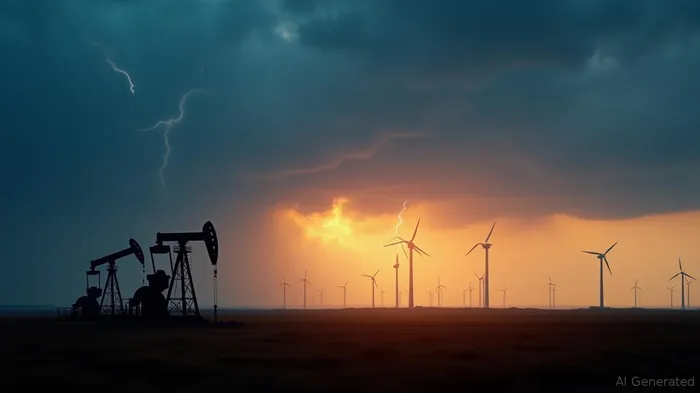
The Perfect Storm: Tariffs and Regulatory Reversals
Trump's policies have unleashed a trifecta of disruption: tariff chaos, climate policy rollbacks, and global supply chain fractures. Let's quantify the pain:
- Oil & Gas Sector:
- Production Surge, Profit Slump: U.S. oil output hit record highs in 2023, but prices have plummeted to $60/barrel—below the $65 breakeven point for shale drillers.
- Tariff Backlash: The 10% tariff on Canadian crude imports (a key refining feedstock) has raised refining costs by 15%, squeezing margins for ExxonMobil (XOM) and ChevronCVX-- (CVX).
- Regulatory Rollbacks: Repeal of methane regulations and revived fossil fuel leases have delayed $60B in planned clean energy projects, but also created openings for firms with diverse portfolios.
- Renewables Stumble:
- Solar Struggle: Solar tariffs (24–49%) have spiked panel costs by 19%, forcing projects to cancel or delay. Yet, corporate demand (e.g., Amazon's $10B solar bets) remains unshaken.
- Battery Bottlenecks: Lithium-ion tariffs now exceed 60%, slowing grid storage growth. However, shows that firms with existing scale still dominate.
Oil & Gas: Short-Term Pain, Long-Term Gains
The sector's volatility is a gift for investors with a 3–5 year horizon:
- Resilient Giants: Companies like ExxonMobil (XOM) and Occidental Petroleum (OXY) are slashing costs and prioritizing shareholder returns. Their balance sheets—strengthened by $55B in cumulative profits (2017–2019)—allow them to survive lean periods.
- LNG's Geopolitical Edge: U.S. LNG exports hit record highs in 2023, leveraging Europe's energy crisis. Cheniere Energy (LNG) benefits directly, with a 2025 EBITDA forecast of $7.2B.
- Regulatory Tailwinds for Conservatives: States like Texas and North Dakota are fast-tracking permits, rewarding firms with local partnerships.
Renewables: A Contrarian's Paradise
While tariffs and funding cuts have stalled progress, the sector's fundamentals remain unshaken:
- Solar's Hidden Strength: Despite tariffs, solar costs have dropped 80% since 2010. Firms like First Solar (FSLR) are scaling U.S. manufacturing, while corporate PPAs (power purchase agreements) lock in demand.
- Wind's Steady Rise: Onshore wind costs could hit $35/MWh by 2030, making projects like Texas's 10GW Coastal Bend Wind Farm economically bulletproof.
- Nuclear's Quiet Resurgence: Advanced reactors (e.g., NuScale's SMRs) are getting $230M in DOE funding. Westinghouse (a Bechtel subsidiary) stands to benefit as the U.S. seeks to reclaim nuclear leadership.
VanLoh's Blueprint for Resilience
VanLoh's analysis underscores three imperatives for investors:
- Go Local, Think Global:
- State-Specific Plays: Back firms aligned with Texas (wind/oil) and California (solar/storage). Nucor (NUE), a steelmaker with clean tech partnerships, is a prime example.
Export Champions: Look to Cheniere (LNG) and Schlumberger (SLB), which thrive on global LNG and shale demand.
Innovate or Die:
- Battery Breakthroughs: Firms likeioneer (a lithium innovator) and QuantumScape (solid-state tech) are racing to slash costs.
Green Hydrogen: Avoid blue hydrogen (methane-dependent) traps. Instead, bet on firms like Plug Power (PLUG), which are scaling green hydrogen with electrolyzer breakthroughs.
Diversify or Perish:
- Hybrid Players: NextEra (NEE), which owns both renewables and nuclear, exemplifies resilience.
- Commodity Hedgers: XOM's oil and LNG divisions balance its methane-exposed operations.
The Bottom Line: Act Now, or Miss the Bottom
The U.S. energy sector is at an inflection point. While Trump's policies amplify near-term pain, they've also created historically cheap entry points for:
- Oil Majors trading at 5x–7x EV/EBITDA (versus 10x+ in 2019).
- Renewables with 20%+ annual growth trajectories, now discounted by 30% due to policy fears.
Investors who act now will profit as markets eventually price in the inevitable:
- Global energy demand will rise 50% by 2050, requiring both fossil fuels (for decades) and renewables (for the future).
- The IRA's $370B in clean energy subsidies—despite cuts—are still a tailwind for resilient firms.
The contrarian's edge lies in buying chaos. The energy sector's volatility is fleeting; its transformation is permanent.
Opportunity is knocking—for those with the courage to answer.





Comentarios
Aún no hay comentarios