
The Enduring Power of Resilient Leadership in High-Volatility Markets
In the annals of industrial history, few figures embody the essence of resilient leadership as profoundly as , the founder of the . Rising from poverty in post-war Korea, Chung transformed Hyundai into a global industrial861072-- powerhouse by anchoring his strategies in frugality, relentless execution, and ethical trust. His legacy offers a blueprint for investors navigating today's high-volatility markets, where adaptability and long-term vision are critical differentiators. By dissecting the mental models of leaders like Chung, we uncover actionable frameworks for identifying companies poised to thrive in construction, shipbuilding, and emerging markets.
Strategic Frugality: The Foundation of Resilience
Chung's mantra of “using both sides of a sheet of paper” was not mere cost-cutting—it was a philosophy of capital preservation and resource efficiency. This mindset enabled Hyundai to survive the 1997 Asian Financial Crisis by maintaining R&D investments and retaining talent while competitors slashed budgets. Modern exemplars of this principle include Costco and ASML, which prioritize conservative balance sheets and reinvestment rates exceeding 10% of revenue.
For investors, the takeaway is clear: seek firms with disciplined capital allocation and reinvestment strategies. Companies like in India, which leverages frugal innovation to deliver affordable housing, or Alfamart in Indonesia, which integrates low-cost convenience solutions, exemplify this ethos. , .
Execution Discipline: Speed and Precision in Action
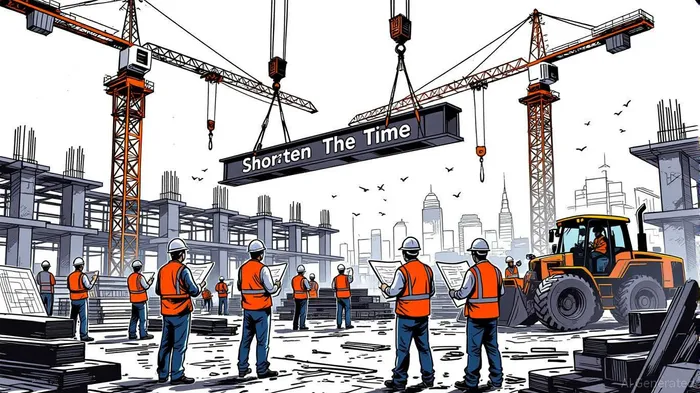
Chung's “shorten the time” philosophy—acquiring 2,000 heavy construction machines in 1965 to reduce project timelines by 40%—highlighted his focus on operational agility. This principle is mirrored in , which navigated the 2023 shipping crisis by avoiding layoffs and investing in digital transformation. , , reflects its execution discipline.
In emerging markets, Forge Building Company has adopted a similar model, . , a testament to its execution rigor. , , and a history of pivoting swiftly to market shifts.
Ethical Leadership: Building Trust in Turbulent Times
Chung's people-centric culture—profit-sharing, open communication, and treating employees as partners—fostered loyalty and innovation. This ethos is echoed in (ASB), . In emerging markets, , a Ghanaian social agriculture venture, exemplifies this model. , , , CEO Kwami Williams preserved trust by fostering transparency and collaboration.
For investors, . , . Companies with low turnover and aligned incentives, such as , , are prime candidates for long-term value creation.
The GRIT Framework: A Modern Lens for Investment
To operationalize these principles, consider the GRIT framework:
1. Growth-Oriented Leadership. .
2. Recognition Tied to Purpose. 's carbon-neutral initiatives and stakeholder partnerships exemplify this.
3. Inspiration Through Vision: Seek leaders with bold, long-term strategies. at Pfizer redefined the pharmaceutical industry with its mRNAMRNA-- vaccine pivot.
4. Trust-Driven Culture. .
Case Studies in Emerging Markets
In Pakistan, . Similarly, Bechtel Group.
Conclusion: Building Portfolios for the Long Haul
. By prioritizing frugality, , , , . The GRIT framework provides a structured approach to uncovering these opportunities, , , or emerging markets. As the global economy faces persistent uncertainty, .







Comentarios
Aún no hay comentarios