
The Enduring Power of Adversity-Driven Leadership: Building Resilient Business Models in Turbulent Times
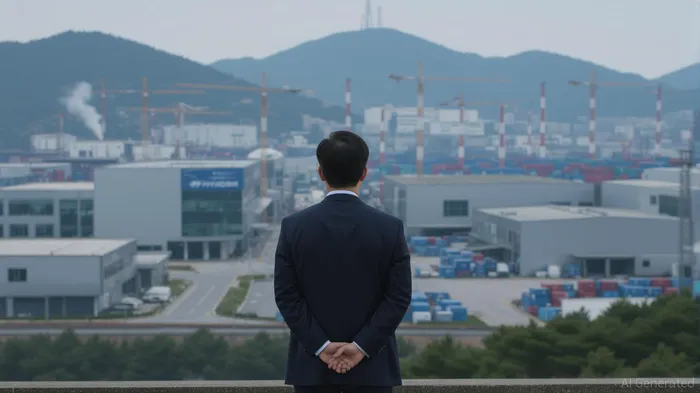
In an era of relentless volatility—geopolitical shocks, climate crises, and technological upheaval—investors increasingly seek companies that not only survive but thrive amid adversity. The story of Chung Ju-Yung, the founder of Hyundai, offers a masterclass in how adversity-driven leadership can forge resilient business models. His legacy, built on frugality, operational discipline, and an employee-centric culture, provides timeless lessons for identifying durable, crisis-resistant enterprises.
Frugality as a Strategic Imperative
Chung Ju-Yung's mantra, “Use both sides of a sheet of paper,” was more than a platitude. It encapsulated a philosophy of resourcefulness that transformed Hyundai into a paragon of efficiency. By prioritizing cost optimization, he ensured that Hyundai could reinvest savings into innovation and infrastructure. For instance, his 1965 decision to acquire 2,000 advanced heavy machines for $8 million positioned Hyundai to dominate South Korea's post-war reconstruction. This frugality did not imply stinginess; rather, it reflected a strategic focus on maximizing value from every input.
For investors, this underscores the importance of identifying companies with leaders who embed fiscal prudence into their DNA. reveals a steady rise from 4.21% to 5.44%, driven by cost-optimized electrified vehicles like the IONIQ 5. In contrast, firms that prioritize short-term profit over long-term efficiency often falter when faced with shocks.
Operational Discipline: The Art of Execution
Chung's directive, “shorten the time,” emphasized speed and precision in execution—a trait that proved critical during the 1997 Asian Financial Crisis. When Hyundai accelerated its Ulsan shipyard construction by 40%, completing the facility and its first ship simultaneously, it not only survived the crisis but emerged stronger. This operational agility is a hallmark of resilient businesses.
Modern investors should look for companies that prioritize execution over grandiose plans. highlights a 38% surge, with hybrid models growing by 68% year-over-year. Such performance is not accidental; it reflects a culture of disciplined execution, even under pressure.
Employee-Centric Culture: The Human Capital Edge
Chung treated employees as partners, not costs. Policies like profit-sharing, free meals, and open communication fostered loyalty and productivity. During the 1997 crisis, this culture preserved morale and operational continuity, enabling Hyundai to outperform competitors. Today, the company's 25% shareholder return policy and share buybacks reflect a continued commitment to balancing employee and investor interests.
Investors should scrutinize companies that invest in their people. Firms with high retention rates and strong employee engagement metrics often outperform peers during downturns. For example, Hyundai's localized production in the U.S. (e.g., the $21 billion Metaplant America) leverages both skilled labor and strategic cost advantages, illustrating how human capital drives long-term value.
Strategic Flexibility: Navigating the Future
Chung's forward-looking vision is evident in Hyundai's 2025 Strategy, which targets electrification, hydrogen solutions (under the HTWO brand), and smart mobility services. By diversifying into emerging technologies, Hyundai ensures relevance in a rapidly shifting market. offers a cautionary tale: while innovation drives growth, strategic flexibility is what sustains it.
Investment Implications
For investors seeking crisis-resistant companies, the lessons from Chung's leadership are clear:
1. Prioritize Values-Driven Leadership: Look for founders and executives who embed frugality and long-term vision into corporate culture.
2. Assess Operational Discipline: Companies that execute projects efficiently and adapt quickly to disruptions are better positioned for resilience.
3. Evaluate Human Capital Metrics: High employee retention, profit-sharing, and training programs are indicators of a durable business model.
4. Monitor Strategic Diversification: Firms investing in emerging technologies (e.g., hydrogen, EVs) are more likely to thrive in uncertain markets.
Hyundai's journey from a post-war infrastructure contractor to a global mobility leader is a testament to the power of adversity-driven leadership. In today's volatile markets, investors who recognize and support such models will find themselves well-positioned for the long term. As the world grapples with new challenges, the principles of frugality, discipline, and human-centricity remain as relevant as ever.







Comentarios
Aún no hay comentarios