
EnBW's $3.6 Billion Gamble: Betting on Renewables to Cement Green Leadership
EnBW, Germany's third-largest utility, has pulled the trigger on a €3 billion capital increase—the largest in its history—to fund a sweeping transition to renewable energy. The move, announced in late May 2025, aims to turbocharge investments in offshore wind, solar farms, hydrogen-ready power plants, and grid upgrades while shoring up its balance sheet. This isn't just a financial maneuver; it's a high-stakes bet on EnBW's ability to dominate Europe's energy transition. Here's why investors should take note.
The Capital Raise: Equity Fortification Meets Green Ambition
The cornerstone of EnBW's strategy is its €3 billion equity injection, which will be raised exclusively through a rights issue to existing shareholders. The subscription price of €58 per share—priced at a 10% discount to recent trading levels—ensures the deal is oversubscribed, with majority shareholders NECKARPRI and OEW Energie-Beteiligungs each pledging €1.5 billion. This dual commitment achieves two critical goals:
- Creditworthiness Boost: By increasing equity, EnBW aims to slash its net debt-to-EBITDA ratio below 2.0 by year-end. A stronger equity cushion reduces refinancing risks and could prompt upgrades from rating agencies like Moody'sMCO-- or S&P.
- Project Funding: The capital will directly finance €10 billion in renewable and grid projects by 2030, including the 1.2 GW “Hohe See” offshore wind farm and hydrogen-ready gas plants.
The Strategic Allocation: Where the Money Goes
EnBW's capital allocation is laser-focused on three pillars:
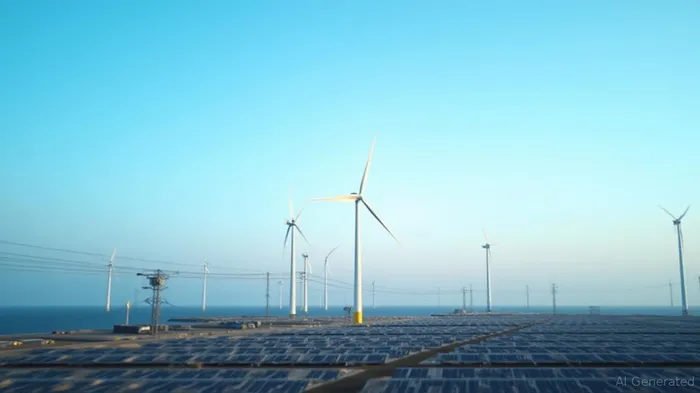
- Offshore Wind Dominance: With 3.4 GW of offshore wind capacity planned by 2030, EnBW is positioning itself as a North Sea powerhouse. The Hohe See project alone, 100 km off Germany's coast, will supply 1 million households.
- Grid Modernization: A €4.5 billion grid investment program through 2030 aims to address Germany's chronic underinvestment in transmission infrastructure. Local partnerships—like its 50/50 joint venture with Bayernwerk for grid upgrades—are key to minimizing regulatory risks.
- Hydrogen and Flexibility: By retrofitting gas plants to run on green hydrogen, EnBW avoids stranded assets while aligning with EU's 2030 hydrogen targets.
Why Shareholder Backing Matters
The 46.75% stake held by NECKARPRI and OEW isn't just financial muscle—it's political credibility. Both entities are ultimately owned by the states of Baden-Württemberg and Hesse, which rely on EnBW to meet their climate goals. This public-sector backing creates a “too important to fail” dynamic: regional governments will likely support EnBW's grid projects, smoothing permitting hurdles that have derailed other utilities.
Risks and the ESG Case for Investors
No investment is risk-free. Rising interest rates could pressure margins on long-term projects, while delays in grid approvals remain a wildcard. But EnBW's alignment with EU climate mandates and its regional infrastructure dominance mitigate these risks. For ESG-focused investors, this is a rare opportunity:
- ESG Credentials: EnBW's 2030 targets—100% renewable power generation and carbon neutrality—outpace most European peers.
- Dividend Stability: A 2024 dividend payout ratio of 60% suggests management prioritizes both growth and returns.
- Market Leadership: With a 25% share of Germany's offshore wind pipeline, EnBW is a de facto leader in Europe's most advanced renewables market.
Conclusion: A Multi-Year Growth Story
EnBW's capital increase isn't just a financial fix—it's a strategic masterstroke. By leveraging state-backed shareholders, locking in green projects with long-term contracted revenues, and bolstering its balance sheet, EnBW is building a moat around its position as a climate transition leader. For investors, this is a play on two enduring trends: the inevitability of energy decarbonization and Germany's role as a European grid backbone.
While the road to 2030 won't be smooth, EnBW's move underscores a critical truth: utilities that marry equity strength with renewable ambition will thrive. For ESG investors seeking a tangible stake in the energy transition, EnBW's stock—priced at a 20% discount to its peers on EV/EBITDA metrics—deserves serious consideration.
This is a gamble worth taking.







Comentarios
Aún no hay comentarios