
Emirates Airlines: A Model of Strategic Resilience in the Post-Pandemic Aviation Sector
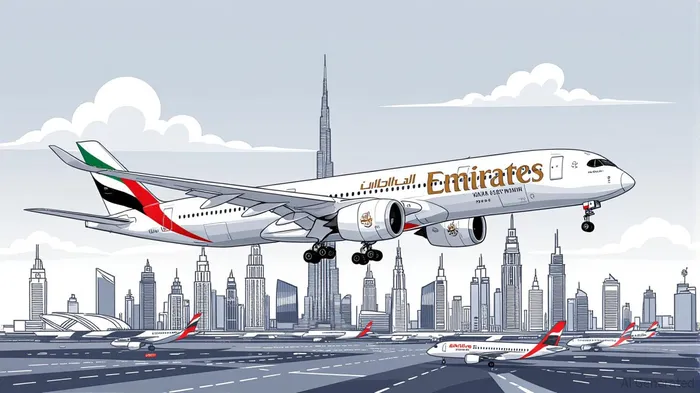
The global aviation sector's post-pandemic recovery has been anything but linear. While demand for air travel has rebounded, the industry faces a volatile landscape marked by geopolitical tensions, energy price swings, and shifting consumer behaviors. In this environment, Emirates Airlines has emerged as a standout performer, leveraging strategic flexibility and disciplined execution to secure its position as the world's most profitable airline. For investors, the airline's financial resilience and forward-looking investments offer a compelling case for long-term exposure to a sector still in the early stages of rebalancing.
Financial Fortitude: Profitability Amid Uncertainty
Emirates' 2024–25 fiscal year results underscore its ability to thrive in a high-stakes environment. , , . This performance, , .
The airline's cash reserves, , provide a buffer against cyclical downturns and enable strategic reinvestment. This liquidity is not merely a byproduct of strong demand but a result of disciplined cost management. Fuel, the largest operating expense at 31% of costs, . Similarly, , reflecting efficient labor planning and automation.
: Mitigating Volatility
Emirates' risk management framework is a cornerstone of its resilience. The airline employs a mix of forward contracts, options, and natural hedges to insulate itself from fuel price swings and currency fluctuations. In 2024–25, , a critical advantage in an industry where margins can evaporate overnight. For context, competitors with less robust hedging strategies have seen their profits eroded by energy price spikes and FX headwinds.
The airline's debt management further strengthens its balance sheet. , Emirates has positioned itself to access capital at favorable rates—a vital asset as it prepares for fleet expansion. Its debt-to-equity ratio remains among the lowest in the sector, ensuring flexibility to navigate potential downturns.
and Network Expansion
Emirates' long-term competitiveness hinges on its ability to adapt to evolving market dynamics. The introduction of the Airbus A350 into its fleet marks a strategic shift toward fuel-efficient, long-haul aircraft. , the airline is enhancing customer experience while extending the lifecycle of its assets. This dual focus on operational efficiency and service quality is rare in an industry often forced to trade off between the two.
Network expansion has also been a key driver. The airline added 16 A350s and four BoeingBA-- 777 freighters to its order book in 2024–25, targeting high-growth markets in Asia and Africa. . By aligning capacity with demand, Emirates avoids the overexpansion pitfalls that have plagued rivals.
Sustainability and Talent: Foundations for the Future
Beyond financial metrics, Emirates is investing in sustainability and human capital to future-proof its operations. . Meanwhile, initiatives like Wejhaty, a digital HR platform, and enhanced crew training programs are addressing labor challenges in a sector facing talent shortages. These efforts not only reduce costs but also align with ESG trends that are reshaping capital allocation.
Investment Implications: A Long-Term Play
For investors, Emirates represents a rare combination of short-term profitability and long-term strategic clarity. Its ability to generate consistent cash flow, even in a volatile environment, provides a margin of safety. The airline's capital allocation discipline—prioritizing high-return projects like fleet modernization and digital transformation—further enhances its appeal.
However, risks remain. Geopolitical tensions and trade wars could disrupt global travel patterns, while rising interest rates may pressure debt costs. Yet, Emirates' hedging strategies and liquidity position it to weather these challenges better than most peers.
Conclusion: A Beacon of Resilience
Emirates Airlines' post-pandemic trajectory is a masterclass in strategic agility. By balancing cost discipline with bold investments, the airline has not only outperformed its peers but also redefined what is possible in a cyclical industry. For investors seeking exposure to the aviation sector's recovery, Emirates offers a compelling case: a company with the financial strength to endure volatility, the innovation to lead, and the foresight to thrive in an uncertain world. In a sector where survival is often the immediate goal, Emirates has already secured its place as a leader—and the best is yet to come.







Comentarios
Aún no hay comentarios