
Emerging Trends in Cryptocurrency Mining: Financing Innovation and Scalability in Niche Digital Assets
The cryptocurrency mining sector is undergoing a profound transformation in 2025, driven by innovative financing models and scalable solutions tailored to niche digital assets. As the industry shifts from energy-intensive Proof-of-Work (PoW) to energy-efficient Proof-of-Stake (PoS) and hybrid consensus mechanisms, new opportunities are emerging for investors seeking to capitalize on the intersection of technology, sustainability, and decentralized finance.
Financing Innovation: Hybrid Models and ESG-Linked Capital
A defining trend in 2025 is the rise of hybrid debt-equity financing, which now accounts for over 60% of large-scale mining projects, according to a 2025 Farmonaut analysis. This approach allows companies to balance risk and reward while attracting diverse capital sources, including institutional investors and ESG-focused funds. For instance, Tether's acquisition of a 37.8% stake in Elemental Altus Royalties Corp exemplifies how cryptocurrency-derived capital is rapidly mobilized to fund mining operations, as outlined in a CruxInvestor post. Such investments are notNOT-- limited to Bitcoin; they extend to niche assets like lithium and rare earths, which are critical for energy transition technologies, as discussed in an SFA Oxford briefing.
ESG-linked financing is another cornerstone of modern mining finance. Sustainability metrics are now embedded in loan terms and bond covenants, incentivizing miners to reduce emissions and optimize resource usage, as the Farmonaut analysis notes. The World Bank's Climate Smart Mining Facility, for example, provides funding for projects that align with environmental and social governance standards, a point emphasized by the SFA Oxford briefing. European investors, in particular, are leading this shift, with policies like the EU's Critical Raw Materials Act driving demand for sustainable mining of battery metals, as the SFA Oxford briefing also explains.
Scalability in Niche Assets: AI, Mobile Mining, and Digital Infrastructure
Scalability in niche digital assets is being redefined by AI-driven optimization and mobile mining platforms. Advanced algorithms are now used to enhance mineral discovery and operational efficiency, a trend noted in the CruxInvestor post. Meanwhile, mobile mining apps such as Pi Network and cPen Network are democratizing access to mining, enabling users to participate via smartphones without high-end hardware, according to a BSC News roundup. These platforms, which leverage Binance Smart Chain and community-driven models, have attracted over 45 million active users, the BSC News piece reports, signaling a shift toward decentralized, low-barrier participation.
The rebranding of mining firms as digital infrastructure providers further underscores scalability. Companies like CoreWeave and Riot PlatformsRIOT-- are repurposing their hardware for AI and high-performance computing, creating diversified revenue streams, as the Farmonaut analysis observes. This pivot not only stabilizes income amid cryptocurrency price volatility but also aligns with institutional demand for cloud-based computational resources.
Market Projections and Investment Opportunities
The global cryptocurrency mining market is projected to grow from $2.2 billion in 2024 to $3.3 billion by 2030, according to a GlobeNewswire report, driven by institutional adoption and expanding blockchain use cases. Investors should focus on projects that combine ESG compliance with technological innovation. For example, green energy partnerships-such as those between miners and renewable energy providers-are reducing carbon footprints while enhancing profitability, a dynamic the Farmonaut analysis highlights.
Conclusion
The convergence of financing innovation and scalability in niche digital assets is reshaping the mining landscape. Hybrid debt-equity models, ESG-linked capital, and AI-driven efficiency are creating a more sustainable and accessible industry. For investors, the key lies in identifying projects that align with both technological progress and environmental stewardship. As the market matures, those who prioritize adaptability and sustainability will likely reap the greatest rewards.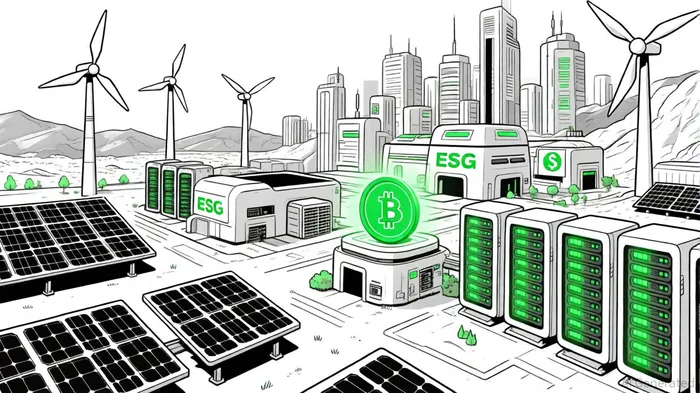





Comentarios
Aún no hay comentarios