
Emerging Technology Convergence: Strategic Sector Positioning for AI, Quantum Computing, and Sustainable Infrastructure
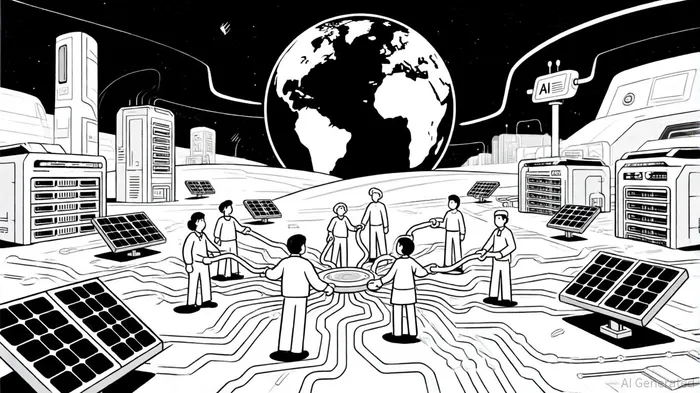
The year 2025 marks a pivotal inflection point in the convergence of artificial intelligence (AI), quantum computingQUBT--, and sustainable infrastructure. As these technologies intersect, they are unlocking unprecedented economic and societal value, reshaping industries, and redefining investment paradigms. According to the World Economic Forum's Technology Convergence Report 2025, the strategic integration of these innovations-through a 3C Framework of combination, convergence, and compounding-is accelerating the transition to a future where technological synergy drives systemic transformation. For investors, this convergence demands a nuanced understanding of sector-specific dynamics and the compounding effects of cross-industry innovation.
AI's Infrastructure Imperative: Powering the Next Frontier
The exponential growth of AI, particularly generative AI, is creating a voracious appetite for infrastructure upgrades. Enterprises now require HPC-grade systems equipped with accelerated processors, high-speed networking, and scalable storage to handle AI's computational demands, according to a Forbes analysis. This has spurred a surge in investments for data centers with advanced cooling technologies and fiber-optic networks to support AI's energy-intensive workloads, as noted in a Webpronews overview.
However, AI's rise also exposes critical bottlenecks. Modern power grids must evolve to sustain the energy demands of AI and quantum computing, while cybersecurity threats and algorithmic biases pose systemic risks, as discussed in the same Forbes analysis. For instance, smart grid optimization leveraging AI is already improving energy distribution efficiency, ensuring stability for high-demand workloads, according to a QED‑C report. Investors must prioritize infrastructure modernization, including energy-resilient compute fabrics and quantum-ready talent pipelines, to future-proof AI ecosystems (Forbes).
Quantum Computing: From Concept to Commercialization
Quantum computing is transitioning from theoretical promise to tangible applications, driven by surging investments and breakthroughs in hardware. Global deal value in quantum computing surpassed $1 billion in 2024, with governments like Japan and Spain committing over $8.3 billion in 2025 alone, according to McKinsey's Quantum Technology Monitor 2025. Startups such as PsiQuantum and Quantinuum, alongside partnerships like SoftBank-Quantinuum and Aramco-Pasqal, are accelerating the commercialization of quantum systems (McKinsey).
The sector's growth is underpinned by advancements in qubit stabilization and error correction, exemplified by Google's Willow quantum chip, as reported in McKinsey's analysis. By 2035, quantum computing is projected to generate $72 billion in revenue, with applications spanning chemicals, life sciences, and finance (McKinsey). For investors, quantum-ready infrastructure-specialized data centers, advanced cooling systems, and cloud-based Quantum Computing as a Service (QCaaS) platforms-represents a $3 billion market in 2025 alone, according to the QED‑C report.
Sustainable Infrastructure: The Bedrock of Technological Progress
Sustainability is no longer a peripheral concern but a core requirement for supporting AI and quantum computing. The integration of quantum computing with the Circular Economy and Industry 4.0 principles is enabling industries to optimize resource usage, reduce waste, and enhance environmental sustainability, as shown in a ScienceDirect study. For example, AI-enabled quantum algorithms are accelerating the development of sustainable materials and renewable energy systems, according to a ScienceDirect review.
Infrastructure funds are increasingly channeling capital into projects that align with these goals. Data centers equipped with green cooling technologies and smart grids optimized via AI are becoming essential for managing the energy demands of advanced computing (Webpronews). Moreover, quantum sensing and post-quantum cryptography are emerging as critical tools for securing AI-driven infrastructures and addressing climate challenges (ScienceDirect review).
Strategic Positioning: Navigating the 3C Framework
To capitalize on this convergence, investors must adopt a 3C Framework:
- Combination: Prioritize sectors where AI, quantum computing, and sustainability intersect, such as energy systems, logistics, and materials science. For instance, hybrid AI-quantum approaches are reducing algorithmic complexity in weather forecasting and disaster response, as illustrated in a Springer chapter.
- Convergence: Invest in infrastructure that bridges technological silos. This includes time-aware systems, expanded global connectivity, and quantum-ready talent development (Forbes).
- Compounding: Leverage the compounding effects of cross-sector innovation. Quantum computing's ability to process complex datasets is already optimizing supply chains and energy efficiency, while AI is enhancing quantum software ecosystems (McKinsey).
Challenges and Opportunities
While the potential is vast, challenges remain. System complexity, workforce upskilling, and cybersecurity risks require proactive mitigation. For example, post-quantum cryptography is gaining urgency as quantum threats evolve (ScienceDirect review). Additionally, the energy-intensive nature of AI and quantum workloads demands innovative solutions like decentralized energy grids and carbon-neutral data centers (Webpronews).
Conclusion
The convergence of AI, quantum computing, and sustainable infrastructure is not merely a trend but a structural shift in global innovation. Investors who strategically position themselves at the intersection of these sectors-by funding infrastructure upgrades, quantum-ready ecosystems, and sustainable practices-will be best poised to capture long-term value. As the World Economic Forum emphasizes, the future belongs to those who embrace the 3C Framework and harness the compounding power of technological synergy (Technology Convergence Report 2025).







Comentarios
Aún no hay comentarios