
The Emerging Role of Security Systems Technology in Shaping the Future of Higher Education Infrastructure
The Technological Shift: From Reactive to Proactive Security
The adoption of artificial intelligence (AI) and zero-trust architectures marks a paradigm shift in how universities approach security. AI-powered tools now detect cyber threats, including AI-driven phishing attacks and deepfakes, while also enhancing physical security through real-time analytics and predictive monitoring. For instance, Virginia Commonwealth University (VCU) replaced traditional VPNs with Zscaler's zero-trust platform, enabling continuous authentication and reducing the blast radius of potential breaches. By 2025, 80% of institutions had zero-trust strategies in place, though full implementation remains a challenge due to outdated infrastructure and skill gaps.
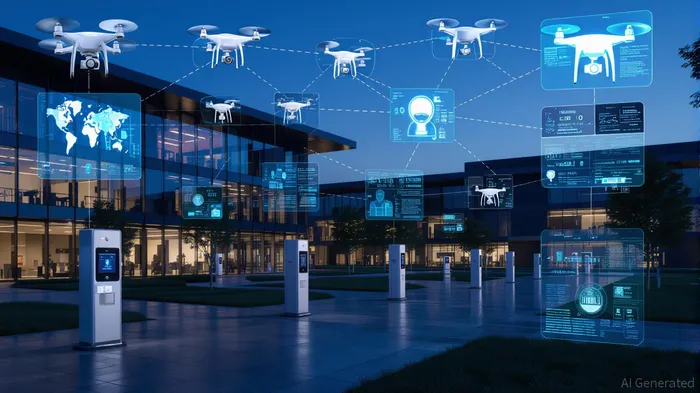 . This shift is driven by the need to move beyond the "castle-and-moat" model of security to one rooted in "never trust, always verify" principles according to research. The integration of physical and cybersecurity systems-often termed "convergence"-has become critical as universities manage hybrid learning environments, international collaborations, and sprawling digital ecosystems according to industry analysis.
ROI: Beyond Cost Savings to Institutional Resilience
The return on investment (ROI) of security technology extends beyond immediate cost savings. A public university in Texas deployed Verkada's cloud-based system, achieving improved situational awareness and reducing IT management burdens while enhancing campus safety. Similarly, institutions investing in cybersecurity training reported $3.57 million in annual business value, including faster incident response times and reduced external costs.
Longitudinal data underscores the strategic value of these investments. Institutions with robust safety reputations have seen stable enrollment rates and stronger institutional reputations, as 60% of students cite safety as a key factor in college selection. Conversely, high-profile safety incidents often correlate with enrollment declines and reputational damage. For research-focused universities, a strong safety record enhances credibility, attracting partnerships and donor support.
Challenges and the Path Forward
Despite the promise of integrated security systems, challenges persist. Over 90% of institutions face IT skill shortages by 2026, complicating the adoption of zero-trust models. Additionally, 32% of cybersecurity professionals report a need for training in identity and access management. These hurdles highlight the importance of aligning security investments with institutional goals and prioritizing staff development.
The financial barriers to adoption are also notable. While integrated systems can leverage existing infrastructure to minimize upfront costs-such as using AI software with legacy IP cameras-implementation still requires strategic budgeting. Universities that adopt systemic approaches, such as California State University's integration of cloud services and data analytics, have achieved 33% cost savings and 30% performance improvements.
Strategic Implications for the Future
The long-term impact of security technology investments is evident in their ability to future-proof institutions. As ransomware attacks and hybrid learning environments expand the attack surface, universities must prioritize layered security strategies, including network segmentation and cloud-based solutions. The convergence of cyber and physical security not only mitigates risks but also supports operational efficiencies, such as seamless access control for remote and on-campus users according to industry experts.
Moreover, the reputational benefits of proactive security measures are increasingly tied to institutional success. A 2025 survey found that 71% of technology leaders rated ROI as at least "moderately important", yet only 46% actively measured it. This gap underscores the need for rigorous ROI frameworks that track metrics like enrollment stability, research funding acquisition, and stakeholder confidence.
Conclusion
Security systems technology is no longer a peripheral concern in higher education but a cornerstone of institutional strategy. By investing in AI-driven tools, zero-trust architectures, and integrated systems, universities can enhance safety, operational efficiency, and long-term competitiveness. However, these investments must be accompanied by strategic planning, staff training, and a commitment to measuring ROI beyond short-term metrics. In an era of escalating threats and evolving expectations, the institutions that thrive will be those that recognize security not as a cost but as a catalyst for sustainable growth.





Comentarios
Aún no hay comentarios