
Emerging Plant-Based Food Delivery Services: A High-Growth, Sustainability-Aligned Investment Opportunity in 2025
The plant-based food delivery sector is undergoing a seismic shift in 2025, driven by converging forces of consumer demand for convenience, health-conscious eating, and sustainability. As global markets expand and operational models evolve, companies like Purple Carrot, CookUnity, and Green Chef are redefining scalability and profitability in the meal kit industry. This analysis examines their strategies, pricing models, and sustainability initiatives to assess their potential as high-growth investments.
Market Dynamics: A Booming Sector with Clear Trends
The global meal kit delivery market is projected to grow from $20.16 billion in 2025 to $65.67 billion by 2031, driven by a 18.88% CAGR. North America remains the dominant region, with Asia-Pacific emerging as a fast-growing market due to urbanization and rising middle-class demand for convenience according to market analysis. Key trends shaping this growth include:
1. Sustainability as a Differentiator: Eco-friendly packaging, carbon-neutral logistics, and low-carbon meal options are no longer niche but essential for brand loyalty as research shows.
2. Hyper-Personalization: AI-driven tools for dietary customization (e.g., gluten-free, high-protein) are becoming standard.
3. Operational Efficiency: IoT and AI are optimizing supply chains, reducing food waste, and improving delivery logistics according to industry reports.
Case Study 1: Purple Carrot – Plant-Based Pioneers with a Sustainability Edge
Purple Carrot, a leader in plant-based meal kits, has positioned itself as a premium yet accessible option for health-conscious consumers. Its pricing model-$11 per serving-balances affordability with perceived value, emphasizing organic, non-GMO ingredients according to a 2025 review. The company's 2025 strategy includes a carbon-zero delivery plan, which contributed to a 12% sales increase among green-conscious consumers according to market data.
Despite a challenging 2018 (including a $4.3 million loss), Purple Carrot's acquisition by Oisix ra daichi in 2025 signals renewed investor confidence according to industry news. The company's strength lies in its customizable meal options (e.g., high-protein, nut-free) and strong customer retention, which historically outperformed industry averages as reported in market analysis. However, scalability remains a question mark, as its reliance on organic sourcing and premium pricing could strain margins during high-demand periods.
Case Study 2: CookUnity – Scaling a Chef-Driven Marketplace Model
CookUnity's innovative chef-to-consumer platform allows independent chefs to operate as entrepreneurs while offering consumers diverse, gourmet meal options. This model reduces overhead costs and fosters brand loyalty through culinary creativity. In 2025, CookUnity achieved a 75% year-over-year increase in total meals and expanded to eight kitchens across the U.S. and Canada according to company announcements.
Sustainability is central to its strategy: the Returnable Packaging Program eliminates single-use waste by encouraging customers to return insulated bags and ice packs as highlighted in company blogs. Additionally, its Climate-Friendly Collection-partnering with Planet FWD-offers low-carbon meals made with sustainably sourced ingredients according to sustainability reports. These initiatives align with a broader market shift toward net-positive environmental impact as noted in industry analysis.
Financially, CookUnity's $250 million in non-dilutive funding according to funding reports underscores its scalability potential. However, its pricing model (ready-to-heat meals at $11.09–$13.59 per serving) lacks transparency for consumer-facing plans, which could limit mass-market adoption. Expansion into corporate wellness and office catering as reported in company updates provides a new revenue stream, addressing workplace DEI goals while diversifying its customer base.
Case Study 3: Green Chef – Operational Excellence and AI-Driven Scalability
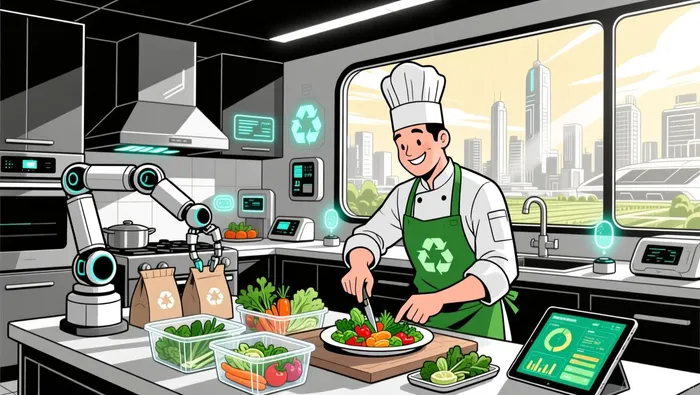
Green Chef, a pioneer in organic meal kits, has leveraged AI and IoT technologies to optimize supply chains, reduce food waste, and monitor ingredient freshness in real time according to industry reviews. These tools enhance operational efficiency, a critical factor for scaling in a sector with high logistics costs. The company's 2025 focus on customer satisfaction metrics-such as repeat order rates and net promoter scores-positions it to capitalize on the $105.03 billion global market projected by 2034 according to market projections.
Green Chef's pricing model (not explicitly detailed in sources) is likely competitive, given its emphasis on organic and health-conscious offerings as noted in market analysis. Its strong customer loyalty, attributed to consistent quality and dietary customization, aligns with broader industry trends according to market insights. However, its reliance on organic sourcing could pose challenges in maintaining margins as demand surges.
Investment Thesis: Sustainability and Scalability as Dual Drivers
The three companies exemplify how sustainability and operational innovation are becoming inseparable from profitability in the plant-based meal kit sector. Key investment considerations include:
- Purple Carrot: A strong brand with a loyal customer base, but scalability depends on overcoming past financial hurdles and expanding its logistics network according to recent reports.
- CookUnity: A scalable platform model with robust funding and sustainability initiatives, though pricing transparency and market penetration in emerging regions (e.g., Asia-Pacific) require further validation according to market analysis.
- Green Chef: A leader in operational efficiency, leveraging AI to reduce waste and improve margins, but must balance organic sourcing costs with growth ambitions according to industry reviews.
Conclusion: Capitalizing on a $65 Billion Opportunity
The plant-based meal kit market is no longer a niche trend but a $20.16 billion industry in 2025, poised to grow at a 18.88% CAGR according to market analysis. Investors who prioritize sustainability-aligned ventures with scalable operational models-like Purple Carrot, CookUnity, and Green Chef-stand to benefit from both financial returns and positive environmental impact. As consumer demand for convenience, health, and eco-consciousness converges, these companies are uniquely positioned to lead the next phase of the food delivery revolution.







Comentarios
Aún no hay comentarios