
Emerging Opportunities in Education Technology and STEM Workforce Development
The Rise of AI and Cybersecurity in Higher Education
Universities and training programs are at the forefront of addressing the urgent demand for skilled professionals in AI and cybersecurity. For instance, AI undergraduate programs in the U.S. have surged by 114.4% since 2024, with institutions like MIT and the University of South Florida leading investments in these fields according to market data. Similarly, states such as Virginia and North Carolina are integrating AI into K-12 curricula and appointing AI consultants to develop classroom guidelines, signaling a systemic commitment to workforce readiness according to state education reports. These initiatives are not merely academic exercises but strategic responses to a labor market facing a shortage of over 750,000 cybersecurity professionals according to industry analysis.
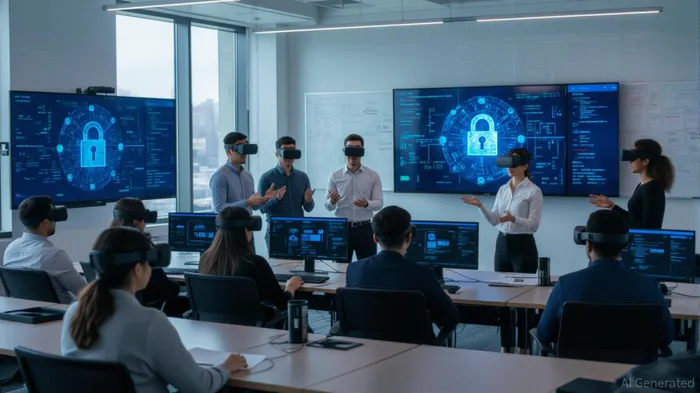
Federal and private sector support further amplifies this momentum. The 2025 U.S. AI Action Plan, for example, allocates $18.5 billion to AI infrastructure, including $4.2 billion dedicated to cybersecurity for AI systems according to government documentation. Concurrently, major corporations like IBMIBM-- and GoogleGOOGL-- have pledged substantial resources to AI education, with IBM's Skillsbuild program aiming to train 2 million learners by 2028 according to corporate announcements. Such collaborations between academia, government, and industry create a robust ecosystem for innovation, ensuring that graduates are equipped to navigate an AI-driven economy.
Mentorship as a Catalyst for Economic Impact
The integration of mentorship programs into STEM education is a key differentiator in fostering economic resilience. The Cybersecurity and Artificial Intelligence Talent Initiative, for instance, offers recent graduates placements in federal agencies, leadership training, and cross-sector networking opportunities, directly addressing the need for experienced professionals in critical infrastructure according to program documentation. Similarly, institutions like Washington State University and Purdue University Northwest are leveraging federal grants to develop hands-on training programs with guaranteed employment pathways according to institutional reports. These models not only reduce the skills gap but also generate measurable economic returns by aligning education with market demands.
The AI Economy Institute's 2025 Fall Cohort further underscores the importance of mentorship in shaping future-ready workforces. By examining apprenticeship models and the role of community colleges in equitable AI adoption, the program highlights how education systems must evolve to keep pace with technological disruption according to research findings. However, challenges persist. A 2025 analysis reveals sharp declines in traditional entry-level tech jobs in the U.S. and UK due to automation, prompting a reevaluation of hiring practices and skill requirements according to industry reports. This underscores the necessity of large-scale upskilling initiatives, which are increasingly supported by private-sector investments in AI literacy and cybersecurity training according to corporate commitments.
Innovation and Risk Mitigation in EdTech
As EdTech platforms adopt AI-driven learning systems, gamification, and immersive technologies like VR and AR, they are redefining student engagement while addressing persistent challenges such as the digital divide according to industry trends. For example, platforms like Squirrel AI and Microsoft's Reading Coach use personalized learning algorithms to enhance educational outcomes according to platform reports. Simultaneously, cybersecurity remains a critical focus, with EdTech companies enhancing encryption and threat detection tools to protect sensitive data according to security assessments. These innovations not only improve accessibility but also mitigate risks associated with data breaches, a growing concern in an increasingly connected world.
Federal initiatives such as the AI Security Operations Center (AI-SOC) and the AI Information Sharing and Analysis Center (AI-ISAC) further demonstrate a proactive approach to managing AI-specific threats according to government guidelines. By promoting secure-by-design principles and regulatory sandboxes, these efforts create a scalable environment for innovation while safeguarding national security interests according to security leadership insights.
Conclusion: A Strategic Investment Horizon
The convergence of EdTech growth, STEM workforce development, and mentorship-driven programs presents a unique opportunity for long-term investors. Institutions that prioritize AI, cybersecurity, and engineering disciplines-while fostering partnerships with government and industry-are well-positioned to capitalize on the $907.7 billion EdTech market by 2034 according to market projections. Moreover, the alignment of these programs with federal funding, private-sector commitments, and economic upskilling needs ensures a resilient return on investment. As the global economy transitions into an AI-driven era, the strategic value of education as a catalyst for innovation and economic growth cannot be overstated.







Comentarios
Aún no hay comentarios