
Emerging Memecoin Dynamics and High-Velocity Gainers in 2025: Assessing Short-Term Volatility and Long-Term Viability in the New Meme Economy
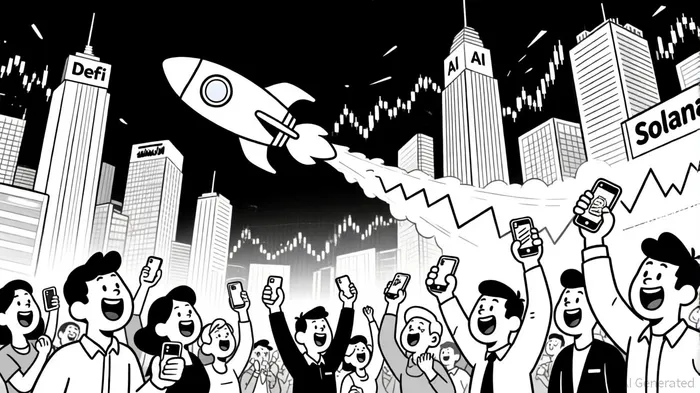
The 2025 meme economy is no longer a sideshow in the crypto space—it's a full-blown revolution. What began as internet humor has evolved into a sophisticated blend of cultural resonance and blockchain utility, with projects like Arctic Pablo Coin (APC) and Layer Brett (LBRETT) redefining what it means to be a “meme coin.” These high-velocity gainers are not just riding the wave of viral trends; they're embedding themselves into the fabric of decentralized finance (DeFi), AI-driven tools, and cross-chain scalability. But as with all speculative frenzies, the question remains: Can these projects sustain their momentum, or are they destined to crash under the weight of their own hype?
The New Meme Economy: Culture Meets Utility
The 2025 meme economy is distinguished by its fusion of entertainment and functionality. Take Arctic Pablo Coin (APC), which has entered Stage 38 of its presale at $0.00092, offering a staggering 66% APY for stakers [1]. A $6,500 investment could theoretically balloon to $2.1 million if APC reaches its $0.1 “moonshot” target, especially with a 200% CEX200 bonus amplifying early liquidity [1]. Meanwhile, Layer Brett (LBRETT)—a Layer 2 Ethereum-based meme coin—is attracting SolanaSOL-- whales with an 895% APY and a presale price of $0.0047. Its $2.8 million in raised funds signals growing institutional curiosity, as the project positions itself as a “100x gainer” by merging meme culture with real-world use cases like NFT staking and decentralized governance [2].
This shift from pure speculation to utility is not lost on market observers. MemeCore, for instance, has surged over 400% in two weeks by introducing a “Meme 2.0” framework that ties cultural impact to network governance [2]. Similarly, Bitcoin Hyper and Snorter are leveraging AI-powered Telegram bots and Layer 2 BitcoinBTC-- scalability to bridge the gap between grassroots humor and enterprise-grade infrastructure [2].
High-Velocity Gainers: APYs and Presales as Catalysts
The allure of astronomical annual percentage yields (APYs) is a double-edged sword. While they attract retail investors hungry for quick returns, they also amplify volatility. For example, LBRETT's 895% APY is a magnet for risk-tolerant traders, but it also raises red flags about sustainability [2]. The same applies to APC's 66% APY, which hinges on the coin's ability to scale adoption without collapsing under liquidity pressures [1].
Presales further complicate the equation. Projects like APC and LBRETT are using presale stages to lock in early liquidity while offering bonuses to incentivize participation. However, this creates a “winner-takes-all” dynamic, where success depends on viral traction and community-driven hype rather than fundamentals. As one on-chain analyst noted, “The new meme economy is less about code and more about culture—projects that can weaponize social media and influencer networks will dominate” [2].
The Volatility Conundrum: Short-Term Gains vs. Long-Term Viability
While the short-term potential of memecoins is undeniable, their long-term viability remains unproven. Shiba Inu (SHIB) and Dogwifhat (WIF) serve as cautionary tales: both surged during the 2024 bull run but have since faced regulatory scrutiny and waning retail interest [1]. The 2025 cohort, however, is attempting to avoid this fate by integrating DeFi primitives and cross-chain interoperability.
For instance, Layer Brett's Ethereum-based Layer 2 architecture allows it to process transactions at a fraction of the cost of Solana-based rivals, potentially broadening its appeal to enterprise users [2]. Meanwhile, MemeCore's governance model—where token holders vote on cultural initiatives—creates a feedback loop that aligns community interests with project longevity [2].
Yet, these innovations do not eliminate risk. The meme economy's reliance on social sentiment makes it vulnerable to sudden shifts in public perception. A single negative tweet or regulatory warning could trigger a cascade of sell-offs, as seen in the 2024 “meme crash” [1].
Strategic Implications for Investors
For investors, the key is to balance high-risk, high-reward memecoins with more stable assets. A diversified portfolio might include:
1. High-velocity gainers like APC and LBRETT for short-term speculation.
2. Established meme coins like SHIBSHIB-- and WIF, which have evolved into ecosystems with DeFi integrations [1].
3. Utility-driven tokens that blend meme culture with real-world applications, such as Bitcoin Hyper's AI tools [2].
However, due diligence is critical. Projects with transparent roadmaps, active developer communities, and clear utility (e.g., Layer Brett's cross-chain capabilities [2]) are more likely to survive the inevitable market corrections.
Conclusion: The Meme Economy's Next Frontier
The 2025 meme economy is a testament to crypto's power to disrupt traditional finance—and itself. While short-term volatility will persist, the emergence of utility-driven memecoins suggests a maturing market. For now, the mantra remains: hodl with caution, but hodl with purpose.
As the line between internet culture and blockchain innovation blurs, one thing is clear: the next bull run will belong to those who can laugh at the chaos while building for the future.






Comentarios
Aún no hay comentarios