
Emerging Markets and the Non-Retaliatory Path: How Strategic Trade Adjustments Are Fueling Capital Inflows
The U.S. trade policy shift under the 2023–2025 administration has intensified global economic fragmentation, yet emerging markets are navigating this turbulence with a calculated strategy: non-retaliation. By avoiding direct confrontation with U.S. tariffs and instead prioritizing regional integration and trade diversification, these economies are stabilizing their trade dynamics while attracting capital inflows. This approach not only mitigates the risks of escalation but also positions emerging markets as beneficiaries of shifting global capital flows.
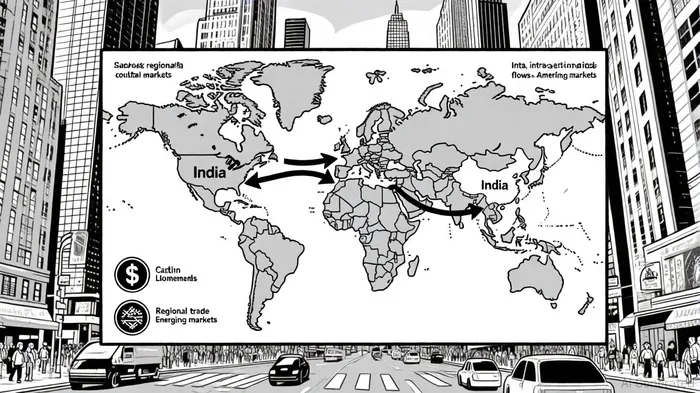
Strategic Non-Retaliation: A Blueprint for Trade Stability
Emerging markets have increasingly adopted a nuanced response to U.S. tariffs, focusing on dialogue and regional cooperation rather than tit-for-tat measures. For instance, Malaysia has engaged in bilateral negotiations with the U.S. to reduce the impact of high tariffs while simultaneously deepening trade ties with China and ASEAN partners[1]. Similarly, India's FY26 budget proactively reduced tariffs on key imports to avoid becoming a U.S. target, a move that has preserved trade stability despite broader tensions[4].
This strategy is not limited to Asia. Mexico, a critical U.S. trade partner, has addressed Washington's concerns on migration and drug trade issues to secure a favorable review of the USMCA, ensuring continued access to North American markets[2]. Meanwhile, Brazil's Economic Reciprocity Law, though unactivated, provides a framework for calibrated responses, allowing the country to maintain flexibility without provoking further U.S. action[3]. These examples underscore a broader trend: emerging markets are leveraging their economic interdependence with the U.S. while diversifying risk through regional alliances.
Capital Flows and the Appeal of Diversification
The non-retaliatory approach has had a measurable impact on capital flows. As U.S.-China tensions disrupted supply chains, investors began reallocating capital toward emerging markets perceived as stable and strategically positioned. According to a report by J.P. Morgan Global Research, trade liberalization in Europe, India's strategic trade deals with the U.S., and the economic resilience of emerging markets have collectively drawn capital away from the U.S. toward Asia and Europe[1].
Emerging market currencies, such as the Indonesian Rupiah (IDR) and Korean Won (KRW), have shown heightened sensitivity to U.S. tariff policies, reflecting both vulnerability and opportunity[2]. For example, Turkey's disciplined monetary policy and high local interest rates have made it an attractive destination for USD-denominated private credit, enabling firms with strong U.S. dollar revenue streams to optimize capital structures[2]. This dynamic illustrates how macroeconomic stability in emerging markets can amplify their appeal amid global uncertainty.
Investment Implications: Balancing Risk and Reward
While non-retaliation has fostered trade stability, it is not without risks. Countries like South Korea, Mexico, and Taiwan remain exposed to U.S. tariff pressures due to their reliance on U.S. markets[2]. However, the broader trend of trade diversification-exemplified by the growth of South-South trade and the African Continental Free Trade Agreement (AfCFTA)-suggests that emerging markets are building resilience[1].
For investors, this environment presents opportunities in sectors poised to benefit from regional integration, such as logistics, technology, and green energy. As noted by the IMF, deeper integration with non-U.S. partners can reduce economic distortions caused by U.S. tariffs while expanding trade corridors[3]. This aligns with the growing emphasis on supply chain resilience, a priority for both policymakers and corporations.
Conclusion
Emerging markets are redefining their role in a fragmented global economy by prioritizing stability over confrontation. Their non-retaliatory strategies not only mitigate the risks of U.S. tariffs but also create a favorable environment for capital inflows. As trade routes and capital allocations continue to shift, investors who recognize the interplay between policy agility and regional cooperation may uncover compelling opportunities in these markets.







Comentarios
Aún no hay comentarios