
Emerging Markets on the Move: Capitalizing on Dovish Fed, Trade Deals, and Inflows Ahead of Key Inflation Data
The confluence of shifting Federal Reserve policy, tentative trade deal optimism, and a resurgence of capital flows into emerging markets (EMs) has created a compelling investment landscape. As the U.S. inflation data for June looms, investors have a window to position for gains in EM currencies and equities—provided they navigate the risks embedded in this fragile equilibrium.
The Dovish Fed: A Tailwind for EM Assets
The Federal Reserve's June 2025 decision to hold rates at 4.25%–4.5% marked a pivot toward caution, with the central bank's “wait-and-see” stance reflecting softer inflation expectations and cooling GDP growth. While the Fed's dot plot suggests only two rate cuts by year-end, markets have priced in nearly 175 basis points of easing by 2026, creating a potential mispricing opportunity.
A key beneficiary of this divergence is the U.S. dollar, which has weakened to a three-year low (WSJ Dollar Index at 94.91). This decline reduces the cost of dollar-denominated debt for EMs and boosts the purchasing power of EM currencies.
Trade Deal Optimism: A Fragile but Critical Catalyst
Trade tensions between the U.S. and China remain unresolved, but the 90-day tariff pause—reducing U.S. tariffs to 10% and Chinese retaliatory measures—has eased near-term volatility. This reprieve has allowed EMs to breathe, with India and CEE nations (e.g., Bulgaria and Czech Republic) capitalizing on supply chain diversification. India's GDP growth is projected to hit 6.2% in 2025, driven by tech exports and domestic demand, while Bulgaria's inflation-controlled economy positions it to adopt the euro in 2026.
Mexico, however, faces headwinds: a 25% tariff hike on non-USMCA-compliant goods has dampened growth to -0.3% in 2025. Yet, the broader regional picture is improving, with EM equity inflows surging by $32 billion in Q2, per Bank of AmericaBAC--.
Inflow Surge: Betting on EM Equities and Carry Trades
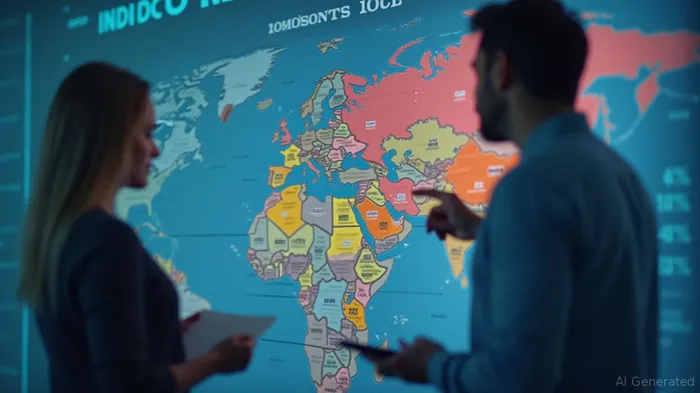
The combination of a weakening dollar and improving trade sentiment has fueled inflows into EM equities and currencies. Investors are targeting high-yield currencies like the Turkish lira (12% policy rate) and Brazilian real, which offer attractive carry trades. Meanwhile, EM equity ETFs such as WisdomTree Emerging Markets Currency Strategy (CEW) and iShares MSCI Emerging Markets (EEM) have rallied 7% and 5%, respectively, year-to-date.
In equities, sectors like technology (e.g., India's Tata Consultancy Services) and consumer discretionary (e.g., Mexico's Grupo Televisa) are outperforming, as EM consumers benefit from lower oil prices and stable wages.
Key Risks: Inflation Data and Trade Escalation
The June inflation report could disrupt this narrative. A 4.8% hourly wage print (up from 4.5%) or renewed tariff hikes post-September could force the Fed to stay hawkish, triggering a dollar rebound and EM sell-off. Similarly, a failure to resolve U.S.-China trade disputes could derail growth in Asia.
Investment Strategy: Selectivity and Hedging
- Overweight EM Equities: Focus on India, South Korea, and Poland, where earnings growth is robust and valuations are cheap (e.g., India's Nifty 50 trades at 18x forward P/E vs. 22x for the S&P 500).
- Currency Plays: Buy Turkish lira (TRY) and Brazilian real (BRL) via ETFs like CEW, but hedge against dollar spikes using short-dated USD puts.
- Sector Rotation: Favor financials (e.g., Itaú Unibanco (ITUB) in Brazil) and utilities (e.g., NextEra Energy (NEE)) in EM-friendly sectors.
- Monitor Inflation Data: Position for volatility by shorting “Mag 7” tech stocks (e.g., NVIDIA (NVDA)) if the Fed surprises hawkishly.
Conclusion
The current alignment of dovish Fed signals, trade deal optimism, and robust inflows presents a rare opportunity to invest in EM currencies and equities. However, investors must remain nimble: a June inflation surprise or tariff escalation could reverse gains. By prioritizing high-yield currencies, undervalued equities, and defensive sectors, portfolios can capitalize on this confluence—while hedging against the risks lurking just beyond the data release.
Risk Disclosure: Emerging markets are volatile and subject to currency fluctuations, political risks, and economic instability. Always diversify and consult with a financial advisor.







Comentarios
Aún no hay comentarios