
Emerging Market Debt Sustainability: Geopolitical Cooperation and Sovereign Bond Market Implications
The global landscape of emerging market (EM) debt sustainability has been reshaped by geopolitical cooperation initiatives such as the G20 Common Framework and the Global Sovereign Debt Roundtable (GSDR). These frameworks aim to address sovereign debt vulnerabilities by fostering creditor coordination and accelerating restructuring processes. However, their effectiveness in stabilizing EM sovereign bond markets remains a nuanced story, marked by both progress and persistent challenges.
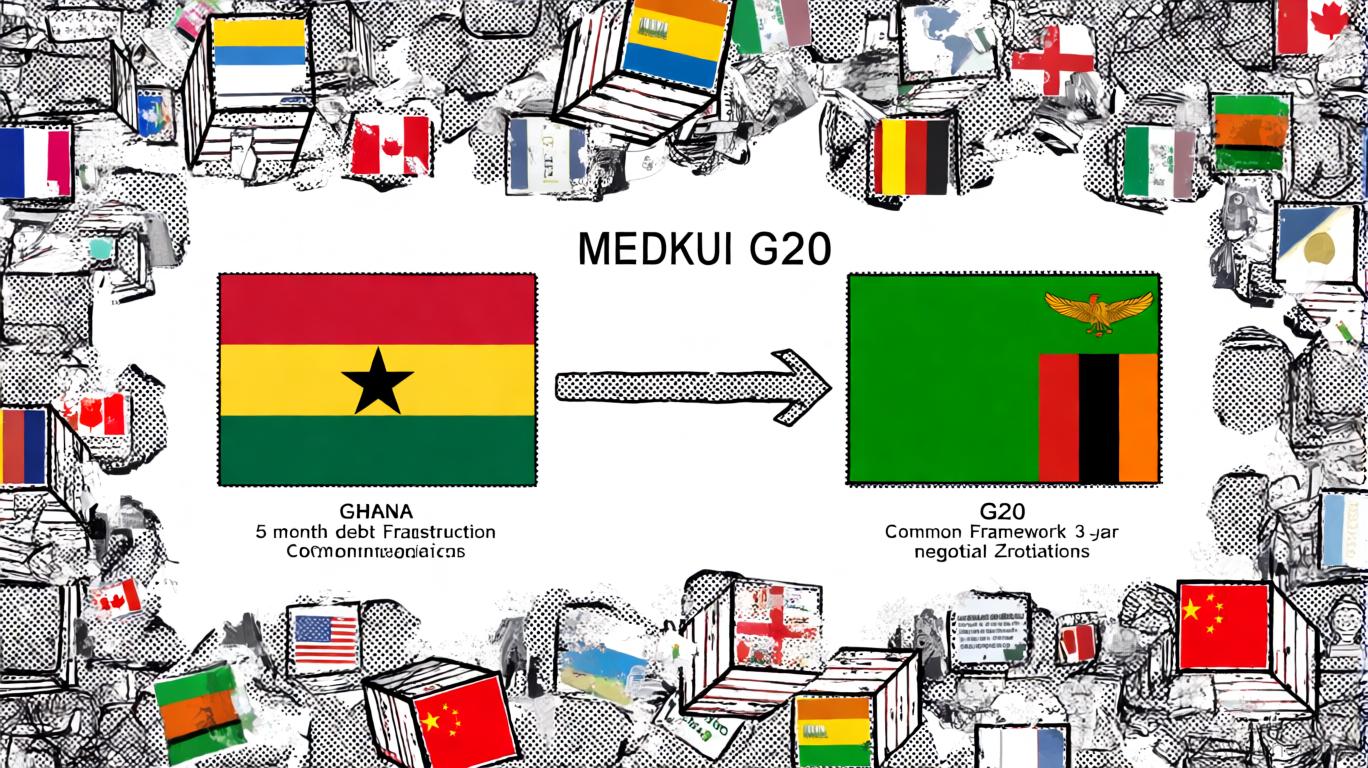
!imageGeopolitical Cooperation and Debt Restructuring Frameworks
The G20 Common Framework, established in 2020, seeks to harmonize debt relief for low- and middle-income countries by aligning official and private creditors. By 2025, landmark restructurings in Ghana and Zambia demonstrated the framework's potential and limitations. Ghana's restructuring, completed in five months, included $5.4 billion in bilateral debt relief and a domestic debt swap that saved 61 billion Ghanaian cedi. This swift action, coupled with fiscal reforms, restored investor confidence, with credit ratings improving and GDP growth exceeding 5% in Q1 2025, according to FurtherAfrica. In contrast, Zambia's $6.3 billion restructuring took over three years due to protracted negotiations between Chinese and Western creditors, underscoring the framework's struggles with inter-creditor equity, as FurtherAfrica reported.
The GSDR, co-chaired by the IMF, World Bank, and G20, has focused on technical improvements to debt sustainability frameworks. By 2025, it had produced compendiums on creditor treatment comparability and information sharing, streamlining processes for future cases, the World Bank reported. However, its impact on credit ratings remains limited, as seen in Fitch's downgrade of Ethiopia's sovereign rating to 'CCC' in 2021 due to stalled debt relief negotiations.
Quantitative Impacts on Sovereign Bond Markets
The MSCI Emerging Markets Sovereign Bond Index, with a notional value of $1.1 trillion as of 2024, reflects the scale of EM debt markets. Post-restructuring, Ghana's bond yields stabilized, while Zambia's yields remained elevated due to prolonged uncertainty. A 2023 study noted that global monetary policy—particularly central bank balance sheet expansions—reduced EM sovereign yields by up to 800 basis points for non-investment-grade issuers, masking some of the volatility caused by restructuring delays.
Investor flows have also been influenced by these dynamics. Ghana's swift restructuring attracted renewed capital inflows, whereas Zambia's protracted negotiations tempered investor appetite. The MSCI index highlights that most EM issuers maintained sustainable debt-to-GDP ratios, but credit spreads widened for countries with unresolved debt issues.
Challenges and the Path Forward
Despite progress, structural inefficiencies persist. The Common Framework's voluntary nature and lack of enforceable rules have delayed outcomes, as seen in Ethiopia's ongoing negotiations. Additionally, domestic debt treatment remains contentious; Zambia excluded non-resident domestic debt from restructuring, raising concerns about burden-sharing fairness, as FurtherAfrica reported.
For investors, the key takeaway is the growing importance of geopolitical coordination in mitigating EM debt risks. While frameworks like the GSDR are building technical capacity, systemic reforms—such as binding creditor agreements and standardized debt sustainability metrics—are needed to ensure equitable and timely resolutions.
Conclusion
Geopolitical cooperation has undeniably advanced EM debt sustainability, but its success hinges on resolving inter-creditor disputes and streamlining frameworks. For investors, the lessons from Ghana and Zambia underscore the need to balance optimism with caution, prioritizing countries that demonstrate fiscal discipline and structural reforms. As the GSDR and Common Framework evolve, their ability to address systemic challenges will shape the future of EM sovereign bond markets.







Comentarios
Aún no hay comentarios