
The Emerging Market in Aviation Cyber-Physical Resilience
The Airbus A320 Incident: A Wake-Up Call for Aviation Safety
The October 2025 incident revealed a systemic risk: the susceptibility of flight control systems to solar radiation. Airbus identified that intense solar activity could corrupt data in the ELAC hardware, particularly in software version L104, leading to uncommanded elevator movements that risked exceeding structural limits. The fix-reverting to older software versions for 85% of affected aircraft or replacing hardware for older models-highlighted the industry's reliance on reactive strategies rather than proactive resilience. This crisis underscores a growing need for radiation-hardened software and hardware, as well as predictive maintenance systems capable of mitigating such risks.
Market Dynamics: Radiation-Resilient Tech and Aerospace Software
The global radiation-hardened electronics market, valued at $1.77 billion in 2025, is projected to grow at a 5.4% CAGR to $2.30 billion by 2030. This expansion is fueled by rising demand from defense, space, and commercial aviation sectors, where radiation-tolerant components are critical for satellites, drones, and high-altitude aircraft. Innovations such as silicon-on-insulator (SOI) and wide-bandgap semiconductors (e.g., gallium nitride and silicon carbide) are enabling more efficient and reliable radiation-hardened solutions.
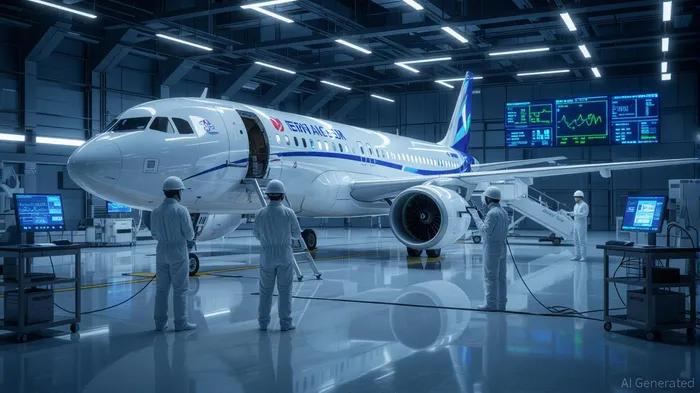 Simultaneously, aerospace software providers are integrating artificial intelligence (AI) and machine learning to enhance flight control systems. For instance, Honeywell Aerospace reported a 15% year-over-year sales increase in its aerospace segment during Q3 2025, driven by demand for advanced avionics and defense systems. The company's recent acquisition of Li-ion Tamer, a fire detection technology firm, and its planned spinoff of Solstice Advanced Materials signal a strategic pivot toward resilience-focused innovation (https://investor.honeywellHON--.com/news-releases/news-release-details/investor-relations-insights-september-2025-edition).
Key Players and Financial Performance
Several firms are emerging as leaders in this space. Honeywell Aerospace has demonstrated robust financial performance, with Q3 2025 sales of $10.4 billion and adjusted earnings per share of $2.82, exceeding expectations. Its focus on radiation resilience and automation positions it to capitalize on post-A320 incident demand. Similarly, Thales Group reported €3.9 billion in aerospace order intake for 2025, driven by defense contracts and avionics demand (https://www.thalesgroup.com/en/news-centre/press-releases/thales-reports-its-order-intake-and-sales-september-30-2025). The company's investments in radiation-hardened technology for space and defense applications align with industry trends.
Garmin, another key player, achieved record Q3 2025 revenue of $1.8 billion, with a 12% year-over-year increase. Its recent FAA certification of Autoland and Autothrottle systems for King Air 350 aircraft highlights its leadership in autonomous flight technologies. Meanwhile, STMicroelectronics, a major supplier of radiation-hardened components, reported $3.19 billion in Q3 2025 net revenues, with a gross margin of 33.2%, reflecting strong demand for its mission-critical electronics.
Investment Implications
The Airbus A320 incident has acted as a catalyst, accelerating adoption of radiation-resilient technologies and advanced flight control software. Investors should prioritize firms with:
1. Proven expertise in radiation-hardened electronics (e.g., Microchip Technology, BAE Systems).
2. Leadership in AI-driven aerospace software (e.g., Honeywell, Thales).
3. Strong financials and strategic acquisitions to address emerging risks.
However, challenges remain. High development costs and long qualification cycles for radiation-hardened components could slow innovation. Yet, the growing commercial space sector and government contracts offer a buffer, ensuring sustained demand.
Conclusion
The aviation industry's response to the A320 incident underscores a broader shift toward cyber-physical resilience. As solar radiation threats and software vulnerabilities become more prominent, firms specializing in radiation-hardened electronics and advanced flight control systems will play a pivotal role in ensuring safety and operational continuity. For investors, this represents a high-conviction opportunity in a market poised for long-term growth.







Comentarios
Aún no hay comentarios