
Emerging ICE Infrastructure and Public Safety Tech in Minneapolis: A Dual-Edged Investment Opportunity
The intersection of federal immigration enforcement infrastructure and public safety technology in Minneapolis has created a complex landscape for investors. While the city has taken firm steps to resist federal ICE operations on local property, the deployment of thousands of agents and the construction of detention facilities in adjacent areas like Woodbury have sparked both controversy and economic activity. Meanwhile, Minneapolis's push to modernize its public safety ecosystem through technology and community-focused programs offers contrasting investment signals. This analysis explores the tensions and opportunities arising from these developments, focusing on real estate adjacency and technological innovation.
Federal ICE Infrastructure: A Contested Expansion
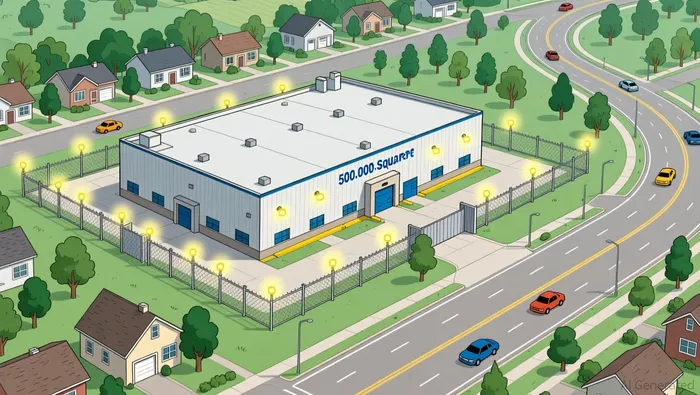
Minneapolis has explicitly barred the use of city-owned properties for ICE operations via Executive Order 2025-02, a move aimed at preserving community trust and public safety. However, federal efforts have persisted. By late 2025, the Trump administration had deployed 2,000 ICE agents to the Minneapolis area as part of a nationwide crackdown on immigration, including allegations of fraudulent refugee applications. A key development is the conversion of a 500,000-square-foot industrial building at 11435 Hudson Road in Woodbury into a makeshift ICE prison, capable of holding up to 1,500 detainees. This facility, previously unleased since 2023, underscores the federal government's strategy to repurpose underutilized infrastructure for immigration enforcement.
The proximity of such facilities to residential and commercial areas raises questions about their impact on local real estate. Woodbury's housing market, for instance, has shown mixed signals. While median home prices dropped 9.89% year-over-year to $410,000 in November 2025, the area remains attractive due to its strategic location near the I-94 corridor and the Gold Line Bus Rapid Transit (BRT) system. Investors must weigh the potential for increased federal activity against Woodbury's broader appeal as a suburban hub with expanding logistics infrastructure.
Public Safety Tech: A Counterbalance to Federal Tensions
In contrast to the federal ICE push, Minneapolis has invested heavily in reimagining public safety through technology and community engagement. The Office of Community Safety (OCS) has launched initiatives such as the Community Safety Ambassador pilot program, set to debut in May 2026 along Lake Street and Franklin Avenue corridors. These efforts align with the city's Safe and Thriving Communities Plan, which emphasizes non-police responses to crises, including behavioral health interventions and portable lighting for high-risk areas.
The Minneapolis Police Department (MPD) has reported measurable success: a 32% reduction in gunshot victims and a 40% decline in robberies and carjackings year-to-date. Such metrics could enhance the desirability of neighborhoods where these programs are implemented, particularly in areas like North and South Minneapolis, where new community safety centers have been established. Additionally, the Minneapolis Fire Department's integration of behavioral crisis response teams and the Emergency Communications Center's upgraded radio systems highlight a broader trend toward technology-driven safety solutions.
Real Estate Adjacency: Gold Line BRT and ICE Facilities
The Gold Line BRT corridor has emerged as a focal point for real estate development, with $805 million in permitted projects completed in 2025. Stations in Sun Ray and Greenway Avenue are being positioned as walkable hubs, attracting mixed-use developments that cater to both residential and commercial demand. This infrastructure, combined with the city's public safety investments, could drive long-term value in adjacent neighborhoods.
Conversely, properties near ICE facilities face unique challenges. The 11435 Hudson Road site in Woodbury, now slated for ICE use, has seen fluctuating real estate dynamics. While the median price per square foot rose 3.1% year-over-year to $199, the area's rental market has surged, with median monthly rents increasing 8.72% to $2,903 in October 2025. Investors may find opportunities in Woodbury's industrial sector, where single-tenant activity and logistics demand have supported absorption rates despite a 5.0% vacancy rate in Q2 2025.
Risks and Considerations
The dual forces of federal ICE expansion and local public safety innovation create a volatile environment. Protests, legal challenges, and community distrust linked to ICE operations could depress property values in adjacent areas. Conversely, neighborhoods benefiting from public safety tech-such as those with reduced crime rates and enhanced crisis response-may see sustained demand. Investors should also monitor the federal government's long-term plans for detention facilities, as policy shifts could alter the trajectory of projects like the Woodbury site.
Conclusion
Minneapolis's landscape of ICE infrastructure and public safety technology presents a paradox for investors. While federal enforcement activities in Woodbury and surrounding areas introduce uncertainty, the city's commitment to community-focused safety initiatives and transit-oriented development offers compelling opportunities. Real estate adjacency to the Gold Line BRT and areas with proven crime reduction metrics may outperform properties near ICE facilities, particularly as local policies continue to prioritize equity and transparency. For investors, the key lies in balancing proximity to federal infrastructure with the city's broader vision for a safer, more inclusive future.







Comentarios
Aún no hay comentarios