
Emerging Hospitality Sector Opportunities: Early-Stage Restaurant Chain Expansion in 2025
The global restaurant industry is undergoing a transformative phase, driven by technological innovation, sustainability imperatives, and shifting consumer preferences. As of 2025, the market is projected to reach $4.03 trillion in value, growing at a compound annual growth rate (CAGR) of 7.8% through 2032, according to Restroworks' industry statistics. This expansion is fueled by urbanization, the resurgence of international tourism, and the rapid adoption of digital ordering platforms, which are valued at $380 billion globally in 2024 and expected to grow at over 9% annually. For investors, early-stage restaurant chain expansion-particularly in cloud kitchens, tech-integrated models, and sustainability-driven ventures-offers compelling opportunities.
Cloud Kitchens: Scalability and Cost Efficiency
Cloud kitchens, or "ghost kitchens," have emerged as a cornerstone of modern hospitality innovation. The global cloud kitchen market was valued at $73.8 billion in 2024 and is projected to reach $81.7 billion in 2025, expanding at a CAGR of ~10.6% through 2033. These kitchens leverage lower overhead costs and digital-first delivery models to enable rapid scalability. For instance, the U.S. cloud kitchen market is anticipated to grow to $27.47 billion by 2032, per a Mordor Intelligence report.
Investors are increasingly targeting cloud kitchen ventures with hybrid models that combine virtual brands with physical touchpoints. Wonder Group, for example, secured a $600 million Series E round in Q3 2025, tied to expansion milestones and EBITDA breakeven goals, according to AGC Partners' market update. Similarly, India's Skope Kitchens has introduced a managed kitchen-as-a-service platform, allowing brands to scale without upfront capital expenditures. These examples underscore the sector's potential for high returns, particularly in markets with robust delivery infrastructure.
Tech-Driven Innovation: AI and Digital Integration
Technology is reshaping restaurant operations, with automation, AI, and data analytics becoming table stakes for competitiveness. A 2025 SmartBridge study highlights that 58% of restaurant operators plan to increase IT budgets to enhance digital customer engagement and reduce costs. For example, Starbucks has leveraged its mobile app to boost customer loyalty, while Domino's uses AI for real-time order tracking and voice-activated ordering.
The ROI for tech-driven models is evident in operational efficiencies. One major chain partnered with a tech firm to implement generative AI for consolidating customer feedback, enabling data-driven decisions that improved service quality and reduced waste. Additionally, automation in inventory management and vendor processing has cut operational costs by up to 20% for early-stage chains. These innovations are particularly attractive in regions like the southern U.S., where lower labor costs and high delivery demand create favorable conditions for multi-unit expansion, as noted in a Forbes article.
Sustainability as a Competitive Edge
Sustainability is no longer a niche concern but a critical differentiator. A 2025 report by the National Restaurant Association notes that 90% of diners globally consider sustainability when choosing where to eat. Chains like Dave's Hot Chicken and Bojangles are expanding in the American South by emphasizing farm-to-table sourcing and eco-friendly packaging. The Michelin Guide's debut in the region further validates this trend, spotlighting restaurants that prioritize local partnerships and transparent sourcing.
Financially, sustainability initiatives yield long-term value. For instance, energy-efficient technologies and waste reduction programs can cut costs by 10–15%, while enhancing brand reputation attracts eco-conscious consumers, as shown in Restroworks case studies. The Sustainable Restaurant Association (SRA) highlights case studies where sustainability-driven practices increased customer loyalty and revenue by 12–18%.
Investment Landscape: Returns and Challenges
While the sector offers strong growth potential, investors must navigate a mixed capital environment. Q3 2025 saw significant exits, including DoorDash's $3.8B acquisition of Deliveroo and Thoma Bravo's $2.0B take-private of Olo. However, the broader venture capital market remains cautious, with exit volumes declining by 30.1% year-over-year in 2024, according to a Development Corporate analysis.
Despite this, high-potential sectors like cloud kitchens and sustainability-focused chains continue to attract capital. For example, NEA and Temasek led $600M and $210M rounds in Wonder and Rebel Foods, respectively, in 2024–2025. These investments reflect confidence in scalable, tech-integrated models that align with consumer trends.
Conclusion
The hospitality sector's early-stage expansion presents a unique confluence of technological innovation, sustainability, and scalability. Cloud kitchens offer cost-efficient delivery models, tech-driven solutions enhance operational ROI, and sustainability practices align with consumer values. While venture capital exits remain selective, strategic investments in high-growth regions like the southern U.S. and Asia-Pacific-where cloud kitchens are projected to grow at 21.81% CAGR through 2030-can yield substantial returns. For investors, the key lies in identifying ventures that combine these elements to create durable value in an evolving market.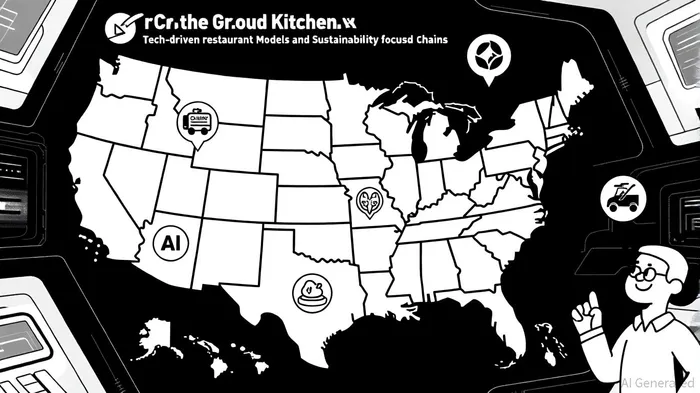





Comentarios
Aún no hay comentarios