
Emerging Defense Contractors Outpacing Legacy Giants in the Post-Trump Budget Era
The defense sector is undergoing a seismic shift as President Donald Trump's proposed $1.5 trillion 2027 budget reshapes capital allocation priorities and modernization goals. At the heart of this transformation lies a stark divergence in strategies between emerging defense contractors like KratosKTOS-- Defense & Security Solutions and legacy giants such as Lockheed MartinLMT-- and BoeingBA--. While the latter continue to prioritize shareholder returns through buybacks and dividends, companies like Kratos are doubling down on reinvestment in mission-critical technologies, aligning with Pentagon priorities for accelerated readiness and industrial base expansion. This strategic contrast is not just reshaping market dynamics but also redefining what it means to be a "defense contractor" in an era of heightened geopolitical risk and technological urgency.
Kratos' Reinvestment-First Model: A New Paradigm
Kratos has positioned itself as a poster child for the reinvestment-first approach, a strategy that eschews stock buybacks and dividends in favor of direct capital deployment into technologies critical to national security. According to a report by Kratos, the company's capital allocation philosophy centers on "development, production, and fielding of affordable, mission-ready technologies for the warfighter." This model has enabled Kratos to self-fund advancements in areas such as unmanned systems, hypersonics, propulsion, and defense electronics-sectors explicitly highlighted in Trump's 2027 budget as priorities for modernization.
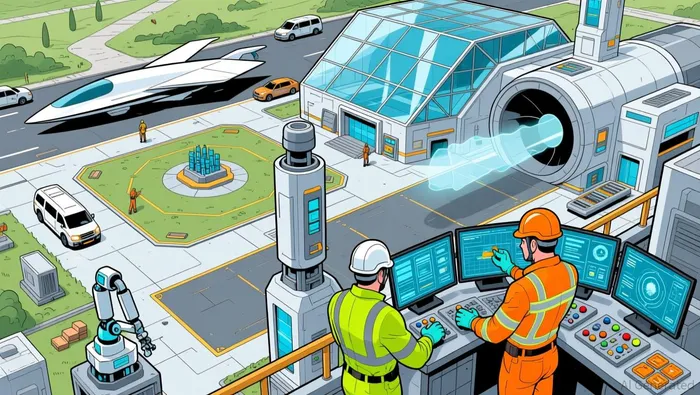
A concrete example of this strategy in action is Kratos' $68.3 million contract to build a hypersonic materials testing facility, a project aimed at accelerating the development of thermal protection systems for hypersonic vehicles. The company has also committed to ordering 60 Zeus hypersonic motors to streamline inventory and reduce delivery timelines. These projects underscore Kratos' ability to align its innovation cycles with Pentagon demands for scalable, affordable solutions. By maintaining inventory and investing in infrastructure, Kratos ensures that capabilities are available when needed, rather than delayed by bureaucratic or financial constraints according to market analysis.
Legacy Contractors: Buybacks Over Readiness
In contrast, legacy defense contractors have historically relied on buybacks and dividends to reward shareholders. For instance, Lockheed Martin returned $4.6 billion to shareholders in 2025 through buybacks and dividends. While these returns may appeal to investors seeking short-term gains, they come at the expense of reinvestment in the industrial base. This tension has been amplified by Trump's proposed restrictions on stock buybacks and dividends for defense firms until they improve production and maintenance of military equipment.
The scrutiny of buyback-heavy strategies is further compounded by the Pentagon's push for faster innovation cycles and expanded industrial capacity. As stated by Kratos CEO Eric DeMarco, "Disciplined reinvestment translates into direct operational advantages," a sentiment that highlights the growing disconnect between legacy models and modernization imperatives. Legacy firms, with their larger overhead and more complex bureaucracies, may struggle to match the agility of companies like Kratos, which prioritize speed and affordability.
Alignment With Trump's $1.5 Trillion Budget and Pentagon Priorities
Trump's 2027 budget, a 50% increase from the 2026 allocation, emphasizes "Dream Military" goals such as hypersonic weapons, AI-driven systems, and unmanned platforms. Kratos' reinvestment strategy is not only compatible with these priorities but also structurally designed to capitalize on them. By avoiding financial engineering and focusing on production readiness, Kratos can deliver systems at scale, a critical factor in an era where quantity often trumps quality in defense procurement.
Moreover, the budget's emphasis on industrial base expansion aligns with Kratos' approach to infrastructure investment. The company's ability to self-fund development and production risks ahead of formal customer funding positions it to outpace competitors reliant on traditional contracting models. This is particularly relevant for hypersonics and AI, where rapid iteration and large-scale deployment are non-negotiable.
Implications for Investors
For investors, the divergence between Kratos and legacy contractors represents a pivotal inflection point. While buyback-driven firms may offer immediate returns, their long-term viability is increasingly tied to regulatory and market pressures favoring reinvestment. Kratos, meanwhile, is positioned to benefit from both policy tailwinds and operational advantages. Its alignment with Trump's budget and Pentagon priorities suggests a sustainable model that prioritizes national security outcomes over shareholder appeasement-a rare alignment in the defense sector.
As the 2027 budget moves through Congress, the defense industrial base will likely see a further shift toward readiness-focused policies. Companies that embrace this shift-like Kratos-stand to outperform peers clinging to outdated capital allocation strategies. In a world where speed and scale define success, the reinvestment-first model is not just a competitive edge; it's a necessity.





Comentarios
Aún no hay comentarios