
The Emergence of Tokenized Treasuries as Onchain Collateral: A New Era in Institutional Crypto Capital Efficiency
Strategic Implications for Institutional Investors
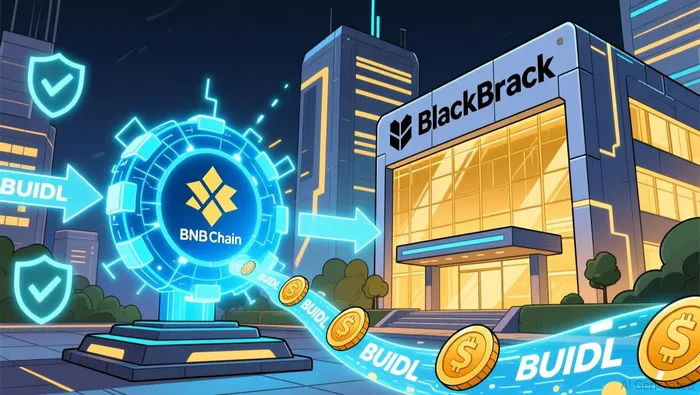
BUIDL's expansion to BNB Chain offers institutional investors a dual advantage: yield generation and enhanced liquidity. Backed by U.S. Treasuries and pegged to the dollar, BUIDL yields approximately 3.7% annually, a rate that rivals traditional money market instruments while providing onchain flexibility. For institutions, this means they can deploy capital more dynamically-using BUIDL as collateral for leveraged positions on Binance without sacrificing exposure to risk-free assets according to industry analysis.
The collaboration between BlackRockBLK--, Binance, and BNB Chain also highlights the importance of regulatory compliance in scaling these innovations. BUIDL's integration with Binance's triparty banking agents and custody partner Ceffu ensures adherence to institutional-grade compliance standards. This alignment with regulatory frameworks reduces friction for institutions hesitant to enter the crypto space, thereby accelerating adoption.
Capital Efficiency and Interoperability
The strategic value of BUIDL lies in its ability to bridge onchain and offchain markets. By expanding to BNB Chain, BUIDL gains interoperability with decentralized finance (DeFi) protocols, allowing institutions to engage in yield farming, lending, or structured products while maintaining dollar stability. This is particularly significant for BNB Chain, which positions itself as a low-cost, high-throughput platform for financial innovation.
Data from Q3 2025 reveals that BUIDL's $2.5 billion in assets under management has driven a 15% increase in Binance's institutional trading volumes according to market data. This growth underscores the demand for assets that combine the transparency of blockchain with the security of traditional treasuries.
Regulatory Considerations and Future Outlook
While BUIDL's success hinges on its compliance infrastructure, regulatory scrutiny remains a wildcard. The U.S. Securities and Exchange Commission (SEC) has yet to issue clear guidelines on tokenized funds, though BUIDL's structure-leveraging existing money market fund frameworks-mitigates some risks according to industry reports. As more institutions adopt similar strategies, regulators may follow suit in formalizing frameworks for tokenized RWAs.
Looking ahead, the BUIDL-BlackRock-BNB Chain model could inspire broader adoption of tokenized assets across asset classes. For instance, tokenized corporate bonds or real estate could follow a similar path, further blurring the lines between traditional and digital finance.
Conclusion
The integration of BUIDL on BNB Chain is more than a technical upgrade-it is a strategic milestone. By offering yield, liquidity, and compliance, tokenized treasuries are redefining institutional capital efficiency. As blockchain infrastructure matures, institutions that embrace these innovations will gain a competitive edge in an increasingly hybrid financial landscape.







Comentarios
Aún no hay comentarios