
The Emergence of a Regulated Clean Energy Trading Market and Its Implications for Institutional Investors
Market Infrastructure Innovation: CleanTrade and the CFTC Framework
In September 2025, REsurety's CleanTrade platform became the first marketplace for clean energy transactions to receive CFTC approval. This regulatory endorsement marks a pivotal shift in how renewable energy assets are traded. CleanTrade facilitates Virtual Power Purchase Agreements (VPPAs), physical Power Purchase Agreements (PPAs), and project-specific Renewable Energy Certificates (RECs) in a transparent, liquid environment. Prior to its launch, these transactions relied on fragmented, manual processes that hindered scalability and institutional participation.
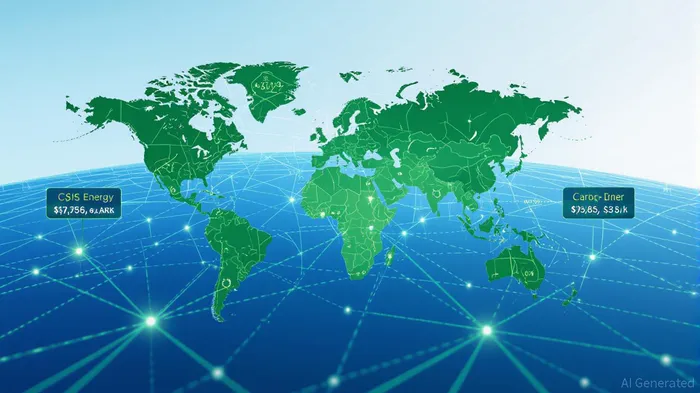
The platform's impact has been immediate. Within two months of its launch, CleanTrade facilitated $16 billion in notional trades, demonstrating strong market adoption. This success stems from its integration with REsurety's CleanSight analytics, which provides real-time financial and environmental insights, enabling buyers and sellers to manage risk. By standardizing pricing and streamlining workflows, CleanTrade has reduced the inefficiencies of traditional bilateral negotiations, offering the same liquidity and transparency long associated with fossil fuel markets.
Policy Drivers and Global Investment Trends
The growth of clean energy derivatives and VPPAs is being propelled by policy frameworks that vary significantly across regions. In Asia, governments are leading the charge. Vietnam's revised Power Development Plan 8, which raised solar and onshore wind targets, and Malaysia's National Energy Transition Roadmap (NETR)-which aims to increase renewable energy's share to 70% by 2050-have created predictable investment environments. India's stable policies, such as priority dispatch for renewables and transmission charge waivers, have driven some of the world's most competitive solar and wind pricing. Meanwhile, China's $818 billion in renewable investments in 2024-up 20% from 2023-highlights the scale of policy-driven growth in the region.
However, the U.S. presents a contrasting picture. A 36% decline in renewable investments under recent policy shifts, including the halt of offshore wind projects and stricter onshore regulations, has led to a 50% downward revision of growth forecasts. Despite these challenges, global offshore wind capacity is projected to reach 140 GW by 2030, albeit with persistent supply chain and regulatory hurdles in key markets.
Investment Potential and Risk-Return Dynamics
For institutional investors, the long-term potential of clean energy derivatives and VPPAs lies in their ability to hedge against fossil fuel price volatility while aligning with decarbonization goals. However, these instruments are sensitive to policy and market risks. Sudden changes in subsidies, feed-in tariffs, or carbon pricing can disrupt profitability, as noted in a risk-based analysis of renewable energy investments. Additionally, high upfront capital costs and technological obsolescence pose challenges.
CleanTrade mitigates some of these risks by providing standardized pricing and real-time liquidity, which reduce counterparty exposure and enhance transparency. This is particularly critical in a market where traditional bilateral negotiations often lack the safeguards of regulated exchanges. For example, the platform's ability to aggregate demand and supply in a single venue allows investors to diversify their clean energy portfolios more effectively, balancing geographic and technological risks.
Conclusion: A New Paradigm for Institutional Investors
The emergence of regulated clean energy trading platforms like CleanTrade represents a paradigm shift. By addressing market fragmentation and enhancing transparency, these platforms are enabling institutional investors to treat clean energy as a tradable asset class. While policy uncertainties and market volatility remain, the integration of robust financial infrastructure-backed by CFTC oversight-provides a foundation for scalable, diversified investments.
As global renewable energy investments approach $1 trillion annually, the role of platforms like CleanTrade in facilitating liquidity and risk management will only grow. For institutional investors, the message is clear: the future of energy markets is not just about sustainability but also about structured innovation.







Comentarios
Aún no hay comentarios