
The Emergence of Meme Coin ETFs: A New Frontier in Altcoin Investment?
The Allure and the Hype
Dogecoin's rise from a joke to a top-10 cryptocurrency by market cap is a testament to the power of community-driven narratives. With 2.5 million Reddit followers and a cult-like following fueled by social media and celebrity endorsements (Elon Musk's tweets remain a key price driver), DOGE has carved out a niche in microtransactions and tipping. Its low fees and meme-driven adoption have even attracted merchants, creating a veneer of utility. Yet, as a recent analysis from ResearchGate underscores, Dogecoin's inflationary supply model and lack of foundational innovation-unlike blockchains like SolanaSOL--, which boast 65,000 transactions per second-pose existential challenges for long-term viability.
Institutional investors, however, are not blind to the risks. The same report highlights that meme coins fail to meet the "price stability" and "regulatory oversight" benchmarks that secured BitcoinBTC-- and Ethereum's ETF approvals. This is no minor oversight: The U.S. government's strategic pivot toward Bitcoin as a reserve asset further marginalizes Dogecoin's role in institutional portfolios.
Volatility and the Volatility Tax
Dogecoin's price history is a rollercoaster. In November 2024, it surged 200% to $0.46, only to plummet 55% shortly after. Such volatility is not a bug but a feature of meme coins, which derive value from sentiment rather than fundamentals. For institutions, this means a double-edged sword: high-risk, high-reward opportunities for short-term trading versus the potential for catastrophic drawdowns.
The Grayscale XRP ETF (GXRP), which launched alongside GDOGGDOG--, offers a partial counterpoint. Ripple's token benefits from clearer use cases in cross-border payments, yet even it faces skepticism. The broader altcoin ETF market remains a gamble, with investors betting on the hope that regulatory clarity and network effects will eventually justify the risks.
Regulatory Quicksand
The absence of a robust regulatory framework for meme coins is a critical barrier. Unlike Bitcoin futures markets, which provided a blueprint for ETF approvals, DogecoinDOGE-- lacks the infrastructure to satisfy institutional due diligence. A March 2025 Grayscale report notes that firms are increasingly pivoting to stablecoins and tokenized real-world assets-categories with clearer compliance pathways. This shift underscores a harsh reality: Meme coins may thrive in retail markets but struggle to meet the standards of institutional-grade assets.
Strategic Implications: Niche or Noise?
Dogecoin's cultural significance cannot be ignored. It remains a gateway asset for retail investors, with its low entry barriers and meme-driven appeal ensuring a place in the crypto ecosystem. However, its strategic value for institutions is limited. As Phemex's 2025 trading guide argues, Dogecoin's future hinges on its ability to evolve beyond "tipping" and into more robust use cases-a feat it has yet to achieve.
Meanwhile, the rise of tokenized assets and stablecoins signals a tectonic shift in institutional priorities. Firms like Stripe and PayPal are doubling down on stablecoins for payments, while tokenized real estate and commodities offer tangible yields. In this landscape, meme coins risk becoming relics of a bygone era-a digital equivalent of Beanie Babies.
Conclusion: A Gamble or a Gimmick?
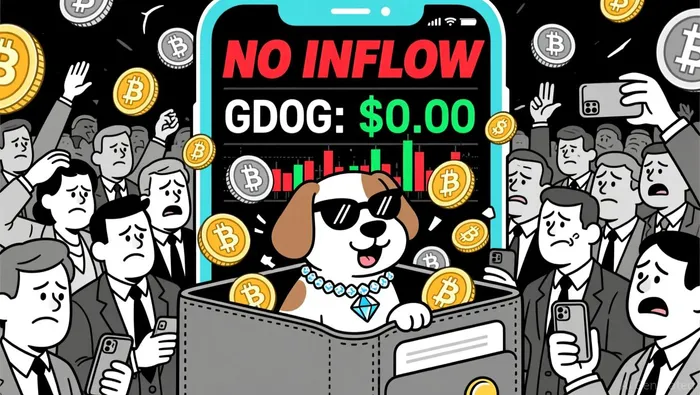
The emergence of meme coin ETFs is a fascinating experiment in financial innovation. For institutions, the strategic calculus is clear: These products offer speculative upside but come with volatility, regulatory uncertainty, and limited utility. The GDOG launch, with its zero inflows, serves as a cautionary tale. Yet, for a sector built on disruption, the mere existence of these ETFs is a victory.
Investors must ask themselves: Are they buying into a community, a commodity, or a con? The answer will determine whether meme coin ETFs are a fleeting fad or a foundational asset class. For now, the jury is out-but the show must go on.





Comentarios
Aún no hay comentarios