
The Emergence of Liquid Clean Energy Markets: CleanTrade and the Future of Green Finance
A New Era of Market Transparency and Liquidity
CleanTrade's CFTC approval in September 2025 marked a pivotal regulatory milestone, establishing it as the first and only SEF for clean energy derivatives. This designation enables the platform to operate as a governed marketplace where buyers, sellers, and traders can negotiate and execute deals with full visibility into bids, offers, and post-trade compliance according to platform updates. Within two months of its launch, CleanTrade achieved $16 billion in notional trading volume, a testament to the pent-up demand for institutional-grade clean energy instruments.
The platform's integration of REsurety's CleanSight analytics further enhances its value proposition. By providing real-time insights into grid congestion, curtailment risks, and project-specific carbon impact data, CleanSight empowers market participants to hedge against energy price volatility while aligning with rigorous environmental metrics according to research reports. This combination of financial and environmental analytics 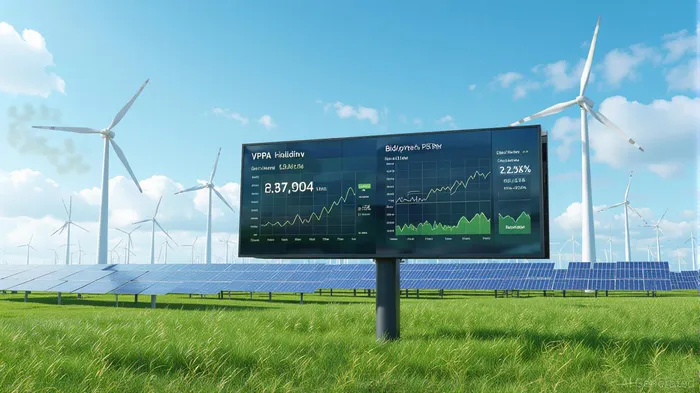 bridges the gap between traditional energy trading and clean energy, enabling corporations and investors to achieve both budget certainty and ESG goals.
Corporate ESG Strategies: From Ambition to Execution
For Fortune 500 companies, CleanTrade's infrastructure directly supports the operationalization of ESG strategies. As global ESG assets are projected to grow from $39.08 trillion in 2025 to $125.17 trillion by 2032, corporations are under increasing pressure to demonstrate accountability across their value chains. Platforms like CleanTrade facilitate this by enabling transparent procurement of VPPAs and RECs, which are critical for reducing Scope 3 emissions.
Case studies from 2025 highlight this impact. For instance, Unilever has tied executive compensation to sustainability performance via its Sustainability Progress Index, a strategy that CleanTrade's tools can further enhance by providing granular data on carbon offsets and renewable energy procurement according to ESG strategy reports. Similarly, Walmart's Project Gigaton, which has already avoided 750 million metric tons of emissions through supplier collaboration, could leverage CleanTrade's liquidity to scale its renewable energy procurement at lower risk according to industry analysis. Salesforce's Net Zero Cloud platform, designed to track Scope 3 emissions, also benefits from CleanTrade's ability to streamline REC transactions, enabling more precise carbon accounting according to case studies.
Project Financing and Portfolio Diversification
CleanTrade's role extends beyond corporate procurement to the broader financing of renewable energy projects. In Q3 2025, U.S. clean energy investment reached $75 billion, with $25 billion allocated to production and industrial decarbonization. CleanTrade's platform accelerates this trend by reducing transaction costs and time-streamlining workflows from bid sourcing to contract execution within a single system according to industry analysis. This efficiency is critical for developers seeking to secure financing at every project stage, from development to operation according to financial insights.
Moreover, the platform's ability to treat VPPAs and RECs as institutional-grade commodities has attracted major players like Cargill and Mercuria, who are now treating clean energy as a serious asset class according to market reports. This shift is reflected in the U.S. renewable energy market, where solar, wind, and battery storage accounted for 85% of new generation capacity in Q2 2025. By providing a regulated, transparent environment, CleanTrade mitigates the risks associated with project-specific financing, making it easier for investors to diversify their portfolios with clean energy assets .
The Road Ahead: Green Finance as a Cornerstone of Capital Markets
The implications of CleanTrade's success are profound. As ESG-linked assets surpass $50 trillion by 2025, the integration of clean energy into mainstream finance is no longer a niche pursuit but a necessity. CleanTrade's CFTC approval has set a precedent, demonstrating that regulatory frameworks can evolve to support innovation without compromising market integrity. For investors, this means access to a new asset class with strong growth potential and aligned with global decarbonization goals. For corporations, it means a scalable, transparent pathway to meet ESG targets while managing financial risk.
However, challenges remain. Geopolitical uncertainties and evolving regulatory standards, such as the EU's CSRD and California's climate laws, will require continuous adaptation. CleanTrade's role in providing real-time analytics and compliance tools will be critical in navigating these complexities.
Conclusion
CleanTrade's emergence as a CFTC-approved SEF represents more than a technological innovation-it is a paradigm shift in how clean energy is valued, traded, and integrated into global capital markets. By addressing the structural inefficiencies of traditional markets, the platform is unlocking liquidity, transparency, and scalability for renewable assets. As Fortune 500 companies and institutional investors increasingly prioritize ESG-aligned strategies, CleanTrade's infrastructure will serve as a linchpin in the transition to a sustainable economy. The future of green finance is no longer a distant vision; it is here, and it is being built on the foundations of market infrastructure innovation.







Comentarios
Aún no hay comentarios