
The Emergence of General-Purpose Embodied AI: Why X Square Robot is a Strategic Bet in China's Robotics Revolution
China's robotics industry is undergoing a seismic transformation, driven by the convergence of artificial intelligence and physical systems. In 2025, the sector's revenue surged by 29.5% year-over-year, fueled by the production of 595,000 industrial robots and 13.5 million service robots in the first three quarters alone. This growth is not merely quantitative but qualitative, as embodied AI-systems that integrate perception, reasoning, and physical action-emerges as a defining force. At the forefront of this revolution is X Square Robot, a company leveraging a foundation model-driven robotics ecosystem to redefine the boundaries of general-purpose embodied intelligence. For investors, X Square represents a compelling opportunity to capitalize on China's AI-driven industrial renaissance, underpinned by its closed-loop data mechanisms, hardware innovations, and strategic alignment with national technological priorities.
A Foundation Model for Generalizable Robotics
X Square's Wall-OSS (Wall of Open-Source Software) is a cornerstone of its investment thesis. Unlike traditional robotics systems, which require task-specific programming, Wall-OSS is designed to enable generalizable and robust embodied AI across multiple robot forms. The model employs a three-stage training process: high-level reasoning (e.g., task planning), fine-grained motor control (e.g., precise hand movements), and the fusion of both for real-world execution. This architecture allows the model to adapt to unpredictable environments, a critical capability for applications ranging from household chores to logistics.
What sets Wall-OSS apart is its closed-loop data feedback system, which continuously refines the model through physical interactions. For instance, when a Quanta X2 robot (X Square's flagship humanoid) performs a task like serving food on a cafeteria tray, the system collects data on tactile feedback, environmental conditions, and execution outcomes. This data is then fed back into the model, enabling iterative improvements in performance. By 2025, X Square had already trained its models on a dataset of real-world robotic actions, enhancing the system's ability to handle delicate tasks such as tool manipulation.
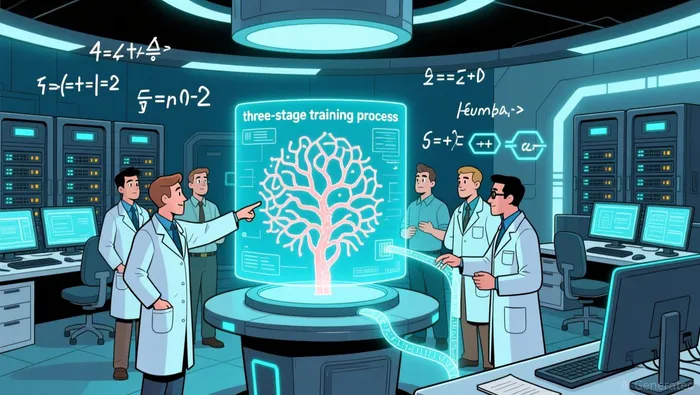 The open-source nature of Wall-OSS further amplifies its strategic value. By providing developers with tools to fine-tune the model, X Square is fostering an ecosystem of innovation. This approach mirrors the success of open-source AI frameworks like PyTorch and Hugging Face, which have accelerated industry-wide adoption.
Hardware Innovation: The Quanta X2 as a Case Study
While software is the backbone of X Square's ecosystem, its hardware innovations are equally transformative. The Quanta X2, a wheeled humanoid robot, exemplifies this synergy. With 62 degrees of freedom (DoF)-including 20-DoF dexterous hands equipped with tactile sensing-the robot can perform tasks requiring both strength and delicacy, such as assembling electronics or preparing meals. Its wheeled base, capable of speeds up to 1 m/s, ensures smooth mobility in dynamic environments, while a composite shell over an alloy frame balances durability with agility.
The Quanta X2's capabilities are powered by X Square's proprietary WALL-A operations model, a unified foundation model that integrates perception, reasoning, and control. This system enables the robot to autonomously map its surroundings using multi-sensor fusion (LiDAR, IMU, tactile sensors) and execute multi-step tasks without human intervention. For example, in a logistics setting, the robot can navigate a warehouse, identify misplaced items, and reorganize them-all while adapting to unexpected obstacles.
Competitive Positioning in a Rapidly Evolving Market
China's robotics landscape is highly competitive, with firms like AgiBot and Unitree Robotics dominating industrial shipments. In 2025, AgiBot led the global humanoid robot market with 5,168 units shipped, capturing 39% of the market. However, X Square's focus on AI-driven adaptability differentiates it from these production-centric competitors. While AgiBot and Unitree prioritize scale, X Square is betting on the long-term value of algorithmic innovation and open-source collaboration.
This strategy is supported by X Square's recent $100 million Series A+ funding round, led by Alibaba Cloud. The investment has enabled the company to accelerate development of its foundation model and reduce the cost of consumer robots-a critical step toward mass adoption. X Square aims to bring the price of its robotic butlers down to $10,000 within three to five years, a target that aligns with China's broader push to democratize AI-powered automation.
Strategic Alignment with China's AI Ambitions
X Square's trajectory is inextricably linked to China's national AI strategy, which emphasizes the integration of AI into the real economy. The government's 2017 AI development plan has catalyzed a surge in computing infrastructure, with China projected to have 1,037 exaflops of intelligent computing capacity by 2025. This ecosystem supports X Square's data-intensive training processes and positions the company to benefit from policy-driven growth.
Moreover, the rise of multimodal foundation models-a domain where Chinese startups like MiniMax have made global inroads- further strengthens X Square's competitive edge. By leveraging these advancements, the company is well-positioned to expand beyond robotics into adjacent sectors such as smart homes and industrial automation.
Conclusion: A High-Conviction Investment
For investors, X Square Robot embodies the intersection of cutting-edge AI research, hardware innovation, and strategic market positioning. Its foundation model-driven ecosystem, coupled with a closed-loop data system and modular hardware design, addresses key bottlenecks in robotics scalability. While the company faces competition from established players, its focus on adaptability and open-source collaboration creates a moat that is difficult to replicate.
As China's robotics market continues to grow- projected to expand from 398.5 billion yuan in 2025 to over 1.7 trillion yuan by 2035-X Square's ability to bridge the gap between AI and physical systems makes it a strategic bet for those seeking exposure to the next wave of technological disruption.







Comentarios
Aún no hay comentarios