
The Emergence of Fair Token Distribution: Analyzing Zero Knowledge Proof's ICA Model
A Paradigm Shift in Token Distribution
ZKP's ICA model operates on a daily 24-hour auction cycle, distributing 200 million tokens per cycle based on participants' contributions. Unlike traditional token sales, which often rely on fixed pricing and private investor rounds, ZKP's mechanism dynamically determines token value by dividing total contributions by the number of tokens available. For example, if $1 million is raised in a cycle, each $10,000 contribution would yield 1% of the 200 million tokens, or 2 million ZKP tokens. This proportional allocation ensures that no single participant can manipulate the market, as contributions are capped at $50,000 per wallet.
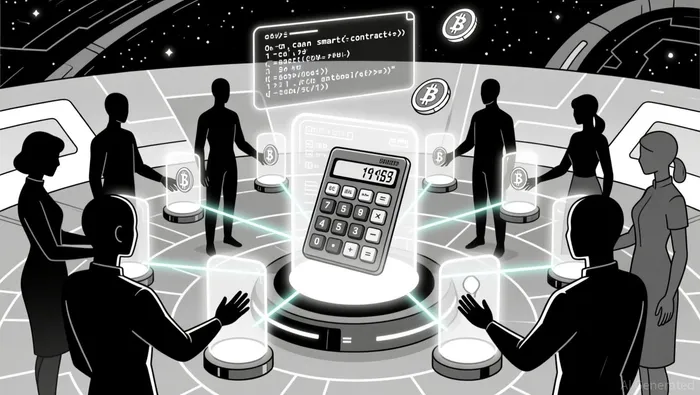 The model's mathematical transparency is further reinforced by on-chain verifiability. All transactions and calculations are publicly accessible, eliminating the need for trust in centralized entities. This contrasts sharply with conventional token sales, where opaque pricing and preferential allocations often lead to post-launch volatility and regulatory scrutiny.
Infrastructure Readiness and Investor Confidence
One of ZKP's most distinctive features is its pre-launch investment in infrastructure. The project has already allocated over $100 million to develop its technology, including custom hardware called Proof Pods, which support its decentralized AI network. This approach diverges from speculative projects that rely on vague roadmaps and unproven concepts. By building infrastructure before seeking investment, ZKP reduces the risk of underdelivery and aligns with growing investor demand for tangible value.
The ICA model also addresses a critical pain point in traditional token sales: the concentration of tokens among whales. By enforcing a $50,000 daily contribution limit and automating allocations via smart contracts, ZKP neutralizes the influence of large investors. This democratization of access is a strategic advantage in a market where retail participation is increasingly valued.
Real-World Applications and Market Positioning
ZKP's utility extends beyond token distribution. The project has secured high-profile partnerships with entities like FC Barcelona and the NRL Dolphins, leveraging its privacy-preserving AI technology for applications in sports analytics and fan engagement. These partnerships underscore ZKP's potential to bridge blockchain innovation with real-world industries, a factor that often drives long-term value in crypto projects.
Moreover, ZKP's focus on privacy-first AI aligns with global trends in data security and ethical technology. As regulatory scrutiny intensifies, projects that prioritize compliance and user privacy are likely to gain traction. ZKP's ICA model, combined with its technological foundation, positions it as a leader in this space.
Investment Considerations
For investors, ZKP's ICA model presents a unique opportunity to participate in a project that balances innovation with practicality. The daily auction structure allows for continuous price discovery, enabling participants to adjust strategies based on real-time market sentiment. Additionally, the absence of private rounds and fixed pricing reduces the risk of post-launch dumping, a common issue in traditional token sales.
However, as with any emerging technology, risks remain. The success of ZKP's ecosystem will depend on sustained adoption of its Proof Pods and the scalability of its AI applications. Investors should monitor partnerships and on-chain participation rates, which are key indicators of long-term viability.
Conclusion
Zero Knowledge Proof's ICA model represents a significant evolution in token distribution, offering a blueprint for fairness, transparency, and infrastructure-driven value creation. By eliminating speculative roadmaps and prioritizing mathematical equality, ZKP addresses systemic flaws in the crypto market while aligning with investor preferences for accountability. As the industry moves toward more sustainable models, projects like ZKP may redefine the standards for token sales-and, in doing so, attract a new wave of institutional and retail capital.







Comentarios
Aún no hay comentarios