
The Emergence of Euro-backed Stablecoins: A New Era for European Financial Infrastructure
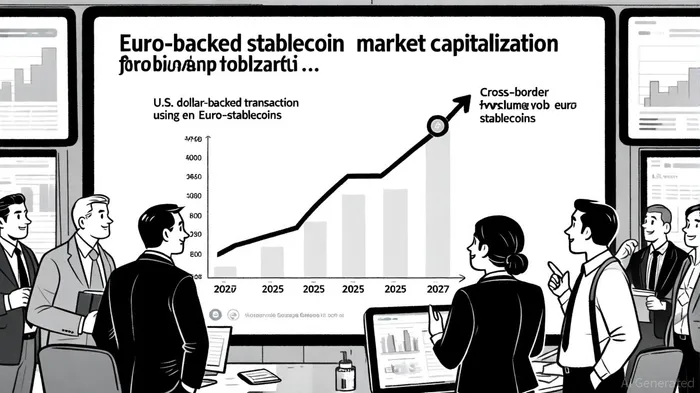
The European financial landscape is undergoing a seismic shift as euro-backed stablecoins emerge as a strategic counterweight to the dominance of U.S. dollar-pegged counterparts. This transformation is driven by a confluence of regulatory innovation under the EU's Markets in Crypto-Assets (MiCA) framework, institutional adoption, and a broader push for monetary sovereignty. For investors, the rise of euro-backed stablecoins represents notNOT-- just a diversification opportunity but a foundational reimagining of cross-border fintech and digital euro adoption.
Regulatory Clarity as a Catalyst
The EU's MiCA regulation, which came into force in 2025, has been pivotal in legitimizing stablecoins as a financial infrastructure tool. By categorizing stablecoins into e-money tokens (EMTs) and asset-referenced tokens (ARTs), MiCA has imposed strict reserve requirements, quarterly audits, and transparency mandates, ensuring stability while fostering innovation[1]. As of July 2025, 14 stablecoin issuers have been authorized under MiCA, with 20 EMTs now operational[4]. This regulatory clarity has already begun to reshape market dynamics: 25% of EU trading volume has shifted to MiCA-compliant euro-stablecoins, with wallet adoption rising 53% year-over-year[3].
The framework also addresses scalability concerns. For instance, daily transaction limits for ARTs are capped at €200 million, while EMTs not tied to EU currency face 1 million transaction limits[1]. These parameters balance innovation with risk mitigation, creating a fertile ground for institutional players to experiment with cross-border use cases.
Market Momentum and Institutional Adoption
Despite their small market share—less than 1% of the $260 billion global stablecoin market—euro-backed stablecoins are gaining traction. Transaction volume grew by 62% quarter-over-quarter in Q3 2025, with euro-denominated stablecoin payments accounting for 7.8% of all European crypto transfers[3]. This growth is underpinned by a coalition of nine major European banks, including ING, UniCredit, and Danske Bank, which are collaborating to launch a euro-backed stablecoin by mid-2026[2].
Institutional adoption is accelerating. Platforms like Banking Circle have already issued MiCA-compliant stablecoins such as EURIEURI-- to facilitate fast, transparent, and 24/7 transactions[3]. Fireblocks reports that 86% of institutional players are now ready to process B2B volume via stablecoins, with €5.7 billion in transactions already processed[3]. This infrastructure readiness signals a shift from speculative hype to practical utility, particularly in cross-border trade and remittances.
Strategic Investment Opportunities
For investors, the euro-stablecoin ecosystem offers three key avenues:
Cross-Border Fintech Innovation: The low-cost, real-time settlement capabilities of stablecoins are redefining traditional payment rails. For example, the new consortium of European banks aims to challenge the dollar's dominance in cross-border transactions, potentially capturing market share in sectors like e-commerce and supply chain finance[2].
B2B and Institutional Settlements: Stablecoins are being integrated into institutional workflows to reduce friction in B2B transactions. A report by Forbes highlights that 35% of European institutions already view enhanced security as a major benefit of stablecoin adoption[4], a critical factor in attracting risk-averse corporate clients.
Digital Euro Synergy: The EU's parallel digital euro pilot programs are creating a complementary ecosystem. As euro-backed stablecoins mature, they could serve as a bridge between traditional banking and decentralized finance (DeFi), enabling seamless interoperability[3].
Challenges and the Road Ahead
While the outlook is optimistic, challenges remain. Euro-stablecoins must overcome their current marginalization in the global market, with a market cap under €350 million as of September 2025[1]. Additionally, the ECB's cautious stance on a digital euro—while supportive of stablecoins—means regulatory alignment will be critical.
However, the projected 37% growth in the EU stablecoin market in 2025, reaching €450 billion in value[1], suggests that these hurdles are surmountable. The key will be maintaining the delicate balance between innovation and stability, a task for which MiCA has laid the groundwork.
Conclusion
The emergence of euro-backed stablecoins marks a pivotal moment in European financial infrastructure. By leveraging regulatory clarity, institutional adoption, and cross-border fintech innovation, these instruments are poised to redefine the role of digital assets in the global economy. For investors, the opportunity lies not just in capitalizing on early-stage growth but in participating in a structural shift toward a more diversified and resilient financial system.







Comentarios
Aún no hay comentarios