
The Emergence of Dogecoin ETFs and the Future of Digital Asset Investing
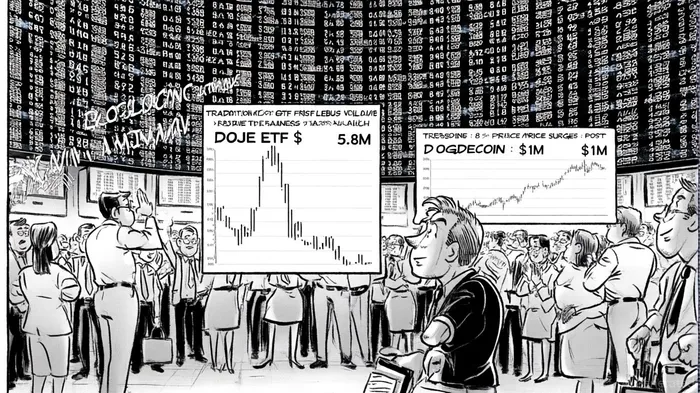
The launch of the first U.S. DogecoinDOGE-- ETF (DOJE) on September 18, 2025, marked a seismic shift in the intersection of digital assets and traditional finance. Within its first hour of trading on the Cboe BZX Exchange, DOJE generated $5.8 million in volume, far exceeding the typical under-$1 million benchmark for new ETFs [1]. This unprecedented demand signals a maturation of the crypto market, where meme coins like Dogecoin are no longer dismissed as speculative novelties but are now being institutionalized through regulated vehicles.
Institutional Validation: From Whales to Corporate Treasuries
The DOJE ETF's success is underpinned by robust institutional and corporate participation. CleanCore SolutionsZONE--, a major player in the crypto space, acquired 1 billion DOGE tokens (5% of the circulating supply) in the weeks leading up to the ETF's launch [2]. This accumulation, coupled with whale activity (wallets holding 1M–10M DOGEDOGE-- steadily buying pre-launch), underscores a strategic bet on Dogecoin's legitimacy as an investable asset. Institutional validation is further reinforced by the ETF's regulatory structure: DOJE bypassed the SEC's traditional securities laws by leveraging the Investment Company Act of 1940, a move that streamlined approval and set a precedent for future crypto ETFs [3].
Regulatory Shifts and Market Adoption
The SEC's recent rule changes, which eliminated case-by-case reviews for crypto ETFs, were pivotal in DOJE's rapid approval [4]. This regulatory shift reflects a broader acceptance of digital assets, even those with no inherent utility like Dogecoin. The ETF's debut also coincided with a 8% surge in Dogecoin's price, driven by both retail and institutional inflows [1]. Analysts now project DOGE could reach $0.40–$0.60 in the short term if the ETF continues to attract capital [5].
The Road Ahead: Risks and Opportunities
While DOJE's launch is a milestone, challenges remain. Critics argue that the ETF's structure—relying on derivatives rather than direct Dogecoin holdings—may limit liquidity [6]. Additionally, overbought conditions and macroeconomic uncertainties (e.g., potential Fed rate cuts) could introduce volatility. However, the ETF's success has already sparked discussions about a wave of altcoin and memecoinMEME-- ETFs, potentially reshaping the investment landscape.
Conclusion
The DOJE ETF is more than a product; it's a harbinger of a new era where digital assets are integrated into mainstream portfolios. By bridging the gap between speculative crypto markets and traditional finance, DOJE has proven that even a “meme” coin can command institutional respect. As regulatory frameworks evolve and investor appetite grows, the future of digital asset investing looks increasingly bankless—and infinitely more accessible.






Comentarios
Aún no hay comentarios