
Embraer's Strategic Growth in the Global Defense Sector: Leveraging Procurement Trends and Emerging Technologies
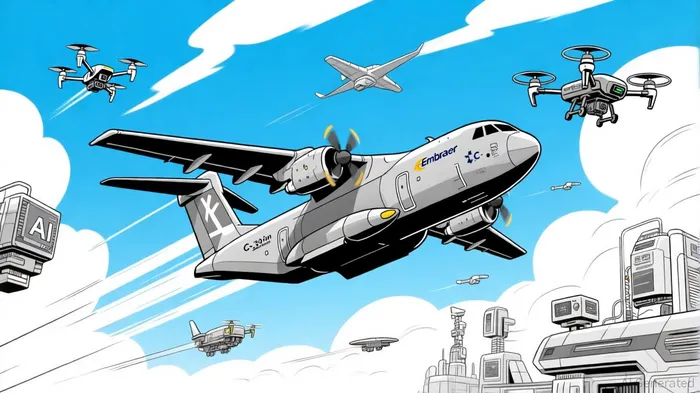
In an era of escalating geopolitical tensions and technological disruption, the global defense sector is undergoing a seismic shift. According to a report by MorningstarMORN--, European defense spending is projected to grow at a robust 6.8% annual rate through 2035, driven by concerns over Russia's invasion of Ukraine and China's military expansion[1]. This surge in demand is not merely about quantity—it reflects a strategic pivot toward high-tech systems like air defense, AI, and autonomous drones. For companies like EmbraerERJ--, this presents both a challenge and an opportunity to redefine their role in the evolving defense landscape.
Aligning with Procurement Trends: Digital Transformation and Resilience
Embraer's approach to navigating this volatile environment centers on digital transformation and supply chain resilience. The company has partnered with SAPSAP-- to implement the "ONEChain Program," a source-to-pay initiative designed to streamline procurement processes and enhance supplier collaboration[2]. By leveraging AI-driven inventory optimization and predictive modeling, Embraer is not only mitigating risks from economic uncertainties but also aligning its operations with the urgent demand for agile, high-tech defense systems[2]. This digital-first strategy positions Embraer to respond swiftly to shifting procurement priorities, particularly in markets where speed and adaptability are critical.
Emerging Markets: Drones and AI as Growth Catalysts
The defense drone market, valued at $11.2 billion in 2025, is expected to nearly double to $21.3 billion by 2034, fueled by a 7.5% compound annual growth rate[3]. Embraer has positioned itself at the forefront of this trend through strategic investments and partnerships. A notable example is its $30 million investment in XMobots, a Brazilian drone developer specializing in autonomous systems for defense, agriculture, and urban mobility[4]. This collaboration accelerates the development of medium and large drones, addressing the growing need for cost-efficient, low-risk surveillance and reconnaissance solutions.
Beyond drones, Embraer is also exploring AI's potential to revolutionize defense and mobility. Through Project EASy, the company has partnered with firms like Near Earth Autonomy and Iris Automation to pioneer autonomous flight technologies[5]. These innovations are not confined to military applications; they extend to urban mobility and logistics, reflecting Embraer's broader vision for AI-driven air ecosystems.
U.S. Market Ambitions: Prime Contractor Aspirations
While Embraer has long been a key player in commercial aviation, its recent foray into the U.S. defense market marks a pivotal shift. The C-390 Millennium, already a success in Europe and Latin America, is now being pitched to U.S. military branches, with potential roles in the KC-135 Tanker Recapitalization program and the Next Generation Air-refueling System (NGAS)[6]. The aircraft's compliance with the Buy American Act and its compatibility with U.S. defense infrastructure make it a compelling candidate for contracts in a market where domestic content is a critical factor[6].
Embraer's ambitions extend beyond hardware. The company is exploring mergers and acquisitions to deepen its U.S. footprint and has even considered establishing a final assembly line for the C-390 in the U.S., mirroring its partnership with Sierra Nevada Corporation for the A-29 Super Tucano[6]. These moves signal a strategic pivot toward becoming a prime contractor in a sector dominated by legacy players like Lockheed MartinLMT-- and BoeingBA--.
Future Outlook: AI-Powered Aviation and Sustainability
Looking ahead, Embraer's vision for the future of aviation is as bold as it is pragmatic. The company has unveiled a concept for an AI-powered passenger aircraft that envisions fully autonomous flights, integrating green technologies like hydrogen and sustainable aviation fuel[7]. While still in development, this concept underscores Embraer's commitment to innovation and sustainability—a critical differentiator in a sector increasingly scrutinized for its environmental impact.
Conclusion: A Strategic Position in a High-Stakes Sector
Embraer's strategic alignment with global defense procurement trends—digital transformation, AI, and autonomous systems—positions it as a formidable player in a sector poised for rapid growth. By leveraging its expertise in both traditional and emerging technologies, the company is not only capitalizing on current demand but also future-proofing its business against the uncertainties of tomorrow. For investors, Embraer represents a compelling case study in how agility, innovation, and strategic partnerships can drive long-term value in a high-stakes, high-reward industry.





Comentarios
Aún no hay comentarios