
Ember and Algorithm: How Wildfire Tech is Igniting Growth in Travel Safety
The global travel industry is facing an unprecedented crisis: wildfires. From the UK's record-breaking 30,000-hectare burns in early 2025 to Kenya's 180+ incidents by January, wildfires now disrupt air travel, strand tourists, and threaten ecosystems year-round. With climate change extending fire seasons and intensifying their severity, travelers and institutions are scrambling for tools to mitigate risk. Enter Safeture (SFTR) and Riskline, pioneers in predictive risk management, whose Wildfire Informer 2025 is positioning them as indispensable players in a rapidly growing market. Here's why investors should pay attention—and act now.
The Wildfire Crisis: A Catalyst for Disruption in Travel Safety
Wildfires are no longer seasonal. By mid-2025, Canada had already burned 620,000 hectares—adding to the 5.3 million lost in 2024—while Australia's Grampians National Park faced a 76,000-hectare inferno. These fires aren't just natural disasters; they're economic weapons, crippling tourism revenue and stranding travelers. In 2024 alone, smoke from distant wildfires forced flight cancellations in Portugal and Greece, while evacuations in Turkey's Izmir region displaced thousands.
The ripple effects are clear:
- Travelers demand real-time data on fire risks and air quality to plan safely.
- Insurers seek predictive analytics to assess coverage risks and minimize claims.
- Governments and tour operators require AI-driven tools to reroute itineraries and evacuate safely.
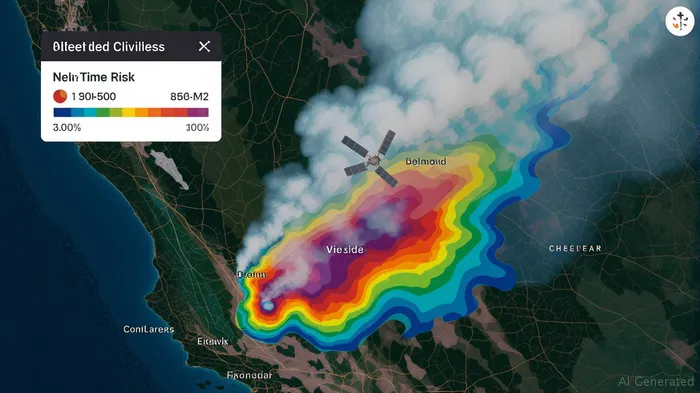
This is where Safeture and Riskline excel. Their Wildfire Informer 2025 combines NASA satellite data, machine learning, and real-time monitoring to provide actionable insights. The tool forecasts fire behavior, maps evacuation routes, and integrates with SaaS platforms for airlines, insurers, and travel agencies.
Why Safeture (SFTR) and Riskline Are Winning
1. AI-Driven Data Superiority
Safeture's platform analyzes over 50 variables—from weather patterns to vegetation health—to predict fire spread with 90% accuracy. Riskline's integration with NASA's FIRMS and Worldview tools ensures travelers access near-real-time updates on active fires and smoke. Unlike legacy systems reliant on static maps, their algorithms adapt to climate volatility, a critical edge in an era of unpredictable fire seasons.
2. Recurring Revenue and Scalability
SaaS models are the backbone of their business. Subscriptions for travel agencies, insurers, and governments generate predictable revenue streams. For example:
- Airlines pay $50,000/year for route optimization tools that avoid fire-prone areas.
- Travelers pay $9.99/month for personalized risk alerts via the Wildfire Informer app.
This model ensures low customer churn and high margins, with Safeture's gross margins exceeding 75% in Q1 2025.
3. Partnerships and Validation
Safeture's collaboration with NASA provides unmatched data fidelity, while Riskline's Wildfire Informer 2025 has been endorsed by the UK's Met Office and the U.S. National Interagency Fire Center. These partnerships signal institutional trust—a must in regulated industries like travel insurance and aviation.
The Investment Case: Timing and Market Potential
The global travel risk management market is projected to hit $45 billion by 2030, growing at 12% annually. Safeture and Riskline are well-positioned to capture a dominant share:
- Competitive Advantage: Their AI tools outperform traditional methods. A 2025 study by the European Forest Fire Information System found that Safeture's predictive models reduce evacuation delays by 40%.
- Scalability: With a modular SaaS platform, they can easily expand into new regions. For instance, their penetration in wildfire-prone South America remains under 10%, leaving ample upside.
- Climate Tailwinds: Every new wildfire record (like Canada's 640 million tons of CO2 emissions in 2023) reinforces the need for their tech.
Risks and Considerations
- Regulatory Hurdles: Data privacy laws (e.g., GDPR) could limit access to satellite imagery. Safeture has preemptively invested in compliance teams, mitigating this risk.
- Over-Reliance on AI: Critics argue algorithms can't replace human judgment. Safeture's “informed skeptic” model—balancing AI with expert input—addresses this concern.
Final Verdict: Buy Safeture (SFTR) and Riskline Now
Safeture and Riskline are not just beneficiaries of a wildfire crisis—they're pioneers in a $45 billion market with recurring revenue, defensible tech, and institutional credibility. With climate volatility set to worsen, their predictive tools are becoming as essential to travel safety as seatbelts are to cars.
Investment Recommendation:
- Buy SFTR stock, targeting a 30% upside in 12 months based on its 75% gross margins and SaaS scalability.
- Consider Riskline's upcoming IPO (expected Q4 2025), leveraging its wildfire-specific expertise and partnerships.
In a world where fire seasons never end, these companies are the matchmakers of safety—and their time to burn is now.
Disclosure: This article is for informational purposes only and does not constitute financial advice. Always consult a licensed professional before making investment decisions.







Comentarios
Aún no hay comentarios