
Embedded Analytics in SaaS: A Strategic Growth Engine for High-Margin Tech Sectors
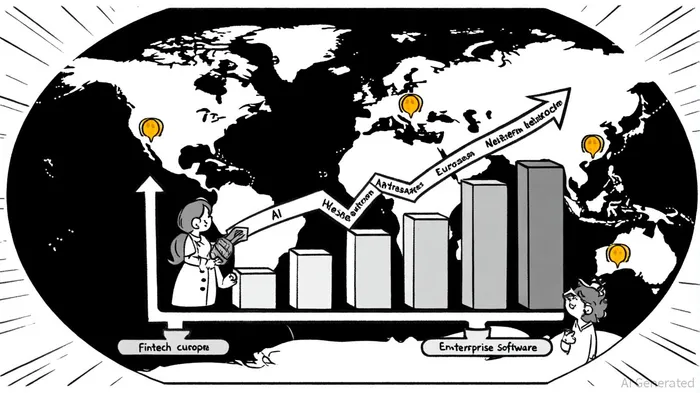
The embedded analytics market is no longer a niche innovation—it's a cornerstone of modern SaaS strategy. As enterprises across high-margin sectors like fintech865201--, healthcare, and enterprise software demand seamless data integration, the market is surging forward with unprecedented momentum. According to a report by Fortune Business Insights, the global embedded analytics market size was valued at USD 78.53 billion in 2025 and is projected to reach USD 182.72 billion by 2033, reflecting a CAGR of 12.82% . This growth is fueled by a confluence of technological advancements, shifting consumer expectations, and sector-specific tailwinds. For investors, the question is no longer if to bet on embedded analytics, but how to position for its next phase of expansion.
The Triple Threat: Fintech, Healthcare, and Enterprise Software
Fintech is leading the charge. The rise of embedded finance—where financial services are integrated directly into non-financial platforms—is reshaping the industry. By 2024, embedded finance had already reached USD 185 billion in transaction value, and it's projected to exceed USD 228 billion by 2028 . This growth is driven by APIs and real-time analytics, which enable seamless integration of payments, lending, and BNPL options into e-commerce and productivity tools. For example, small businesses can now offer working capital solutions without relying on traditional banks, a trend that Bain & Company estimates will generate over USD 7 trillion in transaction value by 2026 .
In healthcare, the shift toward value-based reimbursement models is creating a demand for bedside analytics. Hospitals and clinics now require real-time data to optimize patient outcomes and reduce costs. Mordor Intelligence notes that this trend is particularly pronounced in the U.S. and U.K., with ripple effects across the European Union . Embedded analytics tools are enabling clinicians to access predictive insights during patient visits, a critical advantage in an industry where margins are razor-thin and regulatory compliance is complex.
Meanwhile, enterprise software is leveraging embedded analytics to unlock operational efficiencies. Low-code/no-code platforms are democratizing data access, allowing non-technical users to build custom dashboards and reports. ScaleUp AllyALLY-- highlights that 80% of software vendors plan to embed GenAI capabilities by 2026, enabling predictive analytics and automated decision-making . This shift is not just about convenience—it's about creating defensible moats in a competitive SaaS landscape.
Strategic Growth: AI, Cloud, and Scalability
The scalability of embedded analytics hinges on two pillars: AI integration and cloud-native architecture.
First, AI and machine learning are transforming embedded analytics from passive reporting tools into active decision-making engines. For instance, 81% of analytics users now prefer embedded solutions over standalone tools, citing their ability to deliver real-time insights . GenAI is accelerating this trend by enabling natural language queries and automated anomaly detection. As a result, businesses can move from retrospective analysis to proactive strategy, a critical edge in fast-moving markets.
Second, cloud adoption is unlocking unprecedented flexibility. By 2025, 85% of organizations are expected to adopt cloud-native solutions, driven by their scalability and cost efficiency . Cloud platforms allow SaaS providers to deploy analytics modules on-demand, reducing upfront infrastructure costs and enabling rapid scaling. This is particularly valuable in sectors like fintech, where transaction volumes can spike unpredictably.
Investment Implications: Where to Allocate Capital
For investors, the embedded analytics market offers a unique intersection of high-margin growth and technological defensibility. The fintech segment, in particular, is a goldmine. With embedded finance projected to grow at a CAGR of 18.4% from 2024 to 2032 , companies that master API-driven financial services will dominate. Similarly, healthcare providers that integrate analytics into clinical workflows are likely to outperform peers in a value-based care world.
However, the key to long-term success lies in customization and governance. As the market matures, businesses will demand tailored solutions that align with their workflows. This creates opportunities for SaaS vendors that can balance flexibility with robust data governance—a challenge that many legacy providers struggle to address.
Conclusion
The embedded analytics market is at an inflection pointIPCX--. Driven by AI, cloud, and sector-specific demand, it's evolving from a competitive advantage into a business imperative. For investors, the path forward is clear: target SaaS providers that combine cutting-edge technology with deep vertical expertise. The winners will be those who can scale embedded analytics into every corner of the enterprise—transforming data into action, and action into profit.







Comentarios
Aún no hay comentarios