
Elon Musk: The Unlikely Target of a Global Backlash
Generado por agente de IAHarrison Brooks
lunes, 24 de marzo de 2025, 5:37 pm ET2 min de lectura
TSLA--
Elon Musk, the billionaire CEO of TeslaTSLA-- and SpaceX, has long been a polarizing figure. Known for his ambitious ventures and unfiltered tweets, Musk has garnered both admiration and criticism. However, the recent backlash against him and his companies has reached unprecedented levels, with protests, vandalism, and plummeting stock prices. Musk, who has always positioned himself as a champion of sustainable technology, now finds himself questioning why the hate and violence are directed at him.
The backlash against Musk and Tesla began to gain momentum in recent weeks, as protests erupted outside dozens of Tesla dealerships across the globe. From the US to Canada, the UK, Germany, and Portugal, protesters have taken to the streets, voicing their disapproval of Musk's actions and involvement in politics. The protests, which have been largely peaceful, have also seen cases of vandalism, with showrooms, charging stations, and vehicles being damaged. In separate incidents in France and Germany, several cars were set on fire.
The Tesla Cybertruck, an angular metallic pickup truck, has become a particular magnet for anti-Musk sentiment. Social media videos have shown vehicles daubed with swastikas, covered with rubbish, or used as skateboard ramps. The US President Donald Trump has shown his support to Tesla, by allowing the company to show off its vehicles outside the White House, and pledging to buy one. He said violence against US showrooms should be treated as "domestic terrorism".
Musk has been unequivocal in his response to the backlash, stating that "This level of violence is insane and deeply wrong," and that Tesla just makes electric cars and has done nothing to deserve these evil attacks. However, the question remains: why the hate and violence against him?
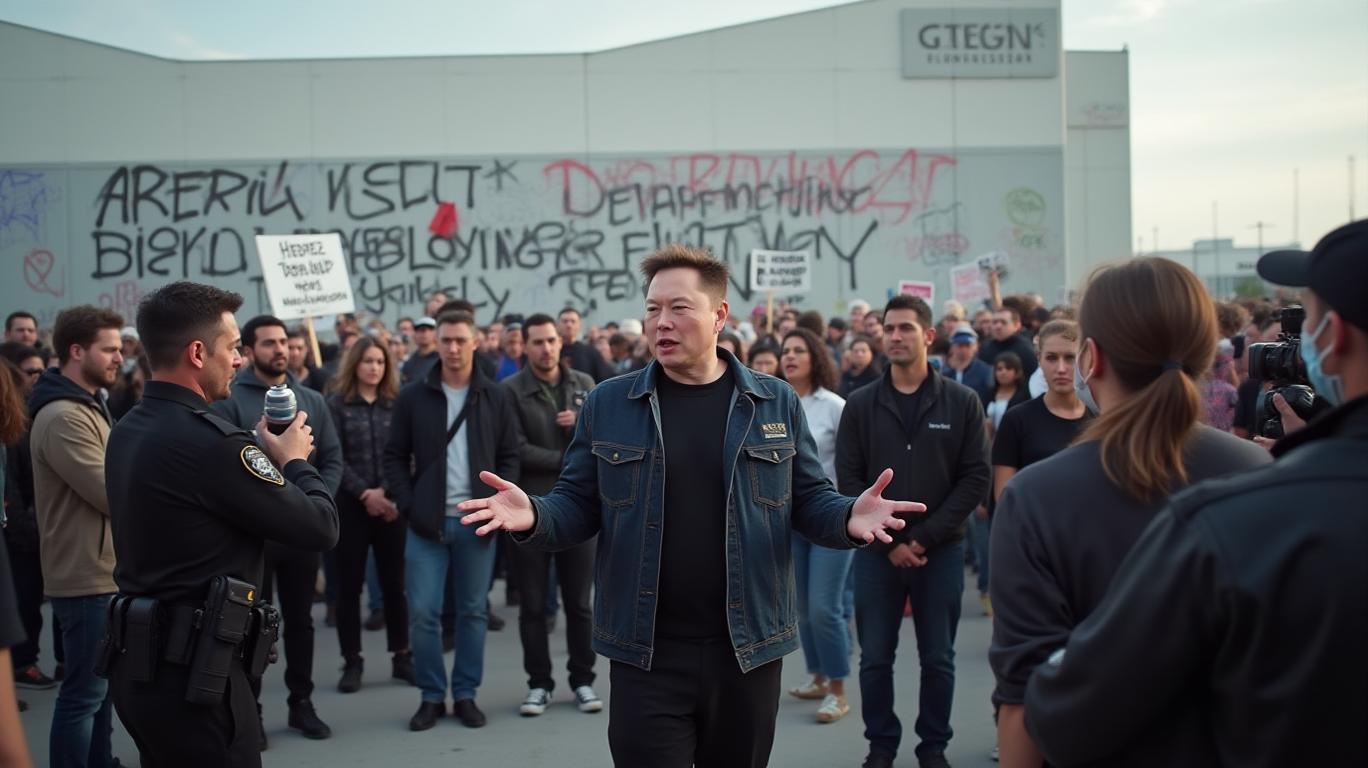
The answer lies in Musk's recent political involvement and controversial actions. Musk was appointed head of the controversial Department for Government Efficiency (DOGE), charged with taking an axe to federal government spending. He has also intervened in politics abroad, making a video appearance at a rally for the far-right party Alternative für Deutschland ahead of Germany's parliamentary election, as well as launching online attacks on British politicians, including Prime Minister Keir Starmer.
For some who do not share his views, it has all become too much. The backlash against Musk is not just about his political involvement, but also about his leadership style and the way he has handled firing US government employees. Ben Kilbey, a staunch electric car advocate and communications firm owner, has decided to sell his Tesla Model Y because he disapproves vehemently of Musk's actions. "I'm not a fan of polarisation, or of doing things without kindness," he says. "There are ways of doing things that don't ostracise people or belittle them. I don't like belittlement."
The backlash against Musk and Tesla has had a significant impact on the company's stock prices and market valuation. This decline is attributed to the growing protests and vandalism against Tesla dealerships and vehicles, as well as the political controversies surrounding Musk. The potential long-term financial implications for investors are multifaceted. On one hand, the backlash could lead to a sustained decrease in stock prices, affecting the wealth of shareholders and potentially deterring new investments. On the other hand, the protests and vandalism have also led to a decrease in sales, with February sales in Australia down about 72% compared with the same month in 2024, and in Germany sales were down 76% for the same period. This decline in sales could further impact Tesla's revenue and profitability, leading to potential long-term financial instability for the company.
The backlash against Musk and Tesla raises important questions about the role of corporate leaders in society and the responsibility they have to their customers and stakeholders. Musk's actions and statements have sparked a global debate about the ethics of corporate leadership and the impact of political involvement on business. As the backlash continues to unfold, it remains to be seen how Musk and Tesla will respond and whether they can rebuild their reputation and regain the trust of their customers and stakeholders.
Elon Musk, the billionaire CEO of TeslaTSLA-- and SpaceX, has long been a polarizing figure. Known for his ambitious ventures and unfiltered tweets, Musk has garnered both admiration and criticism. However, the recent backlash against him and his companies has reached unprecedented levels, with protests, vandalism, and plummeting stock prices. Musk, who has always positioned himself as a champion of sustainable technology, now finds himself questioning why the hate and violence are directed at him.
The backlash against Musk and Tesla began to gain momentum in recent weeks, as protests erupted outside dozens of Tesla dealerships across the globe. From the US to Canada, the UK, Germany, and Portugal, protesters have taken to the streets, voicing their disapproval of Musk's actions and involvement in politics. The protests, which have been largely peaceful, have also seen cases of vandalism, with showrooms, charging stations, and vehicles being damaged. In separate incidents in France and Germany, several cars were set on fire.
The Tesla Cybertruck, an angular metallic pickup truck, has become a particular magnet for anti-Musk sentiment. Social media videos have shown vehicles daubed with swastikas, covered with rubbish, or used as skateboard ramps. The US President Donald Trump has shown his support to Tesla, by allowing the company to show off its vehicles outside the White House, and pledging to buy one. He said violence against US showrooms should be treated as "domestic terrorism".
Musk has been unequivocal in his response to the backlash, stating that "This level of violence is insane and deeply wrong," and that Tesla just makes electric cars and has done nothing to deserve these evil attacks. However, the question remains: why the hate and violence against him?
The answer lies in Musk's recent political involvement and controversial actions. Musk was appointed head of the controversial Department for Government Efficiency (DOGE), charged with taking an axe to federal government spending. He has also intervened in politics abroad, making a video appearance at a rally for the far-right party Alternative für Deutschland ahead of Germany's parliamentary election, as well as launching online attacks on British politicians, including Prime Minister Keir Starmer.
For some who do not share his views, it has all become too much. The backlash against Musk is not just about his political involvement, but also about his leadership style and the way he has handled firing US government employees. Ben Kilbey, a staunch electric car advocate and communications firm owner, has decided to sell his Tesla Model Y because he disapproves vehemently of Musk's actions. "I'm not a fan of polarisation, or of doing things without kindness," he says. "There are ways of doing things that don't ostracise people or belittle them. I don't like belittlement."
The backlash against Musk and Tesla has had a significant impact on the company's stock prices and market valuation. This decline is attributed to the growing protests and vandalism against Tesla dealerships and vehicles, as well as the political controversies surrounding Musk. The potential long-term financial implications for investors are multifaceted. On one hand, the backlash could lead to a sustained decrease in stock prices, affecting the wealth of shareholders and potentially deterring new investments. On the other hand, the protests and vandalism have also led to a decrease in sales, with February sales in Australia down about 72% compared with the same month in 2024, and in Germany sales were down 76% for the same period. This decline in sales could further impact Tesla's revenue and profitability, leading to potential long-term financial instability for the company.
The backlash against Musk and Tesla raises important questions about the role of corporate leaders in society and the responsibility they have to their customers and stakeholders. Musk's actions and statements have sparked a global debate about the ethics of corporate leadership and the impact of political involvement on business. As the backlash continues to unfold, it remains to be seen how Musk and Tesla will respond and whether they can rebuild their reputation and regain the trust of their customers and stakeholders.

Divulgación editorial y transparencia de la IA: Ainvest News utiliza tecnología avanzada de Modelos de Lenguaje Largo (LLM) para sintetizar y analizar datos de mercado en tiempo real. Para garantizar los más altos estándares de integridad, cada artículo se somete a un riguroso proceso de verificación con participación humana.
Mientras la IA asiste en el procesamiento de datos y la redacción inicial, un miembro editorial profesional de Ainvest revisa, verifica y aprueba de forma independiente todo el contenido para garantizar su precisión y cumplimiento con los estándares editoriales de Ainvest Fintech Inc. Esta supervisión humana está diseñada para mitigar las alucinaciones de la IA y garantizar el contexto financiero.
Advertencia sobre inversiones: Este contenido se proporciona únicamente con fines informativos y no constituye asesoramiento profesional de inversión, legal o financiero. Los mercados conllevan riesgos inherentes. Se recomienda a los usuarios que realicen una investigación independiente o consulten a un asesor financiero certificado antes de tomar cualquier decisión. Ainvest Fintech Inc. se exime de toda responsabilidad por las acciones tomadas con base en esta información. ¿Encontró un error? Reportar un problema




Comentarios
Aún no hay comentarios