
Elon Musk's Late-Night Pep Talk, Tesla's Delivery Woes, And More: This Week In Mobility
Generado por agente de IAWesley Park
domingo, 23 de marzo de 2025, 10:38 am ET3 min de lectura
TSLA--
Ladies and gentlemen, buckle up! This week in mobility has been a rollercoaster ride, and we're diving headfirst into the chaos. Elon Musk's late-night pep talk, Tesla's delivery woes, and more are on the table. Let's get started!
First things first, Elon Musk is back in the spotlight, and this time, he's not just talking about Mars or electric cars. He's diving deep into government restructuring and his role as the head of the Department of Government Efficiency. Now, you might be thinking, "What does this have to do with Tesla?" Well, let me tell you, it's a lot more connected than you think.
Musk's recent public statements and actions could have significant implications for Tesla's brand image and investor confidence in the long term. His controversial remarks about deleting entire U.S. government agencies and his isolationist views on American power in the Middle East could alienate certain segments of the market. This could potentially harm Tesla's brand image, especially if these views are seen as conflicting with the company's mission of sustainability and innovation.
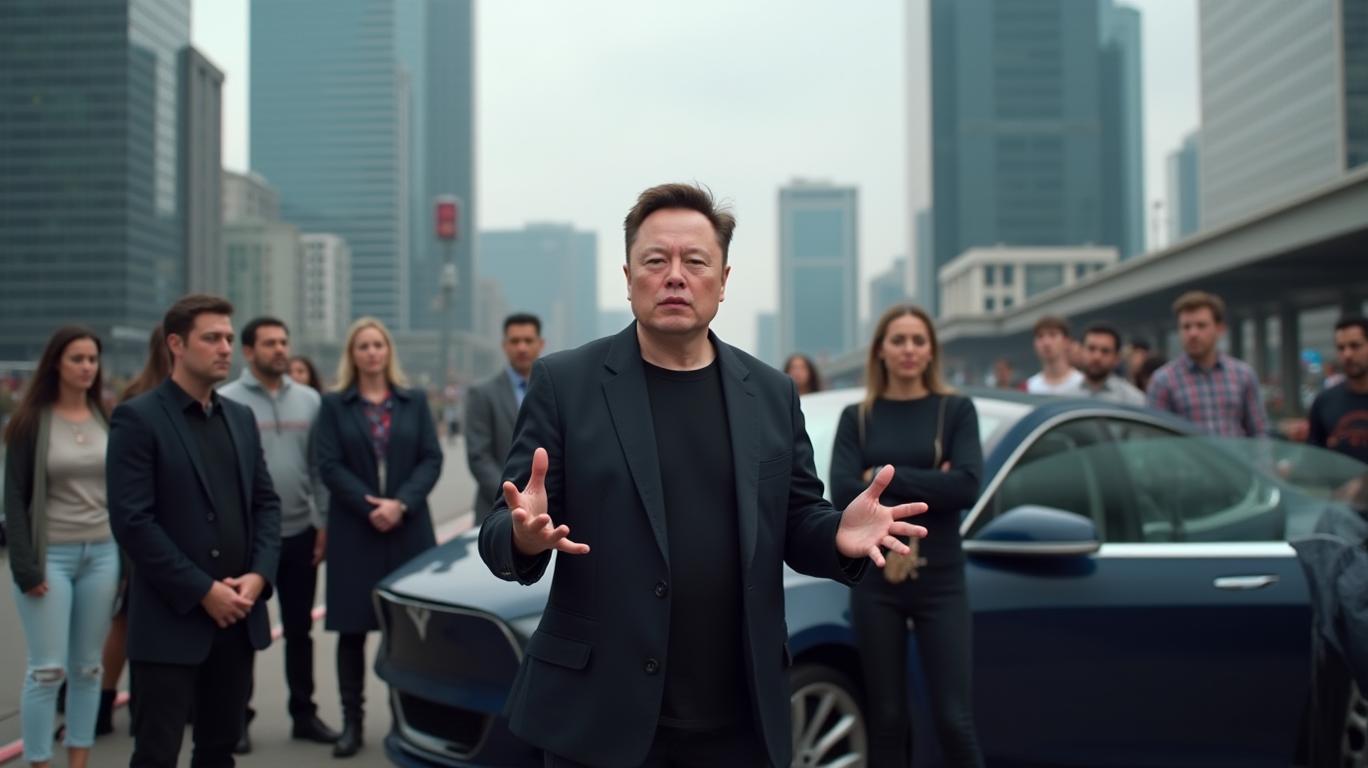
But that's not all! Musk's involvement in the Department of Government Efficiency raises concerns about potential conflicts of interest. As the head of this department, Musk has access to sensitive databases and the power to eviscerate purchases, programs, and staff to achieve his goals. This could lead to accusations of favoritism or self-dealing, which could erode investor confidence in TeslaTSLA--. For example, Musk's company, X, announced a partnership with Visa to offer a mobile payments service called the "X Money Account," which is now set to be dismantled by the Department of Government Efficiency. This could raise questions about whether Musk is using his position to benefit his own companies at the expense of others.
Now, let's talk about Tesla's delivery woes. Prediction markets are forecasting a 27% quarter-over-quarter decrease in Tesla's deliveries. This is a massive drop, and it's not something to be taken lightly. Tesla needs to act fast and make some strategic adjustments to mitigate the impact on its financial performance and market position.
First, Tesla needs to address the Model Y changeover impact. The prediction market's forecast suggests that the Model Y changeover is a significant factor in the expected decrease in deliveries. Tesla should accelerate the changeover process and ensure that production ramps up quickly to meet demand. By addressing this issue, Tesla can minimize the disruption to its delivery schedule.
Second, Tesla needs to diversify its market focus. Tesla's sales are crashing in Europe this quarter, down by as much as 50%. In China, Tesla’s most important market, sales are down slightly year-over-year. Tesla should focus on diversifying its market strategy to reduce reliance on any single region. For example, Tesla could invest more in the US market, which is currently the most opaque but has the potential to be a significant contributor to deliveries.
Third, Tesla needs to enhance its competitive positioning. Tesla should consider enhancing its competitive positioning by introducing more affordable EVs. As noted, "Tesla made a mistake not bringing 'more affordable EVs in 2024,'" and competitors are picking up market share in Europe. By offering more affordable options, Tesla can attract a broader range of customers and mitigate the impact of decreased deliveries.
Fourth, Tesla needs to innovate and expand its product line. Tesla has invested in a humanoid robotics initiative and chip development, and plans to produce a dedicated robotaxi and start a driverless ride-hailing service before 2027. While these initiatives are long-term, Tesla should accelerate innovation in its core product line to maintain market interest and demand. For example, Tesla could focus on improving the range and performance of its existing models to stay ahead of competitors.
Fifth, Tesla needs to improve its supply chain management. Tesla should review and improve its supply chain management to ensure that production is not disrupted by external factors. By improving supply chain management, Tesla can ensure that production remains on track and deliveries are not delayed.
Finally, Tesla needs to address the "Elon Effect." Some customers are avoiding Tesla due to Elon Musk's leadership. Tesla should consider addressing this issue by improving customer perception of the company and its leadership. For example, Tesla could focus on its environmental and social responsibility initiatives to improve its image and attract more customers.
In conclusion, while Elon Musk's public statements and actions could have short-term benefits for Tesla, they also pose significant risks to the company's brand image and investor confidence in the long term. It is important for Tesla to carefully manage these risks and ensure that Musk's actions do not negatively impact the company's reputation or financial performance. By implementing these strategic adjustments, Tesla can mitigate the impact of the expected decrease in deliveries and maintain its financial performance and market position.
Ladies and gentlemen, buckle up! This week in mobility has been a rollercoaster ride, and we're diving headfirst into the chaos. Elon Musk's late-night pep talk, Tesla's delivery woes, and more are on the table. Let's get started!
First things first, Elon Musk is back in the spotlight, and this time, he's not just talking about Mars or electric cars. He's diving deep into government restructuring and his role as the head of the Department of Government Efficiency. Now, you might be thinking, "What does this have to do with Tesla?" Well, let me tell you, it's a lot more connected than you think.
Musk's recent public statements and actions could have significant implications for Tesla's brand image and investor confidence in the long term. His controversial remarks about deleting entire U.S. government agencies and his isolationist views on American power in the Middle East could alienate certain segments of the market. This could potentially harm Tesla's brand image, especially if these views are seen as conflicting with the company's mission of sustainability and innovation.
But that's not all! Musk's involvement in the Department of Government Efficiency raises concerns about potential conflicts of interest. As the head of this department, Musk has access to sensitive databases and the power to eviscerate purchases, programs, and staff to achieve his goals. This could lead to accusations of favoritism or self-dealing, which could erode investor confidence in TeslaTSLA--. For example, Musk's company, X, announced a partnership with Visa to offer a mobile payments service called the "X Money Account," which is now set to be dismantled by the Department of Government Efficiency. This could raise questions about whether Musk is using his position to benefit his own companies at the expense of others.
Now, let's talk about Tesla's delivery woes. Prediction markets are forecasting a 27% quarter-over-quarter decrease in Tesla's deliveries. This is a massive drop, and it's not something to be taken lightly. Tesla needs to act fast and make some strategic adjustments to mitigate the impact on its financial performance and market position.
First, Tesla needs to address the Model Y changeover impact. The prediction market's forecast suggests that the Model Y changeover is a significant factor in the expected decrease in deliveries. Tesla should accelerate the changeover process and ensure that production ramps up quickly to meet demand. By addressing this issue, Tesla can minimize the disruption to its delivery schedule.
Second, Tesla needs to diversify its market focus. Tesla's sales are crashing in Europe this quarter, down by as much as 50%. In China, Tesla’s most important market, sales are down slightly year-over-year. Tesla should focus on diversifying its market strategy to reduce reliance on any single region. For example, Tesla could invest more in the US market, which is currently the most opaque but has the potential to be a significant contributor to deliveries.
Third, Tesla needs to enhance its competitive positioning. Tesla should consider enhancing its competitive positioning by introducing more affordable EVs. As noted, "Tesla made a mistake not bringing 'more affordable EVs in 2024,'" and competitors are picking up market share in Europe. By offering more affordable options, Tesla can attract a broader range of customers and mitigate the impact of decreased deliveries.
Fourth, Tesla needs to innovate and expand its product line. Tesla has invested in a humanoid robotics initiative and chip development, and plans to produce a dedicated robotaxi and start a driverless ride-hailing service before 2027. While these initiatives are long-term, Tesla should accelerate innovation in its core product line to maintain market interest and demand. For example, Tesla could focus on improving the range and performance of its existing models to stay ahead of competitors.
Fifth, Tesla needs to improve its supply chain management. Tesla should review and improve its supply chain management to ensure that production is not disrupted by external factors. By improving supply chain management, Tesla can ensure that production remains on track and deliveries are not delayed.
Finally, Tesla needs to address the "Elon Effect." Some customers are avoiding Tesla due to Elon Musk's leadership. Tesla should consider addressing this issue by improving customer perception of the company and its leadership. For example, Tesla could focus on its environmental and social responsibility initiatives to improve its image and attract more customers.
In conclusion, while Elon Musk's public statements and actions could have short-term benefits for Tesla, they also pose significant risks to the company's brand image and investor confidence in the long term. It is important for Tesla to carefully manage these risks and ensure that Musk's actions do not negatively impact the company's reputation or financial performance. By implementing these strategic adjustments, Tesla can mitigate the impact of the expected decrease in deliveries and maintain its financial performance and market position.

Divulgación editorial y transparencia de la IA: Ainvest News utiliza tecnología avanzada de Modelos de Lenguaje Largo (LLM) para sintetizar y analizar datos de mercado en tiempo real. Para garantizar los más altos estándares de integridad, cada artículo se somete a un riguroso proceso de verificación con participación humana.
Mientras la IA asiste en el procesamiento de datos y la redacción inicial, un miembro editorial profesional de Ainvest revisa, verifica y aprueba de forma independiente todo el contenido para garantizar su precisión y cumplimiento con los estándares editoriales de Ainvest Fintech Inc. Esta supervisión humana está diseñada para mitigar las alucinaciones de la IA y garantizar el contexto financiero.
Advertencia sobre inversiones: Este contenido se proporciona únicamente con fines informativos y no constituye asesoramiento profesional de inversión, legal o financiero. Los mercados conllevan riesgos inherentes. Se recomienda a los usuarios que realicen una investigación independiente o consulten a un asesor financiero certificado antes de tomar cualquier decisión. Ainvest Fintech Inc. se exime de toda responsabilidad por las acciones tomadas con base en esta información. ¿Encontró un error? Reportar un problema


SOBRE NOSOTROS
Nuestra historiaAutores de noticiasBase de conocimientosPolítica de privacidadTérmino de usoDescargo de responsabilidad de corretaje de tercerosTérminos de uso de AIMEDivulgaciones de riesgos de AInvest AICarrerasCONTÁCTENOS
Email: support@ainvest.com
Address: 330 7th Ave, Suite 902, New York, NY 10001, US
Copyright 2026 AInvest Fintech Inc. All rights reserved.


Comentarios
Aún no hay comentarios