
Elon Musk's $1 Trillion Tesla Pay Package: A Strategic Bet on Tech-Led Growth and Long-Term Innovation
A Pay Package Aligned with Technological Ambition
The compensation plan, which grants Musk up to 423.7 million additional TeslaTSLA-- shares, is explicitly tied to achieving decade-long goals in robotics, autonomy, and energy solutions. According to a Parameter.io report, . Designed as a fully autonomous vehicle without pedals or a steering wheel, the Cybercab leverages Tesla's Full Self-Driving (FSD) software to redefine urban mobility, as noted by the report. This focus on AI-driven innovation aligns with Musk's vision of transforming Tesla from an electric vehicle (EV) manufacturer into a leader in autonomous systems and robotics, as detailed in a IBTimes article.
, reflecting Tesla's broader push into robotics. As stated by , . By tying Musk's compensation to these targets, Tesla aims to incentivize long-term innovation while maintaining alignment with shareholder interests.
Valuation Justification: A High-Stakes Bet on Disruption
Tesla's premium valuation has long been a subject of contention. . However, proponents view the recent shareholder approval as a vote of confidence in Tesla's disruptive potential.
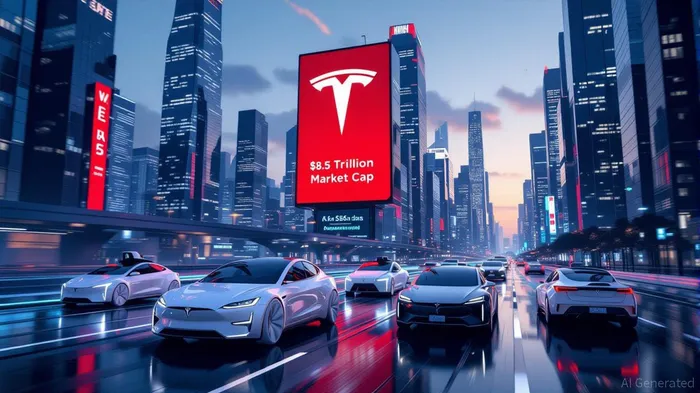
According to a Yahoo Finance report, the $1 trillion package requires Tesla to achieve a market cap of $8.5 trillion, . This ambitious target hinges on the successful scaling of FSD and robotaxi services, particularly in Europe and China, where regulatory approvals for autonomous driving are expected as early as Q1 2026. If realized, these innovations could unlock new revenue streams, including subscription-based mobility services and robotics contracts, thereby justifying Tesla's premium valuation.
Yet, risks remain. , a notable dissenting voice, , as noted in a EMEgypt report. Such concerns highlight the tension between visionary innovation and corporate governance-a challenge Tesla has faced since its 2018 pay package was invalidated by a Delaware court, as detailed in a Marketscreener article.
Shareholder Sentiment and Strategic Risks
While the package received strong support, it also exposed fractures in shareholder sentiment. , as noted in the IBTimes article, while others fear it undermines checks and balances.
Financial analysts offer a nuanced perspective. A Morningstar report . , .
Forward-Looking Investment Outlook
For investors, , with R&D autonomy and long-term innovation at its core. However, .
- Opportunities, . , as noted in the Parameter.io report.
- Risks, , . Additionally, , as noted in the .
In the short term, . However, the long-term outlook hinges on the company's ability to translate innovation into scalable, .
Conclusion
. By aligning Musk's interests with ambitious technological goals, . For investors, . As the company races toward its 2026 and 2030 targets, .





Comentarios
Aún no hay comentarios