
The Elizabeth Line’s Impact on London’s Office Market: Reassessing Value and Location Premiums
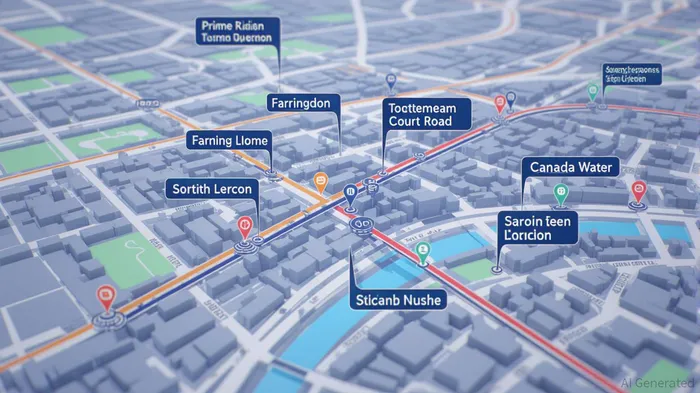
The Elizabeth Line has fundamentally reshaped London’s office market, creating a new paradigm of connectivity, demand, and value. Since its introduction in 2005, the line has driven a 406% increase in office rents in Farringdon and a 187% surge in Tottenham Court Road, transforming these areas into prime submarkets [2]. By linking previously underutilized zones to central London, the line has fostered a “linear central business district,” enabling businesses to access high-quality office space with reduced overhead costs [2]. This shift is not merely geographic but behavioral: tenants now prioritize proximity to the Elizabeth Line over traditional central London locations, where vacancy rates hover at 10.27% in Q2 2025 [2].
The Rise of “Smart Core” Submarkets
Investors are increasingly redirecting capital toward “smart core” submarkets like Canada Water and Canary Wharf, which offer a blend of modern infrastructure, ESG compliance, and strategic connectivity. These areas are outpacing traditional central London offices in demand, with the West End submarket recording a vacancy rate of 7.42% in Q4 2024—well below the London average of 2.6% [2]. The appeal lies in their alignment with hybrid work models and tenant preferences for flexible, sustainable spaces. For instance, 60% of 2024 office leases in London favored BREEAM-certified buildings, which command a 15% rent premium over non-certified alternatives [4].
Canada Water, in particular, exemplifies this trend. Its proximity to the Elizabeth Line and ongoing development of amenity-rich office environments have made it a magnet for tenants seeking value and adaptability [4]. Meanwhile, Canary Wharf, despite a record 18.6% vacancy rate in Q1 2025 [1], is undergoing a strategic transformation. Canary Wharf Group (CWG) is repurposing underutilized office spaces into residential, hotel, and life sciences facilities, aiming to diversify revenue streams and attract a broader tenant base [2]. This pivot underscores the necessity of repositioning assets to align with evolving market demands.
Cost-Efficient Investment Strategies
The tight supply of prime office space—averaging 2.6% vacancy across London—has intensified competition for high-quality assets, particularly in submarkets with pre-leasing activity [1]. Investors can capitalize on this dynamic by targeting “smart core” submarkets where demand for ESG-compliant, flexible spaces is surging. For example, the West End’s prime net effective rents reached £70–£160 per square foot in 2025, driven by tenants’ willingness to pay premiums for modern, sustainable environments [2].
However, traditional central London offices face challenges. Canary Wharf’s struggles highlight the risks of overreliance on legacy infrastructure. Major tenants like HSBCHSBC-- and Deutsche BankDB-- have relocated to the City of London, while hybrid work models have reduced demand for large office footprints [2]. Investors must avoid outdated assets in these areas, which carry higher vacancy risks and require costly retrofits to remain competitive.
Actionable Insights for Investors
- Prioritize Proximity to the Elizabeth Line: Submarkets within 500 meters of Elizabeth Line stations have seen the most robust rent growth, with Farringdon and Tottenham Court Road leading the charge [2].
- Leverage ESG-Compliant Assets: Buildings with BREEAM or LEED certifications are achieving higher occupancy and rent premiums, reflecting tenants’ growing emphasis on sustainability [4].
- Embrace Repositioning: Submarkets like Canary Wharf demonstrate the value of repurposing underutilized office spaces into mixed-use developments, mitigating vacancy risks and diversifying revenue streams [2].
- Monitor Vacancy Trends: While central London’s prime submarkets (e.g., City Core, West End) maintain low vacancy rates (1% and 0.3%, respectively) [3], investors should avoid areas with rising vacancies, such as Docklands Core [1].
Conclusion
The Elizabeth Line has redefined London’s office market, creating a new hierarchy of value where connectivity, sustainability, and flexibility reign supreme. Investors who align with this shift—targeting smart core submarkets and avoiding outdated central London assets—can secure cost-efficient returns while navigating the post-pandemic landscape. As the market evolves, strategic repositioning and data-driven decision-making will be critical to unlocking long-term value.
Source:
[1] London's Canary Wharf office vacancies hit new record, data shows [https://www.reuters.com/world/uk/londons-canary-wharf-office-vacancies-hit-new-record-data-shows-2025-04-04/]
[2] The world of work is changing. Is Canary Wharf ready? [https://ig.ft.com/canary-wharf]
[3] Unlocking London, Shifting Behaviours & Emerging Opportunities [https://www.knightfrank.com/research/article/2025-02-11-unlocking-london-shifting-behaviours-emerging-opportunities]
[4] London Office Market 2025: Pricing, Availability and Demand Trends [https://www.finance-monthly.com/london-office-market-2025-pricing-availability-and-demand-trends/]







Comentarios
Aún no hay comentarios